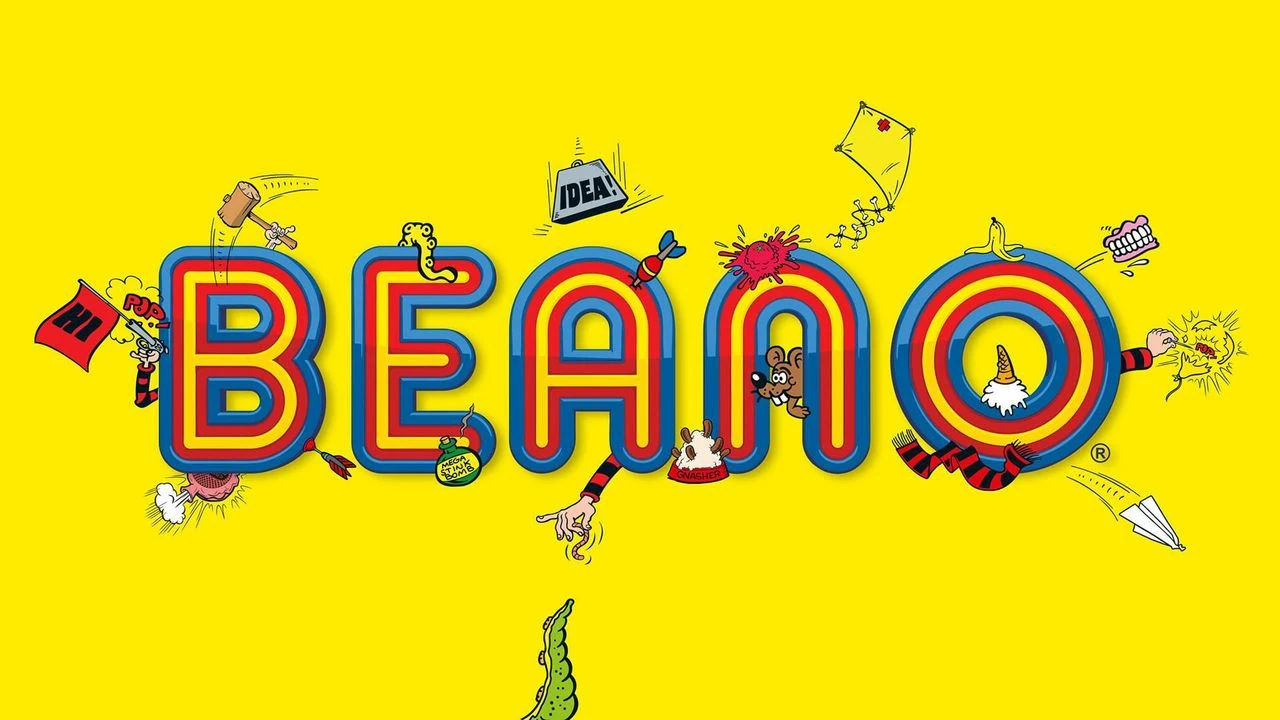
Since its first issue on 30 July 1938, The Beano has built its identity around mischievous characters, anarchic humour and a willingness to make fun of authority. Published by DC Thomson in Dundee, it has introduced generations of readers to Dennis the Menace, Minnie the Minx, the Bash Street Kids and Roger the Dodger. Its long run reflects not only the staying power of familiar characters, but also an effort to adapt stories and formats for changing audiences.
A comic from Dundee
The Beano began in Dundee, Scotland, in the years before the Second World War. Its first issue appeared on 30 July 1938 and cost twopence. The supplied account describes a comic of whimsical stories and mischievous characters, published against a backdrop of growing uncertainty. Its origins in Scotland are central to its place in British publishing: it was a Dundee comic that went on to become familiar to readers across the country.
From the outset, its appeal lay in irreverence. Rather than presenting childhood as dutiful or orderly, its characters could dodge, disrupt and challenge the rules around them. That comic rebellion is part of the title’s identity: the antics are exaggerated, while the characters remain recognisable enough for young readers to enjoy their mischief. The comic’s humour also makes use of familiar settings, including school, and authority figures who can become targets of a joke.
Dennis, Minnie and the other rule-breakers
Dennis the Menace joined The Beano in 1951 and became one of its best-known characters. His striped jumper and slingshot became familiar features, while his cheeky defiance gave the comic a recognisable emblem of childhood rebellion. The cast extends well beyond Dennis: Minnie the Minx, the Bash Street Kids and Roger the Dodger each contribute to a comic world shaped by mischief and resistance to authority.
These characters are not simply interchangeable troublemakers. Their different names and recurring comic situations give readers several routes into the same playful spirit. The supplied account describes their escapades as a combination of outrageousness and familiarity, helping explain the appeal of their exaggerated but relatable behaviour. Their stories also provide space for humour about school and authority. The source offers no specific examples of stories or evidence of their effects on readers, so those wider implications should not be overstated.
Changing with its readers
Over its run, The Beano has introduced new characters and storylines while retaining its characteristic humour. The original article describes it as one of the early comics to feature regular colour illustrations, presenting this as an important development in visual storytelling. Its history is therefore not only a matter of preserving old favourites; it also involves changes in how stories are presented and what audiences may expect.
The comic has appeared in formats beyond its issues. The supplied text refers to annuals, television adaptations and digital material, including a website and app offering comic strips and games. These provide ways to encounter its characters outside the printed comic. The source also says that the title reflects social change and that more recent characters have come from diverse backgrounds. It gives no named examples, so these claims can be noted but not developed into a detailed account of particular storylines or their effects.
Humour and satire are also part of the source’s account of the comic’s social role. Its treatment of school settings and authority figures is described as a means of commenting on social norms. That is a useful way to understand the comic’s recurring subject matter, but the supplied text does not identify particular topical issues or establish that the stories changed readers’ views. The distinction matters: a comic can invite readers to laugh at rules without evidence that it produced a specific social or educational outcome.
Reading, collecting and influence
The Beano is presented in the original article as both entertainment and an encouragement to read. Its engaging stories, visual format and recurring characters may give children an inviting introduction to comic storytelling. The source also says that prominent British writers and artists have credited the comic as an inspiration, but names none of them. That claim is therefore retained as a reported general assertion rather than expanded into examples.
The original article also describes early issues as collector’s items that can fetch significant sums at auction. It refers to an archive and museum exhibitions, without naming the institutions or particular displays. These points suggest continuing interest in the title’s history, though the available account does not provide details with which to assess that activity. Together with its changing formats and cast, they place The Beano both in the history of British comics and in continuing popular culture.
Why The Beano deserves a place in British Legacy
The Beano deserves a place in British Legacy because its story connects a specific publishing home in Dundee with a readership extending across Britain. Launched by DC Thomson in 1938, it established a recognisable comic voice through irreverence and mischief rather than solemnity. Dennis the Menace, Minnie the Minx, the Bash Street Kids and Roger the Dodger give that voice memorable forms: characters whose comic defiance has remained central to the title’s identity. Its long publication history shows the value of a distinctive style and cast that can be revisited and refreshed for new audiences.
Its legacy also lies in the different ways readers have encountered it: through issues and annuals, television adaptations and digital material. The supplied article associates the comic with encouraging children to read and inspiring writers and artists, although it offers no named examples to substantiate those broader claims. More securely, it describes a British comic combining visual storytelling, recurring characters and changing formats over many decades. That combination makes The Beano a useful part of the country’s popular-culture record, as well as a continuing source of comic entertainment.