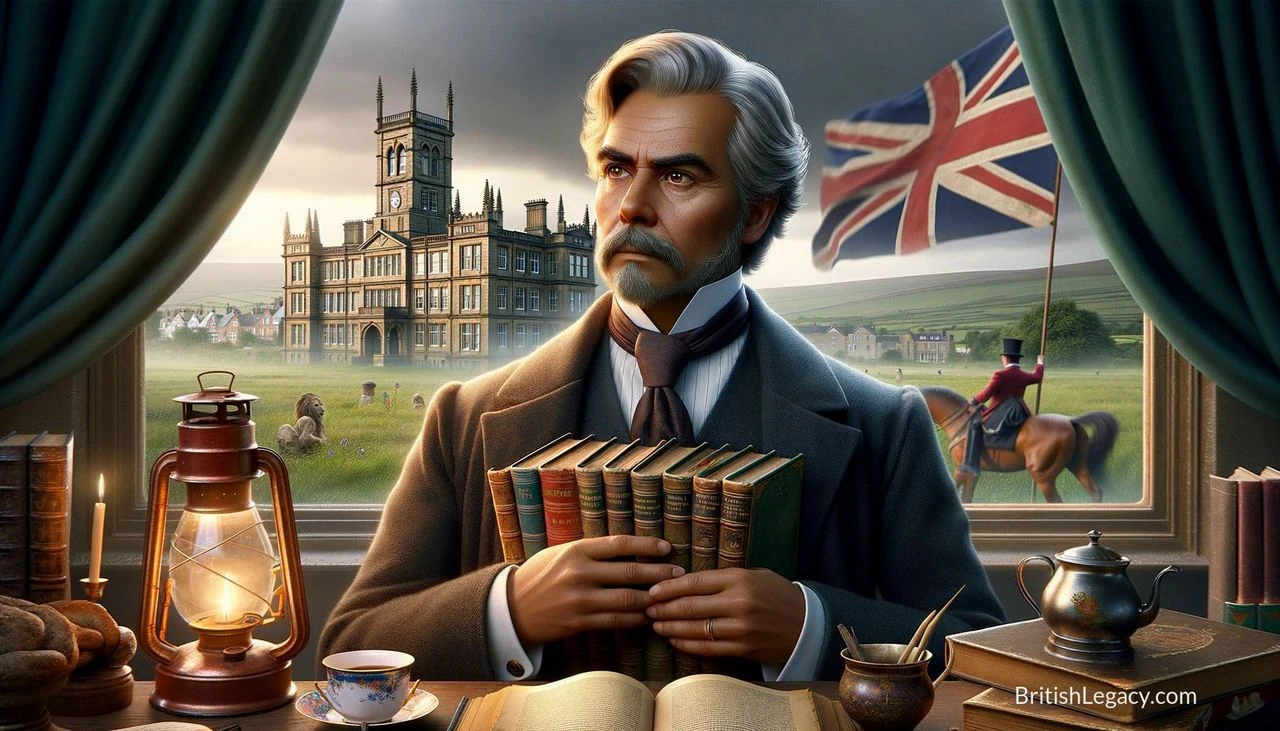
Thomas Arnold’s influence on British education rests on a consequential combination: a forceful headship at Rugby School, an insistence on religious and moral purpose, and reforms that other public schools copied. He was not the advocate of a broadly modern curriculum sometimes portrayed in simplified accounts. Arnold added history and mathematics to Rugby’s teaching but kept classical languages at its centre; he opposed the teaching of physical science. His record is more revealing for that tension than for any tidy claim that he brought the school into a new age.
From the Isle of Wight to Oxford
Arnold was born at West Cowes on the Isle of Wight on 13 June 1795. His father, William Arnold, was a Customs officer, and his mother was Martha Delafield. He attended Warminster School and Winchester College before going to Corpus Christi College, Oxford. He excelled in classics and became a fellow of Oriel College in 1815.
Before Rugby, Arnold worked as a private tutor and became headmaster of a school at Laleham. This earlier experience preceded his appointment to Rugby School in 1828. His later reputation as an educator was closely tied to his capacity to impose a distinctive religious and moral purpose on the school, as well as to the institutional changes made during his tenure.
Rugby: discipline, authority and learning
Arnold was headmaster of Rugby from 1828 to 1841. He developed the praepostor, or prefect, system, giving sixth-form pupils authority across the school under his management. The arrangement made older pupils part of the machinery of school discipline. It is more precise to describe it as a system of delegated authority than simply as older boys looking after younger ones.
His educational priorities were explicitly moral and religious. Arnold described the cure of souls as the first aim of education, moral development as the second and intellectual development as the third. He was an early supporter of the Broad Church Anglican movement, and his religious commitments shaped both his teaching and his approach to school life. He wanted pupils formed as Christians and moral citizens, not merely trained in academic subjects.
Classics remained the foundation of Rugby’s curriculum. Arnold introduced history and mathematics, and also modern languages, but his approach to languages was conservative: he doubted that boys could learn to speak French well at public school and thought grammatical study sufficient. He rejected physical science as a school subject, believing it should either take the leading place in the curriculum or be left out. That opposition complicates claims that his reforms brought modern science into Rugby. His programme changed the school, but it did not amount to a general embrace of modern subjects.
Arnold was not an enthusiast for organised sport as an educational end. Sport was permitted at Rugby as an alternative to poaching or fighting with local boys; it did not become part of the school curriculum until 1850, after his headship. Later admirers, notably Baron Pierre de Coubertin, associated Arnold with the character-forming power of athletic life in English schools. That reputation was influenced by what Coubertin read into the Rugby tradition and into Thomas Hughes’s novel, rather than being a straightforward account of Arnold’s own sporting policy.
Church reform, history and public reputation
Arnold’s religious views also brought him into controversy. He opposed the High Church party and was a decided Erastian. His Principles of Church Reform, published in 1833, is associated with the beginnings of the Broad Church movement; it was not a collection of essays setting out a comprehensive school curriculum. In 1841, after leaving Rugby, he was appointed Regius Professor of Modern History at Oxford, a post he held until his death the following year.
His historical writing included an unfinished three-volume History of Rome, published between 1838 and 1842, and Lectures on Modern History. His sermons also reached a wide readership. Arnold’s educational influence, however, travelled well beyond his own books. Former pupil Thomas Hughes made him a lasting figure in Tom Brown’s Schooldays (1857), an idealised literary portrait of Rugby life rather than a neutral record of the school. The novel helped spread an image of Arnold’s values and of the institution he led.
That public image was never fixed. Arthur Penrhyn Stanley, one of Arnold’s former pupils, published a life of him two years after his death, strengthening his reputation. Lytton Strachey later subjected Arnold to a sardonic reassessment in Eminent Victorians (1918). These differing portrayals reflect the continuing argument over what Arnold represented: religious seriousness and educational authority to some, an imposing and imperfect figure to others.
Family, death and remembrance
Arnold married Mary Penrose, and they had five sons and five daughters. Their children included the poet and schools inspector Matthew Arnold, and William Delafield Arnold, an author and colonial administrator. Family members later became notable in their own right, but Arnold’s public standing chiefly derived from his work as a schoolmaster, churchman and historian.
He had bought Fox How, near Ambleside in the Lake District, in 1832 and spent holidays there. He died suddenly at Fox How on 12 June 1842, the day before his 47th birthday. He was buried in Rugby School chapel. In 1896, a bust of Arnold was unveiled in Westminster Abbey alongside one of his son Matthew. His life and reputation have since been revisited in biographies, while the novel most closely associated with his headship has continued to shape popular ideas about the Victorian public school.
Why Thomas Arnold deserves a place in British Legacy
Arnold belongs in British Legacy because his work at Rugby became part of the history of British education beyond the school itself. As headmaster from 1828 to 1841, he altered how authority was organised by developing a prefect system that entrusted sixth-form pupils with responsibilities across the institution. He also made moral and religious formation the declared centre of his educational aims. These were not neutral administrative choices: they helped define a model of school leadership in which character, discipline and Christian belief were treated as central purposes of education.
His legacy should not be reduced to unqualified praise or to the claim that he introduced a modern curriculum. Arnold added history and mathematics, but maintained the primacy of the classics and rejected physical science as a school subject. That combination makes his influence historically specific: reform at Rugby involved both change and firm limits. His ideas and the school’s image travelled widely through Thomas Hughes’s Tom Brown’s Schooldays, while his connections to the Broad Church movement and his appointment as Regius Professor of Modern History place him in wider religious and intellectual debates. Remembering Arnold with those qualifications gives British Legacy a fuller account of how one influential schoolmaster helped shape educational ideals—and of the disagreements and contradictions within his example.
Sources
Adapted in part from Thomas Arnold by Wikipedia contributors, under CC BY-SA 4.0. Text has been edited and combined with the existing article; this adapted text is shared under the same licence. Contributor history.