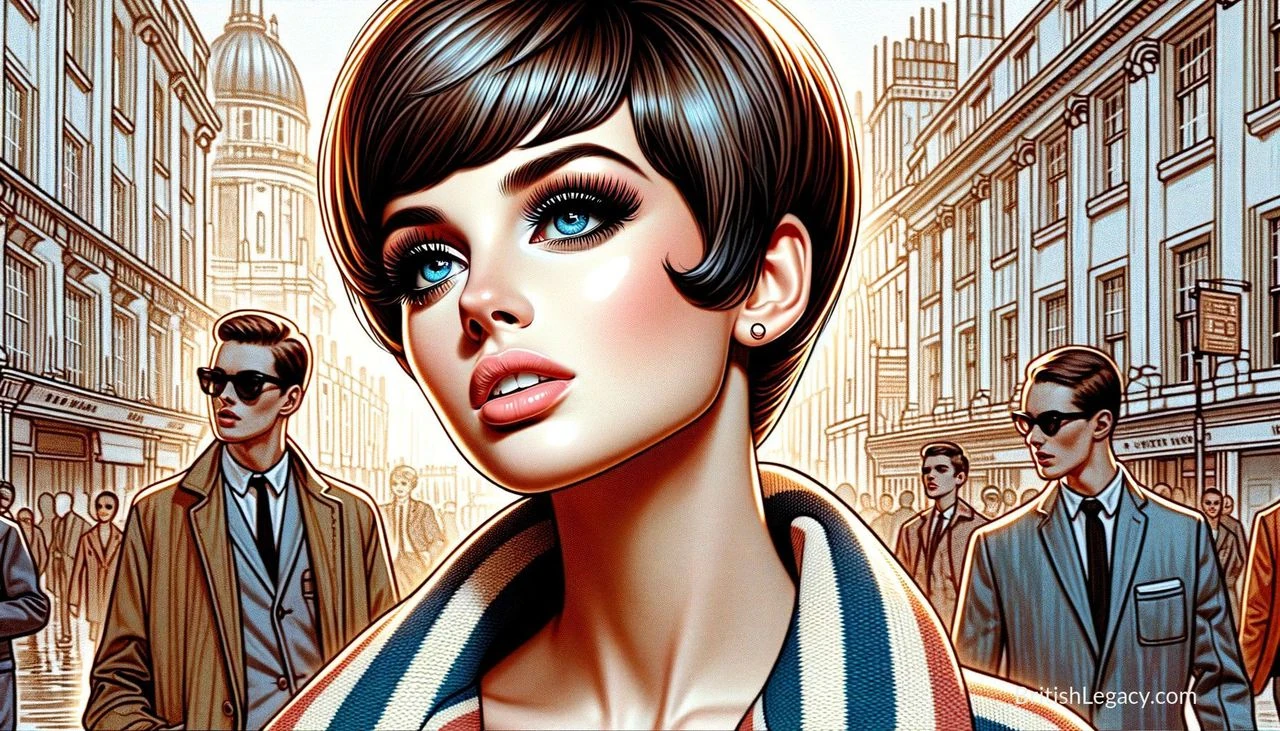
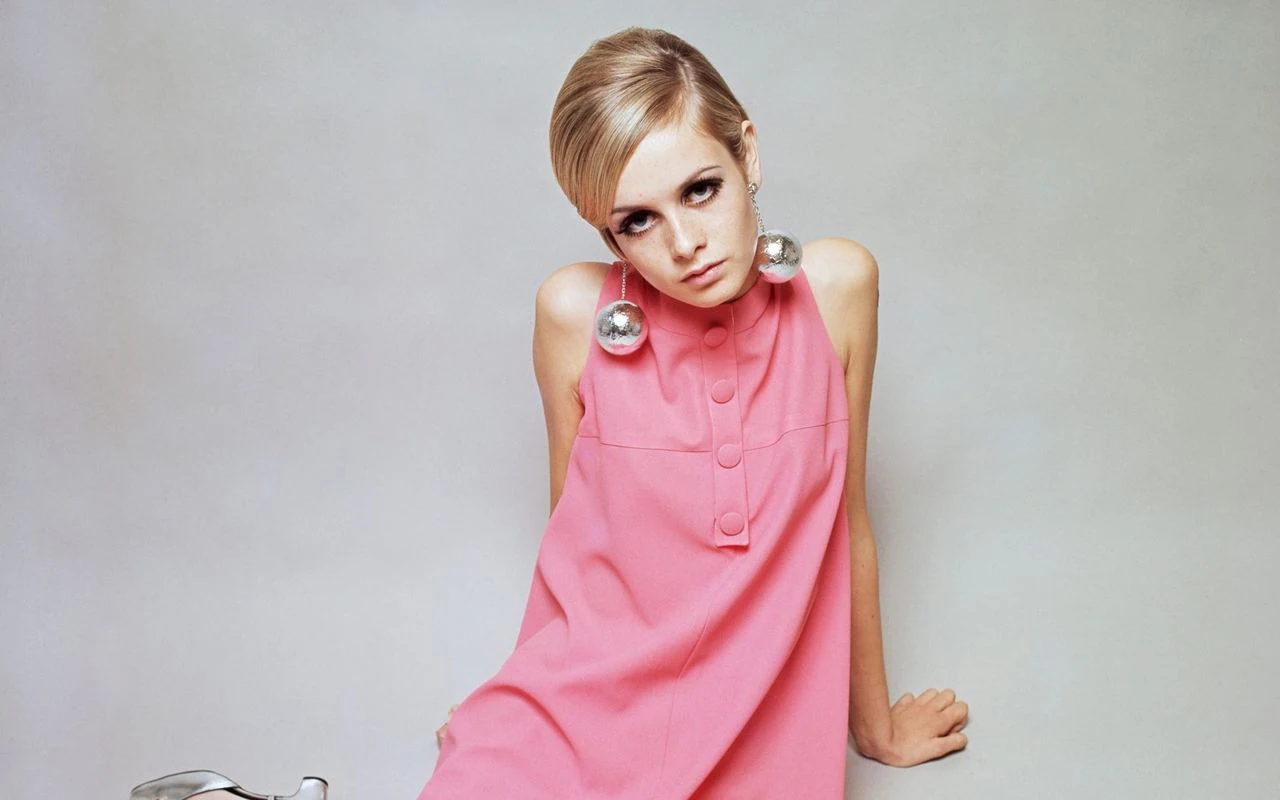
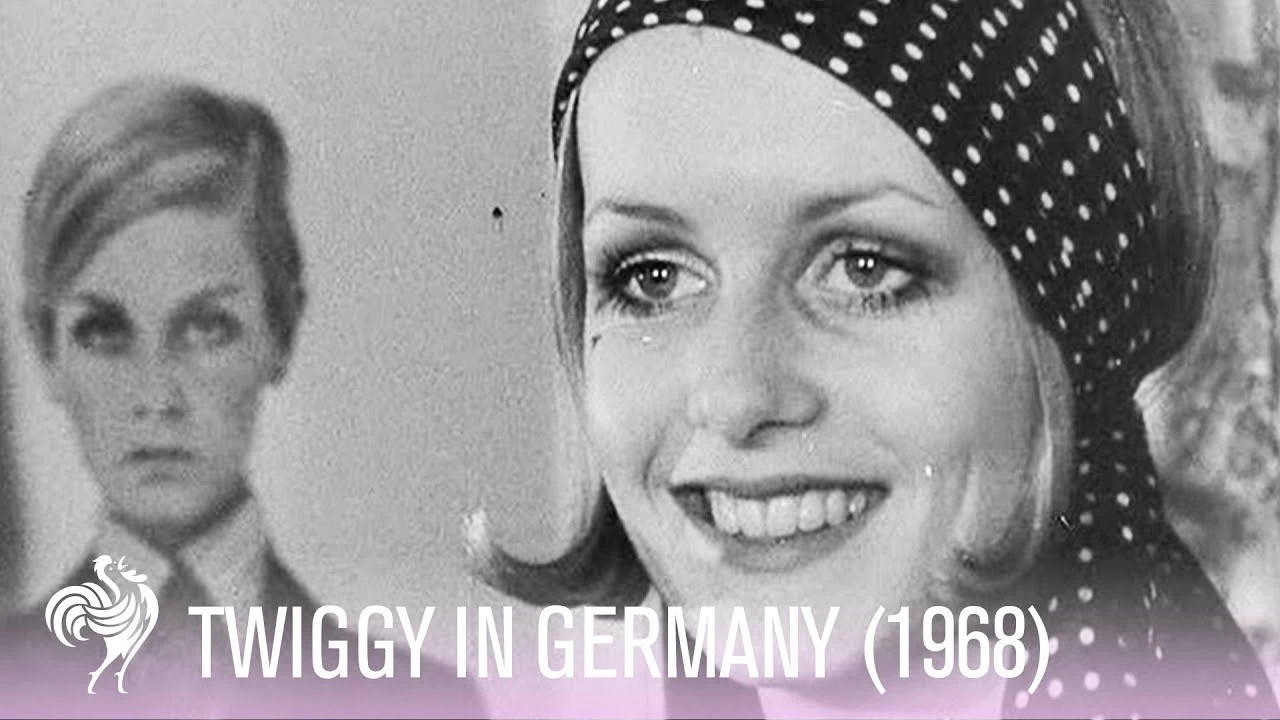
At 16, Twiggy became one of the most recognisable faces of 1960s fashion. Her short crop, large eyes and long lashes gave magazines and photographers an image that stood apart from the established ideal of the model. But her career did not end with that look. Lesley Lawson went on to act, sing and perform on stage, while later returning to fashion and television in Britain and abroad.
From Neasden to the pages of fashion magazines
Born Lesley Hornby on 19 September 1949, she grew up in Neasden, then in Middlesex, the third daughter of Nellie and William Hornby. Her mother, who worked for a printing firm, taught her to sew; Lawson used the skill to make clothes for herself. She attended Brondesbury and Kilburn High School.
In January 1966, aged 16, she had her hair coloured and cut short by Leonard of Leonard of Mayfair. The hairdresser wanted models for photographs of his new crop style. Photographer Barry Lategan took headshots, which Leonard displayed in his salon. Deirdre McSharry, a fashion journalist at the Daily Express, saw them and arranged to meet Lawson. The newspaper then featured her in an article and photographs, calling her “The Face of ’66”.
That account gives a more precise picture of how the career began than the familiar shorthand that she was simply discovered by her hairdresser boyfriend. Nigel Davies became her manager, later adopting the name Justin de Villeneuve. He encouraged the professional name Twiggy, derived from the childhood nickname “Twigs”. Lawson later described meeting him through his brother while working as a Saturday girl in a hairdressers. Their working relationship lasted several years, but the first public attention followed McSharry’s newspaper feature and the photographs made for Leonard.
Within a month of the newspaper article, Twiggy had her first Vogue shoot. Her image soon appeared in major fashion magazines, and she travelled to the United States in 1967 amid intense press attention. She modelled in France, Japan and America, and appeared on the covers of French, US and British Vogue that year. Her look combined a boyishly short haircut and a slender, androgynous appearance with strikingly dark eyelashes, achieved in part through layers of false lashes.
Fame, fashion and a divided response
Twiggy’s arrival coincided with the growing international interest in London fashion and youth culture. She became a widely reproduced image of the period, appearing in everything from fashion features to branded products. Her popularity was not universally welcomed. Critics questioned the thinness of her appearance and what it might suggest to young women; others praised her as a fresh expression of youth and a fit for emerging androgynous styles. Twiggy later said that her teenage thinness was natural to her and spoke against the trend for waif-thin models.
She was also more than a face for other people’s designs. In 1967, she introduced a line of clothes called Twiggy Dresses. After four years of modelling, she retired from the work in 1970, saying, “You can’t be a clothes hanger for your entire life!” Her remark was a clear indication that modelling, though the source of her fame, was only one part of her ambitions.
Building a career on stage and screen
Twiggy’s move into acting began with Ken Russell’s 1971 film The Devils, in which she appeared as an uncredited woman. That year she took the leading role of Polly Browne in Russell’s film of the musical The Boy Friend. The performance won her two Golden Globe Awards in 1972: New Star of the Year – Actress and Best Actress in a Musical or Comedy. The film established a second public identity for her, not as a model playing herself but as a performer taking on a leading role.
She continued to work across film, television and theatre. Her West End stage debut came in Cinderella in 1974, and she later appeared in productions including Noël Coward’s Blithe Spirit. In 1983, she made her Broadway debut in the musical My One and Only, earning a Tony nomination for Best Actress in a Musical. Her screen work included The Blues Brothers, Club Paradise and Madame Sousatzka, as well as television roles in productions such as Pygmalion and Heartbeat.
Music became another strand of her career. She recorded during the late 1960s and released the album Twiggy in 1976; it reached number 33 on the UK Albums Chart. Her single “Here I Go Again” reached the UK top 20. She returned to recording in later years, releasing Midnight Blue in 2003 and Romantically Yours in 2011. On stage and in the studio, she developed a working life that was broader than the modelling career that had first drawn public attention.
A return to fashion and public life
In 2005, Twiggy returned to modelling for a major campaign by the British department-store chain Marks & Spencer. The campaign brought her image before a new audience, and her association with the retailer continued in subsequent advertising. She also worked with its designers on an exclusive clothing collection for the M&S Woman range in 2012. Her fashion work in these years was not simply a replay of her 1960s fame: it placed her in campaigns and collections aimed at contemporary customers.
From 2005 to 2007, she was a judge on the television programme America’s Next Top Model. The role connected her earlier experience in modelling with a new television format centred on aspiring models. Other television work included co-hosting the British magazine programme This Morning in 2001. Her autobiographical books and the best-selling Twiggy in Black and White also returned to the story of the public image that had shaped her early career.
In the 2019 New Year Honours, she was appointed a Dame Commander of the Order of the British Empire for services to fashion, the arts and charity. The honour recognised a career that had moved between those fields over several decades.
Why Twiggy deserves a place in British Legacy
Twiggy belongs in British Legacy because her rise gives a specific, well-documented example of London fashion and popular media reaching an international audience. In 1966, photographs made for a hairdresser’s new crop haircut were seen by a Daily Express journalist, whose feature introduced the teenage model to a much larger public. Vogue shoots and international assignments followed. Her short hair, dramatic lashes and androgynous look became closely associated with the decade, while the sharply mixed response to her thin appearance shows that her image also provoked debate about the bodies and ideals fashion presented.
Her British connection is not confined to the image of the 1960s. Twiggy moved from modelling into British film, television and theatre, then took her stage work to Broadway and her music into the UK charts. Her later modelling for Marks & Spencer brought her back to a major British retailer, while her work as a judge on America’s Next Top Model carried her experience into a new generation of fashion television. These are distinct achievements rather than a single, unchanging claim to fame. Together, they show how a British model could become an international cultural figure and then build a varied working life beyond the image that first made her famous.
Sources
Twiggy — Wikipedia revision 1378673550
Adapted in part from Twiggy by Wikipedia contributors, under CC BY-SA 4.0. Text has been edited and combined with the existing article; this adapted text is shared under the same licence. Contributor history.