Paul Smith’s fashion career began not with a grand launch but with a small shop in Nottingham, open only on Fridays and Saturdays. From that modest base, he developed an international fashion house while keeping a recognisable point of view: clothes grounded in classic forms, enlivened by colour, pattern and unexpected detail. His route into design was unconventional, shaped by an early ambition to race bicycles, a serious accident and the people he met during his recovery.
From Beeston to Byard Lane
Paul Brierley Smith was born in Beeston, Nottinghamshire, on 5 July 1946, the youngest of three children. He left school at 15 without qualifications and began work in a Nottingham clothing warehouse. His father was a textile and clothing retailer. Smith had hoped to become a professional cyclist, and the sport remained an influence on his work throughout his life.
At 17, a serious accident kept him in hospital for more than three months. During his recovery, he made friends at a local art school and encountered graphic art and fashion design. He moved on from warehouse work to become store manager for a Nottingham clothing and fashion start-up owned by one of those friends. He held the job for six years.
At 21, Smith married Pauline Denyer, a teacher at the art school who had trained as a fashion designer at the Royal College of Art. She contributed to the creation of many of the articles sold by the business where Smith worked. He later took tailoring classes and worked with the Savile Row tailor Lincroft Kilgour, developing his knowledge of clothing through practice as well as study.
In 1970, Smith opened his first shop, Paul Smith Vêtements Pour Homme, at 6 Byard Lane in Nottingham. The space measured just 12 feet by 12 feet. It sold established labels alongside Smith’s own designs, and opened on Fridays and Saturdays; during the rest of the week, he took freelance work in Nottingham and London. He also worked as a buyer for the London shop Browns.
Classic clothes, unexpected detail
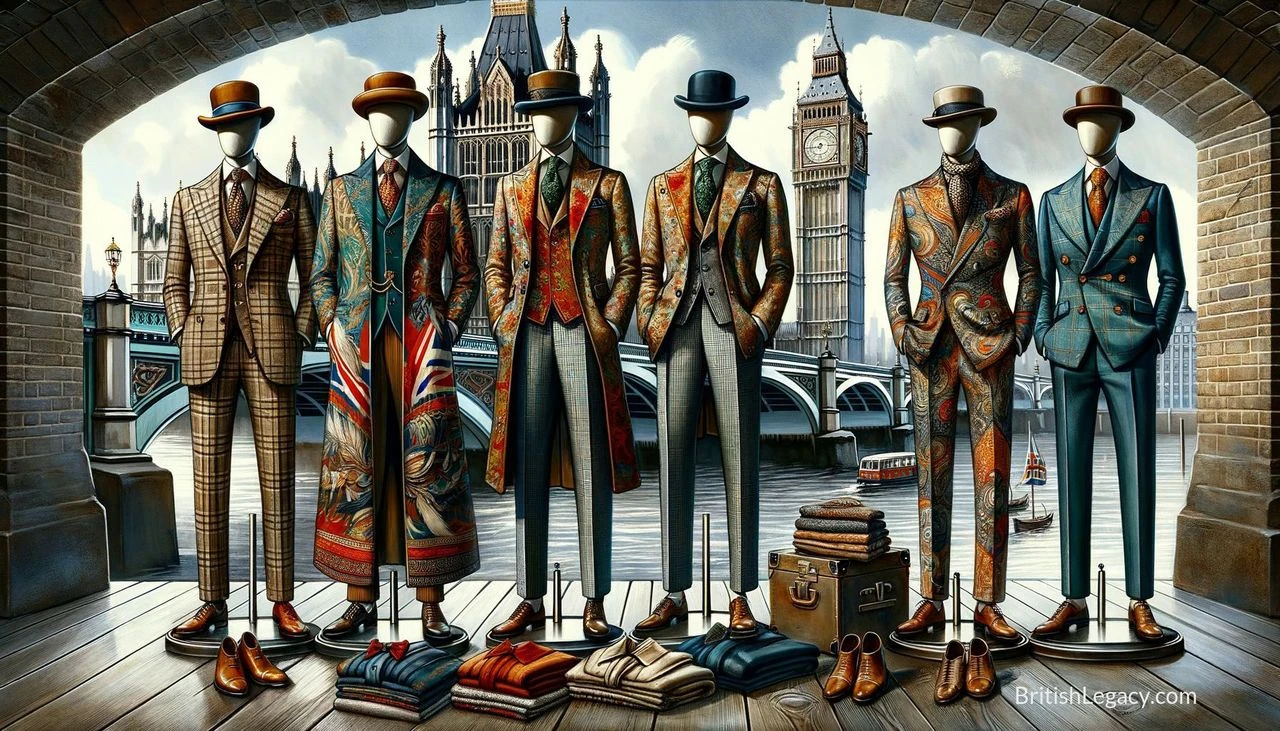
Smith’s phrase for his approach is “classic with a twist”. The foundation is familiar tailoring and established clothing forms; the twist comes through colour, pattern and an altered detail. Multicoloured stripes and pinstripes became among his best-known signatures. Rather than treating tradition as something to reproduce unchanged, he used it as a starting point for clothes with a more individual character.
That combination helped the brand move between formal and casual clothing. In 1976 Smith presented his first menswear collection in Paris, bringing together casual and semi-formal pieces. Three years later, he opened a flagship London shop on Floral Street in Covent Garden. The growing business remained rooted in the independent shop and the designer’s own collections, even as it reached new markets.
The range widened over the following decades. Smith introduced a one-off boys’ collection in 1990; it developed into the seasonal Paul Smith Junior line in 2010. In 1993, he launched Paul Smith Women after female customers had been buying smaller sizes of his menswear. That year he also acquired the workwear label R. Newbold, founded in 1885, and incorporated its styles into his collections.
A Nottingham business goes international
The company began expanding abroad in the 1980s, opening its first Japanese shop in Tokyo in 1984 and a New York shop on Fifth Avenue in 1987. Online sales followed with the launch of the brand’s e-commerce site in 2004. The business also developed beyond clothing into accessories, footwear and eyewear, with physical shops and online sales serving customers around the world.
As of November 2025, the brand said it had 130 shops in more than 60 countries. That figure differs from an older description of more than 300 shops in over 70 countries; the later account gives the current reported scale. In 2006, Japanese trading company Itochu bought a 40 per cent stake, while Smith retained majority ownership.
Smith’s work has also crossed into transport and product design. He designed a limited-edition Mini in 1997, returning to the marque in 2021 with work on the Mini Electric and the Mini Strip, projects that used recycled and natural materials to demonstrate approaches to sustainable design. Other collaborations have included bicycles with Mercian Cycles, lamps with Anglepoise, cycle clothing with Rapha and a redesign of the Lasonic i931 boombox. These projects extended his visual language into objects beyond the wardrobe.
Design in public life
Some collaborations connected Smith’s work with sport and popular culture. He designed a jersey for the 2007 Tour de France start in London, suits for Manchester United in 2009 and the leader’s jersey for the 2013 Giro d’Italia, including its Maglia Rosa. His cycling interest also found an outlet in books: You Can Find Inspiration in Everything appeared in 2001, followed in 2016 by Paul Smith’s Cycling Scrapbook.
His design work has reached print, film and music as well. In 2005, he redesigned the cover of D. H. Lawrence’s Lady Chatterley’s Lover for the 60th anniversary of Penguin Classics. He created the official T-shirt for David Bowie’s album The Next Day in 2013 and collaborated on designs for Bowie’s final album, Blackstar, in 2015. Smith also designed the suits worn in the 2019 film Men in Black: International, in which he made a cameo appearance.
Recognition has come from design institutions, the fashion industry and his home city. He became a Royal Designer for Industry in 1991 and was appointed a CBE in the 1994 New Year Honours for services to fashion. He was knighted in 2000 and appointed to the Order of the Companions of Honour in 2020, again for services to fashion. Nottingham made him an honorary freeman in 1997. In October 2024, Nottingham Express Transit named tram number 230 after him.
Keeping the work in view
The Design Museum’s 1995 exhibition, True Brit, marked 25 years of Smith’s business. It later travelled to Glasgow and Nottingham, where it was shown at Nottingham Castle. The exhibition placed his work in a wider design context while bringing the story back to the city where the first shop had opened.
Paul Smith’s Foundation in Nottingham maintains the designer’s archives. The collection includes garments and accessories, press cuttings, look-books, swatch books and objects associated with collaborations, alongside his collection of magazines, books and other objects. Such material offers a record not only of finished clothes but of the references and exchanges behind a long-running design practice.
Smith has also worked in publishing with illustrator Sam Usher, creating children’s books about animals, travel and the pursuit of inspiration. Their first, The Adventures of Moose & Mr Brown, appeared in 2019, followed by The Young Designers: The Adventures of Moose & Mr Brown in 2022. The books sit alongside his design work as another way of sharing ideas about observation and creativity.
Why Paul Smith deserves a place in British Legacy
Paul Smith deserves a place in British Legacy because his career gives a specific account of how British fashion can draw on tradition without being confined by it. The starting point was a small Nottingham shop, not an established fashion house. From there, Smith built collections around recognisable clothing forms and gave them a distinct identity through colour, stripes and unexpected combinations. His route—from warehouse work and shop management to tailoring classes and international collections—also shows a practical, gradual development of design expertise rather than a single moment of arrival.
His influence is visible in the breadth of work attached to the name: menswear and womenswear, children’s clothing, books, transport and product collaborations, and designs for major sporting events. The Nottingham foundation’s archive preserves garments, working references and records of those collaborations, helping keep this material available as part of the city’s design history. Honours for services to fashion, together with local recognition in Nottingham, reflect both national standing and a continuing connection to the place where the business began. Smith’s legacy is not simply that a British label travelled widely; it is that a clear design sensibility, formed in Nottingham and developed across many kinds of work, remained legible as the company grew.
Sources
Paul Smith (fashion designer), revision 1379171627 · Paul Smith (fashion designer)
Adapted in part from Paul Smith (fashion designer) by Wikipedia contributors, under CC BY-SA 4.0. Text has been edited and combined with the existing article; this adapted text is shared under the same licence. Contributor history.