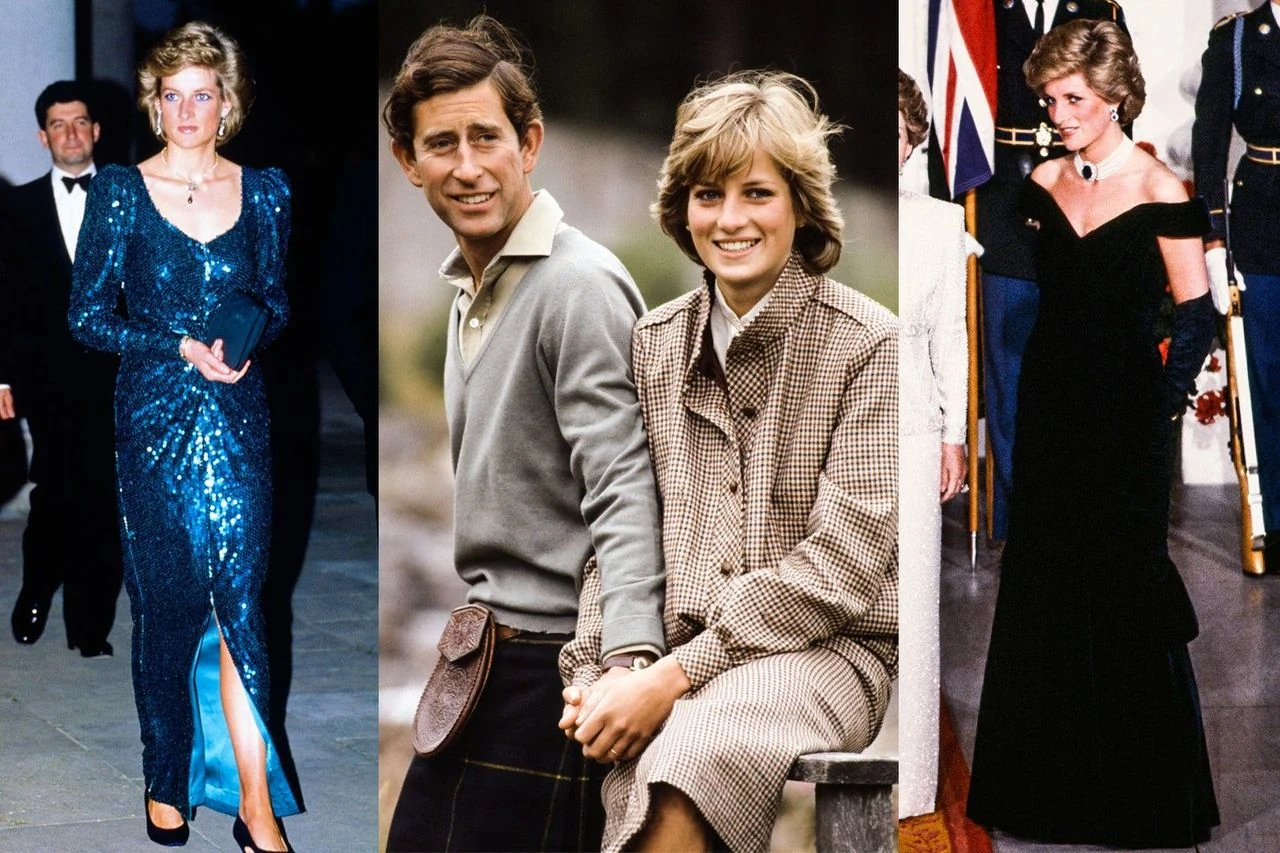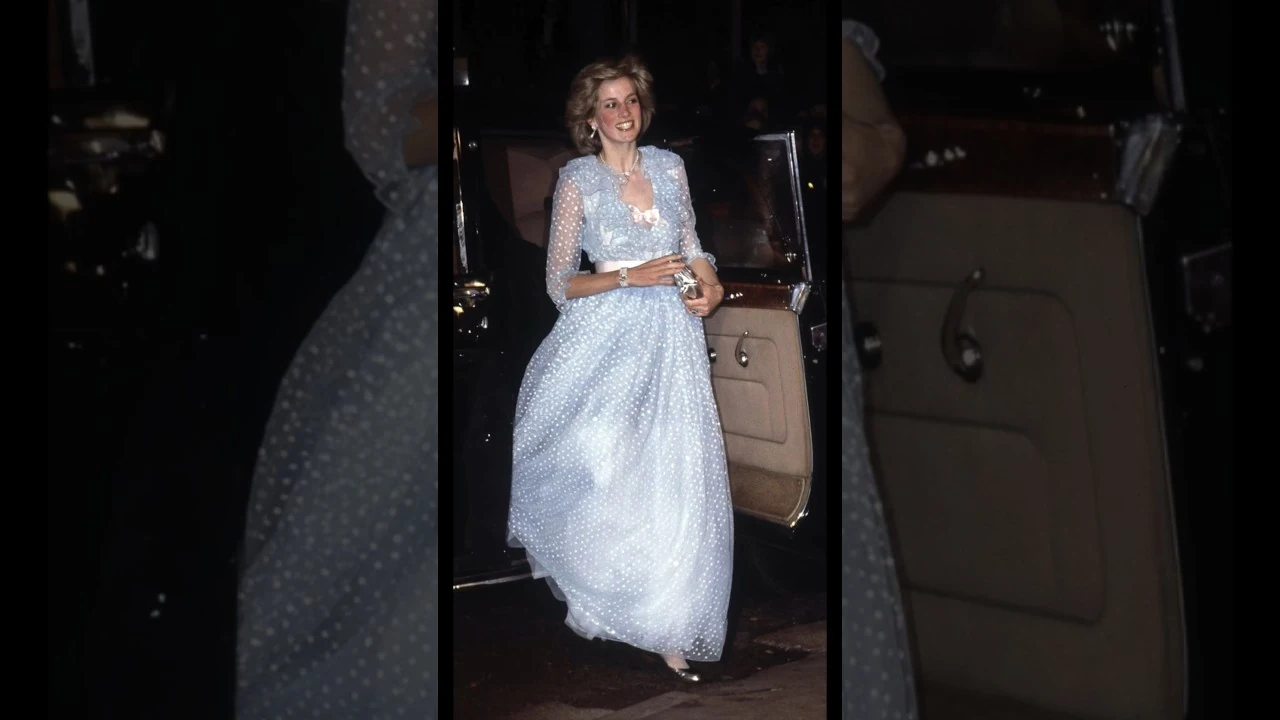
Princess Diana’s public image brought fashion and charitable work into close view. Clothes she wore attracted attention and were emulated; her public profile was also associated with causes including landmine removal, HIV/AIDS awareness and homelessness. Her story is not only one of style: it shows how clothing and public visibility became part of a wider public life.
A wedding dress in the public eye
When Lady Diana Spencer married Prince Charles in 1981, her wedding gown drew attention around the world. Designed by David and Elizabeth Emanuel, it was made of silk taffeta and antique lace and had a 25-foot train. Its scale made it a defining public image of the wedding, and the gown connected Diana’s emerging fashion profile with British designers and dressmaking.
In her early years as a princess, Diana wore coordinated ensembles, vibrant colours and bold accessories associated with the 1980s. Her clothing ranged from romantic, ruffled dresses to more accessible styles. In the 1990s, her look shifted towards sleeker silhouettes. The changing wardrobe kept her appearance in public discussion across formal and less formal settings.
Style as a public language
The phrase “Diana Effect” has been used to describe the attention her clothes attracted, including the rapid demand for garments she wore. Women around the world emulated her tailored suits, casual outfits and evening gowns. Her public image joined high fashion with looks that audiences could seek to reproduce; that combination made her clothing a conspicuous part of her profile.
One of her most recognised outfits was a black, off-the-shoulder dress by Christina Stambolian, worn to the Serpentine Gallery summer party in 1994 and widely known as the “revenge dress”. The label ties the outfit to personal circumstances, but its design and the public attention it received are the clear elements of its fashion legacy.
Diana also wore pieces associated with countries she visited, and her clothing was described as a way of highlighting international designers. Fashion could therefore accompany her public appearances as well as express personal style. The record of her wardrobe presents this as part of her public image, without needing to assign a specific motive to every choice.
Fashion alongside charitable work
Diana’s public profile was also associated with landmine removal, HIV/AIDS awareness and homelessness. These causes broaden the picture beyond clothing: her prominence brought attention to humanitarian concerns as well as to the outfits that became widely discussed.
The Diana, Princess of Wales Memorial Fund was established in her honour to support charitable work. Its creation connected her name with philanthropy, alongside the public memory of her style. The fund and the causes associated with Diana’s advocacy form part of the charitable dimension of her legacy.
Why Princess Diana deserves a place in British Legacy
Diana’s place in British Legacy rests on a distinctive combination of public fashion and humanitarian visibility. The wedding gown designed by David and Elizabeth Emanuel made British designers central to an image watched around the world. Her later wardrobe—from the vivid, coordinated looks of the 1980s to the sleeker styles of the 1990s—gave her a recognisable presence across changing fashions. The “Diana Effect” captures how her clothes could prompt widespread attention and imitation, making fashion a significant part of her public life.
That account is fuller when set beside her association with landmine removal, HIV/AIDS awareness and homelessness. Diana’s public profile helped bring those causes into view, while the memorial fund established in her honour linked her name to charitable work. Remembering both strands avoids reducing her to a style icon or treating fashion as her only legacy. Her British connection is specific: a public figure whose wedding gown showcased the work of British designers and whose charitable profile became part of the country’s public memory.