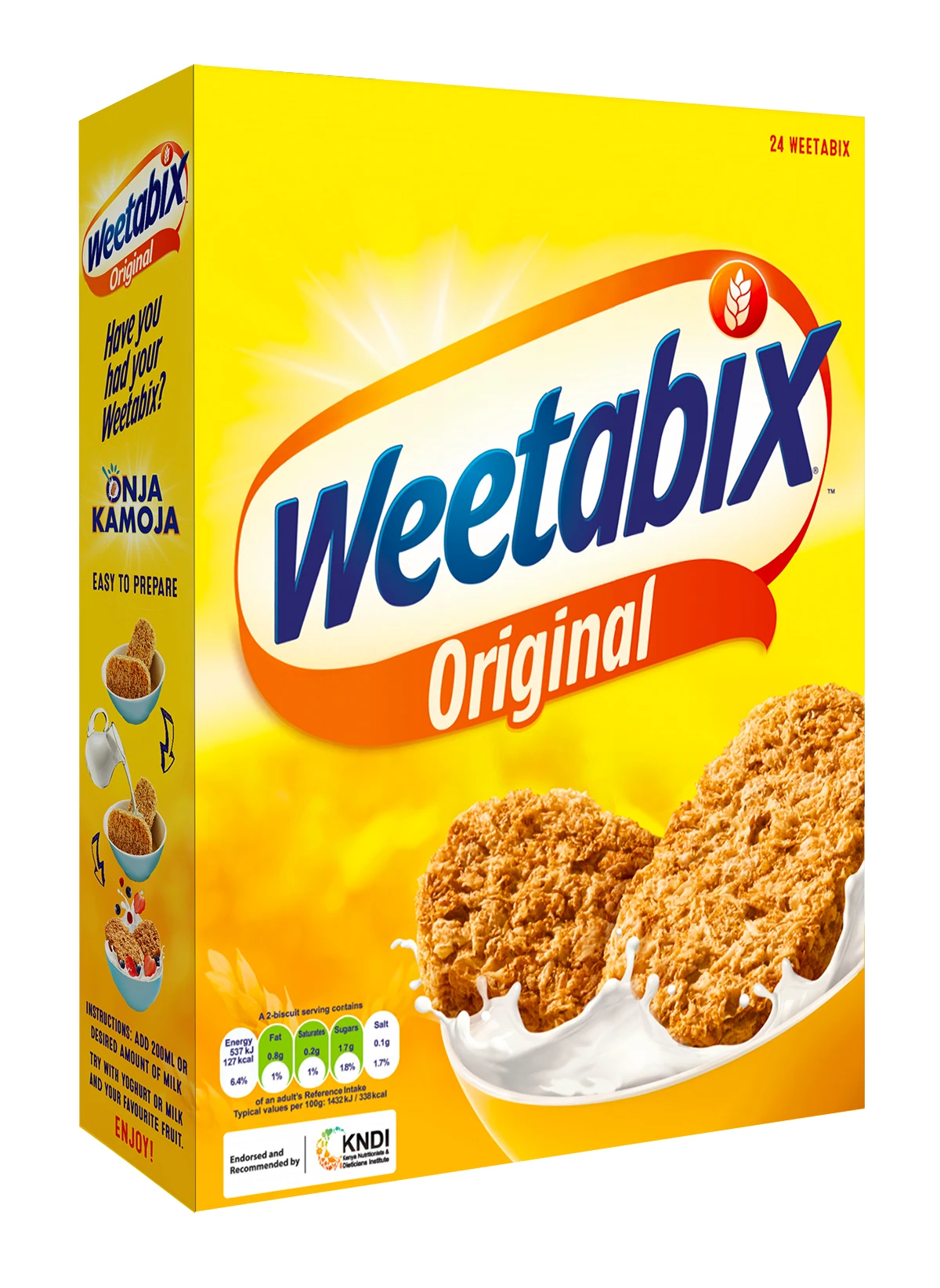
Weetabix began not as a wholly British invention but as a British reinvention of an Australian cereal. Its wheat biscuits have been produced in England since 1932, when Bennison Osborne and Malcolm Macfarlane developed a new product from the earlier Weet-Bix. Made in Burton Latimer, Northamptonshire, the cereal went on to become a recognisable presence in British kitchens, supported by memorable advertising and a product range that has changed over time.
From Weet-Bix to Weetabix
The story starts in Australia in the mid-1920s. Osborne, an Australian, invented Weet-Bix, which was introduced there by Grain Products Limited. Arthur Shannon provided funding, while Macfarlane, a New Zealander, helped with marketing. After Grain Products sold its Australian company in 1928 and its New Zealand company in 1930, Osborne and Macfarlane went to South Africa. Shannon funded another Weet-Bix factory there.
Osborne modified the recipe. With Macfarlane, he obtained private funding and developed a new company, the British and African Cereal Company Limited, naming its product Weetabix. The business began in England in 1932, using an unused gristmill at Burton Latimer, near Kettering. The company took the name Weetabix Limited in 1936. That chronology gives the brand’s British connection a concrete basis: an adapted product, an English production site and a company established to make and sell it.
Today, the UK cereal is made from whole-grain wheat and formed into palm-sized biscuits. A two-biscuit serving, weighing 37.5g, contains 3.8g of fibre. The cereal is manufactured at Burton Latimer and exported to more than 80 countries. The North American product has a separate production history: Weetabix Limited began exporting it to Canada in 1967 and to the United States in 1968; cereal for those markets is now made in Cobourg, Ontario.
A changing range, a familiar biscuit
The original wheat biscuit remains at the centre of the brand, but the range has expanded beyond it. Organic versions and Weetabix Crispy Minis offer alternatives to the standard biscuit. Crispy Minis are sweeter, bite-sized pieces, and their names have changed over the years: varieties were once sold as Frutibix, Bananabix and Chocobix, then as Minibix, before the Weetabix Minis name.
Other variations have included a chocolate-powder version, launched in the UK in 2010, Chocolate Spoonsize with cocoa and chocolate chips, a golden-syrup-baked version and banana-flavoured Weetabix. In 2016, the company introduced Weetabix Protein, made with added wheat-gluten protein granules. It was sold in the familiar biscuit shape as well as in regular and chocolate-flavoured Crunch forms. The brand also developed Oatibix, an oat-based breakfast cereal introduced in the UK in 2006. These products extend the original idea into different ingredients, flavours and formats without changing the central role of the wheat biscuit in the brand’s identity.
Advertising that made the name familiar
Weetabix’s advertising has helped make the product recognisable well beyond the cereal packet. In British campaigns during the 1980s, the biscuits were personified as streetwise young teenagers, initially styled as skinheads. The characters appeared on packaging and in publicity, and the lead character, Dunk, was voiced by Bob Hoskins.
In the 1990s, the slogan “Have you had your Weetabix?” became the basis for a different kind of campaign. Its comic premise was that eating Weetabix gave a person such strength and energy that opponents would retreat. Advertisements played out that idea through humorous reimaginings of fairy tales and historical events. The campaign returned in 2017 with a version of Jack and the Beanstalk: when the giant threatens Jack, Jack replies that he has just had his Weetabix, and the giant leaves.
The brand’s public profile has also reached beyond television and packaging. Weetabix sponsored the Women’s British Open golf tournament from 1987 to 2006; the championship became a women’s major in 2001. Sponsorship gave the name a sustained place in British sport over two decades, while advertising kept it in everyday conversation.
Ownership and an international business
The company’s history also reflects changes in ownership. Bright Food announced in May 2012 that it would take a 60 per cent stake in Weetabix in a deal valuing the company at £1.2 billion. Baring Private Equity Asia acquired the remaining 40 per cent from Lion Capital in 2015. In April 2017, American company Post Holdings announced that it would buy Weetabix from Bright Food. The cereal’s British manufacturing base and its ownership have therefore followed different paths: it remains made in Northamptonshire, while the company has formed part of successive international transactions.
That distinction matters to the brand’s story. Weetabix’s British character is not simply a claim about ownership or origin. The company’s English production began in 1932, its factory remains in Burton Latimer, and its advertising and sponsorship have been closely visible in British public life. At the same time, the product’s beginnings lie in a wider history of food development across Australia, New Zealand and South Africa. The result is a brand whose identity has been shaped by both an international lineage and a long-established place in Britain.
Why Weetabix deserves a place in British Legacy
Weetabix deserves a place in British Legacy because its story shows how a product can acquire a lasting British identity without having an exclusively British origin. The cereal grew out of Weet-Bix, developed in Australia, and took shape through Osborne and Macfarlane’s work on a modified recipe and a new company. Its English chapter began in 1932 at an unused gristmill in Burton Latimer. Production there gave the brand a specific and enduring connection to Northamptonshire, while the company’s later name, Weetabix Limited, and its expanding markets carried that local manufacturing story further afield.
The brand also became part of British life through the ways people encountered it: as a whole-grain wheat biscuit at breakfast, as a cast of animated characters in 1980s advertising, and through the “Have you had your Weetabix?” campaigns that made strength and energy a joke with a familiar punchline. Its long sponsorship of the Women’s British Open connected the name with a major sporting event. These details make Weetabix more than a claim about national heritage: they show how manufacturing, marketing and everyday use can combine to make a product culturally recognisable. Its history offers a grounded example of British food production within an international business, rooted in one English town and known far beyond it.
Sources
Weetabix — Wikipedia revision 1375368213 · Weetabix — Wikipedia
Adapted in part from Weetabix by Wikipedia contributors, under CC BY-SA 4.0. Text has been edited and combined with the existing article; this adapted text is shared under the same licence. Contributor history.