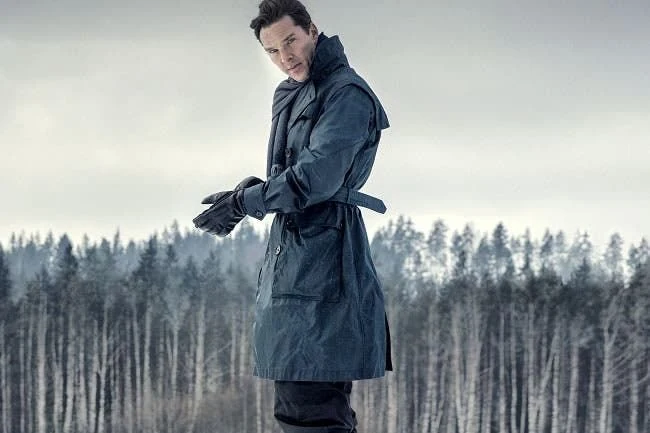
Benedict Cumberbatch’s career has moved between Shakespearean stages, British television and international cinema. He first gained wide recognition as Sherlock Holmes in the BBC series Sherlock, but the role was one part of a body of work that also includes Stephen Hawking, Alan Turing, Hamlet and Doctor Strange. His training in classical acting and sustained work with British theatre institutions have accompanied a screen career with a global audience.
School drama and classical training
Cumberbatch was born in Hammersmith, London, on 19 July 1976, to actors Timothy Carlton and Wanda Ventham. He grew up in Kensington and Chelsea and attended Brambletye, a preparatory school in West Sussex, before studying at Harrow as an arts scholar. There he joined the Rattigan Society, Harrow’s dramatic arts club, and appeared in Shakespeare productions. At 12, he played Titania in A Midsummer Night’s Dream; he later took the lead in a school production of Bernard Shaw’s Pygmalion.
After leaving Harrow, Cumberbatch spent a gap year teaching English at a monastery in Darjeeling, India. He then studied drama at the Victoria University of Manchester and continued his actor training at the London Academy of Music and Dramatic Art (LAMDA), graduating with a master’s degree in classical acting. In 2018, he became LAMDA’s president, succeeding Timothy West.
Building a stage career
Cumberbatch’s early professional work included roles in classical theatre. In 2005, he made his West End debut as George Tesman in Hedda Gabler, first at the Almeida Theatre and then at the Duke of York’s Theatre. The performance brought him an Olivier Award nomination for best supporting actor.
At the Royal National Theatre, he played David Scott-Fowler in Terence Rattigan’s After the Dance in 2010. The production won four Olivier Awards, including best revival. The following year, in Danny Boyle’s production of Mary Shelley’s Frankenstein, Cumberbatch alternated between the roles of Victor Frankenstein and his Creature, opposite Jonny Lee Miller. The production was also broadcast to cinemas through National Theatre Live. For his performance, Cumberbatch received the Olivier Award for best actor, alongside Evening Standard and Critics’ Circle theatre awards.
He returned to the stage in 2015 as Hamlet at London’s Barbican Theatre, in a production directed by Lyndsey Turner. The run was broadcast internationally by satellite, extending the reach of a major London theatre production beyond its auditorium. His theatre work has remained closely connected to Shakespeare and other classic writing, while television and film have taken him into a wider range of roles.
Television: Hawking and Sherlock
Before his best-known television roles, Cumberbatch appeared in dramas including Tipping the Velvet, Cambridge Spies and Small Island. His portrayal of Stephen Hawking in the 2004 television film Hawking brought an early BAFTA Television Award nomination for best actor and a Golden Nymph award for performance in a television film. The role introduced his work to a broad television audience and began a connection with Hawking that continued when he later provided the scientist’s voice for a television series.
In 2010, Cumberbatch began playing Sherlock Holmes in the BBC series Sherlock, created by Steven Moffat and Mark Gatiss. Its contemporary setting placed Arthur Conan Doyle’s detective in modern London. Cumberbatch’s fast, exacting portrayal made the character’s intelligence and social distance central to the drama. The series brought him international recognition and an Emmy Award for outstanding lead actor for the episode “His Last Vow”.
Other television work has included Parade’s End, an adaptation of Ford Madox Ford’s novels, and the title role in Patrick Melrose, based on the books by Edward St Aubyn. For the latter, he won the BAFTA Television Award for best actor. He also played Richard III in the BBC series The Hollow Crown, bringing a figure from English history and Shakespearean drama to the screen.
Film roles and international reach
Cumberbatch’s film career has encompassed historical drama, literary adaptations and franchise films. He played William Pitt the Younger in Amazing Grace, appeared in Atonement and Tinker Tailor Soldier Spy, and took roles in 12 Years a Slave and Star Trek Into Darkness. In Peter Jackson’s The Hobbit films, he supplied the voice and motion capture for the dragon Smaug and the Necromancer.
In The Imitation Game (2014), Cumberbatch played British cryptographer Alan Turing. The performance earned him nominations including the Academy Award for best actor. Turing’s story brought a significant British historical figure to an international cinema audience, though the film is a dramatisation rather than a substitute for the history itself.
His roles in large-scale productions have included Doctor Stephen Strange in the Marvel Cinematic Universe, beginning with Doctor Strange in 2016. He returned to the character in several subsequent films, including Avengers: Infinity War, Avengers: Endgame and Doctor Strange in the Multiverse of Madness. Other prominent screen performances include Thomas Edison in The Current War, a British colonel in 1917, and the rancher Phil Burbank in Jane Campion’s The Power of the Dog. For the last of these, he received an Academy Award nomination for best actor.
Cumberbatch has also worked in radio, narration and voice performance. On BBC Radio 4, he played Captain Martin Crieff in the sitcom Cabin Pressure and Young Rumpole in adaptations of John Mortimer’s work. His narration has included documentaries and audiobooks, while his voice and performance-capture work has taken him from Smaug to animated characters. These projects reflect a career not limited to on-camera acting.
Recognition and work beyond acting
Cumberbatch was appointed a Commander of the Order of the British Empire (CBE) in the 2015 Birthday Honours for services to the performing arts and charity. His awards also include a Laurence Olivier Award, a Primetime Emmy Award and a BAFTA Television Award. In 2016, he became a visiting fellow at Lady Margaret Hall, Oxford.
His charitable activity has included support for organisations working with disadvantaged young people through the arts, and work with the Motor Neurone Disease Association, for which he became a patron in 2015. He has also campaigned for refugee support. During the run of Hamlet at the Barbican in 2015, he appealed to audiences to donate to Save the Children’s work with Syrian refugees; the appeal raised more than £150,000 by the end of the run.
In 2013, Cumberbatch and colleagues launched the production company SunnyMarch. Its first project was the short film Little Favour, made with crowdfunding. The company’s work adds a producing dimension to a career better known for performance, while its initial project illustrates a comparatively small-scale route from idea to screen alongside his roles in large productions.
Why Benedict Cumberbatch deserves a place in British Legacy
Cumberbatch’s place in British Legacy rests on the range of work he has undertaken within British theatre and broadcasting, and on the way that work has travelled. His performances at the National Theatre, in Frankenstein and Hamlet, connect a contemporary career to Britain’s continuing stage traditions. The cinema broadcast of Frankenstein and the satellite transmission of Hamlet also show how theatre institutions can reach audiences beyond their venues. On television, Sherlock gave a new setting and voice to a character created by Arthur Conan Doyle, while his portrayal of Stephen Hawking and later of Alan Turing brought the lives of British figures to audiences around the world.
His significance is not simply a matter of a familiar face in successful productions. Cumberbatch has worked across theatre, television, film, radio and narration, and has taken on roles from Shakespearean characters to contemporary screen heroes. His CBE recognises services to the performing arts and charity; his activity for organisations supporting young people and refugees gives that public profile a civic dimension. Together, these strands make his career a useful example of how British acting training and cultural institutions can feed into international popular entertainment without severing their connection to the stage. His legacy is still being made, but its established record already spans both the discipline of classical performance and the wide reach of modern screen storytelling.
Sources
Benedict Cumberbatch (revision 1379334467)
Adapted in part from Benedict Cumberbatch by Wikipedia contributors, under CC BY-SA 4.0. Text has been edited and combined with the existing article; this adapted text is shared under the same licence. Contributor history.