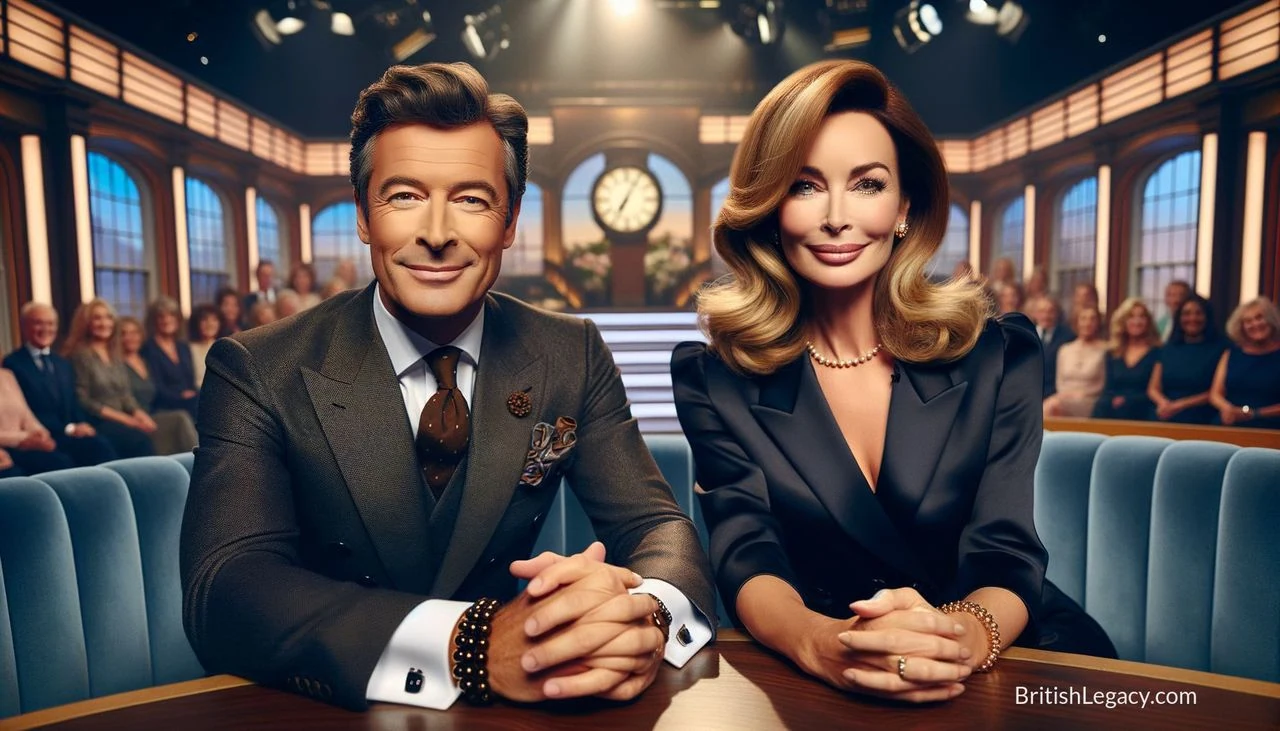
Richard Madeley and Judy Finnigan’s joint television career took them from Granada Television to two familiar daytime formats: ITV’s This Morning and Channel 4’s Richard & Judy. They hosted the former from its launch in 1988 until 2001, then presented their own chat show from 2001. Its weekly Book Club, centred on new and emerging writers, became one of their most distinctive features. Their story also includes a move to digital television and a public apology over a quiz phone scam, episodes that give a fuller account of the opportunities and difficulties of a long broadcasting partnership.
Separate beginnings at Granada
Madeley and Finnigan met in 1982 while working on separate programmes for Granada Television. They were both married to other people. After divorcing their previous spouses, they began a relationship and married in Manchester in 1986. Their children, Jack Christopher and Chloe Susannah, were born in Manchester in 1986 and 1987 respectively.
Their meeting at Granada preceded a professional partnership that would become familiar to viewers around the country. In 1988, they were chosen as the first hosts of This Morning, a new ITV programme based initially at Liverpool’s Albert Dock. It gave them a shared presenting role and established the broad, magazine-style approach that would recur in their work together.
Building a morning programme
This Morning brought different kinds of material into a weekday morning broadcast. Its segments included celebrity interviews, household tips, cookery and phone-ins. The programme typically ran for about two hours, giving it space to move between entertainment, practical subjects and conversations with viewers. It was not built around a single topic: the format’s range was part of its basic shape.
Madeley and Finnigan presented the programme from its launch in 1988 until 2001. Production began at the Albert Dock in Liverpool and moved to London in 1996. That change of base came while the pair remained its hosts; their departure in 2001 closed a thirteen-year run together on the programme.
Their connection with This Morning continued after they left. Madeley later appeared on his own to promote his autobiography. On 5 October 2009, the pair joined the show’s then-presenters, Phillip Schofield and Holly Willoughby, for its 21st-anniversary programme. They returned again for a one-off special marking the programme’s 25th anniversary. These appearances linked their early presenting years to the programme’s later history without changing the chronology of their main run.
A chat show, a book club and a new channel
In 2001, Madeley and Finnigan left This Morning after Channel 4 approached them to host Richard & Judy. The one-hour programme occupied a daytime slot and gave the pair a format under their own names. It introduced two recurring clubs: the Book Club and the Wine Club. The Book Club focused on new and emerging authors, with one book discussed each week and an annual award for the title chosen as “Read of the Year”.
The Book Club made reading a regular, named feature of the show. Rather than limiting books to occasional author interviews, it built a weekly discussion around a selected title and ended each year with a choice of the programme’s Read of the Year. The original article describes the club as influential in the UK, but gives no figures or other detail to establish the scale of that influence. The feature itself, and its focus on new and emerging authors, are more precise markers of the programme’s contribution.
The Channel 4 series ended on 22 August 2008. The move did not end the presenters’ joint television work: they began a new topical chat show on UKTV’s digital channel Watch. Richard and Judy’s New Position premiered on 7 October 2008 and retained elements including the Book Club and a “Summer Read”. Its audience fell over time. The first episode was watched by 200,000 people; the second drew 53,000, and figures later fell to 11,000, compared with audiences of up to 2.5 million for their previous Channel 4 show. In May 2009 it was announced that the Watch programme would be discontinued in July. The presenters attributed its low ratings to a lack of audience engagement.
Setbacks and work away from the studio
In February 2007, the pair issued an on-air public apology after a phone scam connected with the Richard & Judy quiz You Say We Pay was discovered. Viewers had been encouraged to call a premium-rate number even though winners were selected in advance. Madeley and Finnigan announced that the quiz would be suspended until further notice, and both denied involvement in the scam. The episode forms part of the programme’s history as well as the account of its presenters: it demonstrates the need to address what had happened publicly, rather than simply continue with the feature.
Their work together also included writing. Their book, Richard and Judy: The Autobiography, was published by Hodder & Stoughton in 2002. In 2008, Finnigan underwent knee surgery and took a short leave from the Channel 4 show. Guest presenters Emma Bunton and Myleene Klass joined Madeley during her recovery, and he presented one edition alone on 23 July. These were temporary changes within the programme’s regular partnership, rather than the end of their joint presenting work.
Why Richard and Judy deserve a place in British Legacy
Richard Madeley and Judy Finnigan deserve a place in British Legacy for a specific, sustained contribution to British television. Their work on This Morning ran from the programme’s ITV launch in 1988 until 2001. Based first at Liverpool’s Albert Dock and later in London, it brought interviews, cookery, household tips and phone-ins together in a weekday format. They then carried their partnership into Richard & Judy on Channel 4, followed by a later programme on Watch. Those programmes provide a clear record of their place in the development of daytime broadcasting across several channels and formats.
Their Book Club gives that record a distinctive literary strand. Weekly discussion of books by new and emerging authors, alongside an annual “Read of the Year”, made reading a recurring part of their chat show rather than an occasional subject. The programme also shows how a presenting partnership could create recognisable features that continued when the show moved channels. Their career was not without difficulty: the quiz phone-scam episode prompted an on-air apology and suspension of the feature, while the Watch programme ended after audiences fell. Including those events makes the legacy more credible, not less. It rests on documented programmes, formats and choices, and on a British television career whose reach extended from a Liverpool studio to national weekday schedules.
Sources
Richard and Judy — revision 1362230724 · Richard and Judy
Adapted in part from Richard and Judy by Wikipedia contributors, under CC BY-SA 4.0. Text has been edited and combined with the existing article; this adapted text is shared under the same licence. Contributor history.