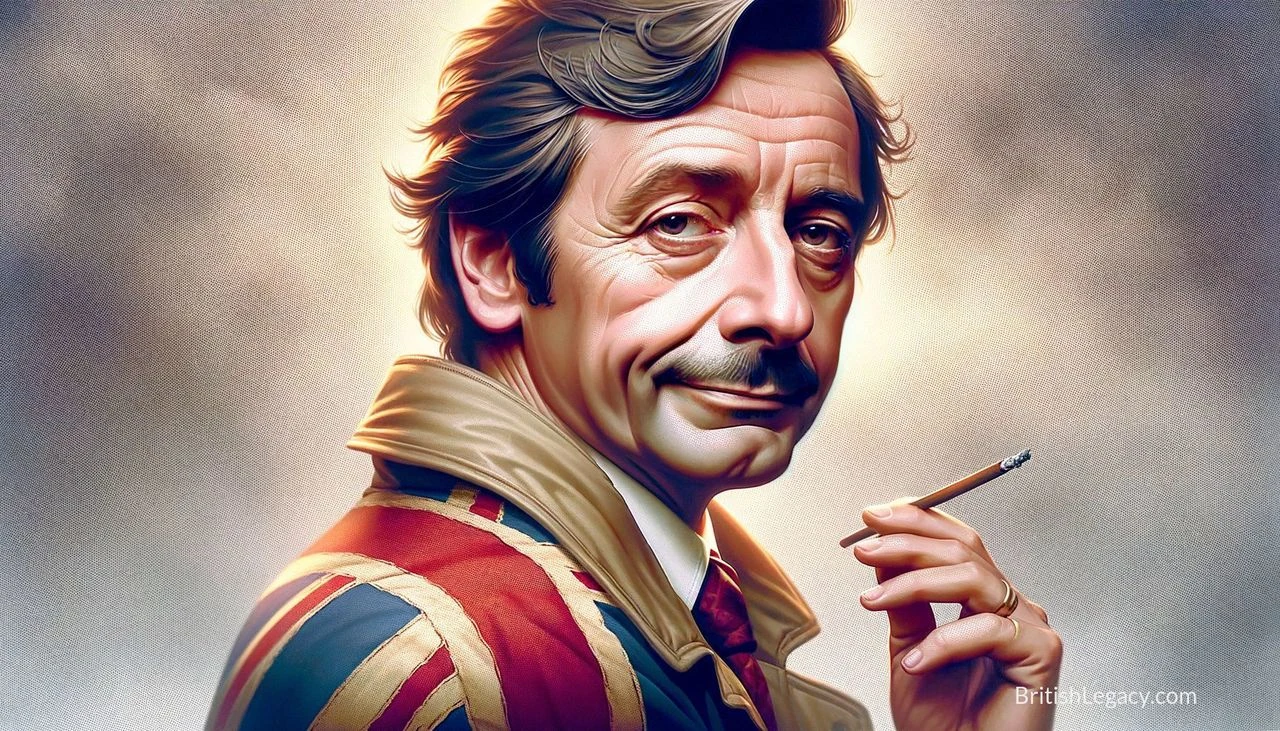
David Walliams built a career that moved between sketch comedy, television drama, children’s books and live performance. His partnership with Matt Lucas made Little Britain a defining television comedy of the 2000s; his books later reached a large young readership. Those achievements sit alongside criticism of the comedy’s stereotypes and questions about his conduct, making his cultural record more complicated than the familiar image of a comic performer turned bestselling author.
From David Williams to a comedy partnership
Born David Edward Williams in Wimbledon, in the London Borough of Merton, on 20 August 1971, he grew up in Banstead, Surrey. His father, Peter, worked as a London Transport engineer, and his mother, Kathleen, was a laboratory technician. He attended Collingwood Boys’ School in Wallington and Reigate Grammar School before studying drama at the University of Bristol, where he graduated in 1992.
During university holidays, he performed with the National Youth Theatre. There, in 1990, he met Matt Lucas, who would become his long-term comedy collaborator. Williams adopted the professional name Walliams after joining Equity at college, because another member was already named David Williams. Before their best-known work, the pair appeared in programmes including Rock Profile, Sir Bernard’s Stately Homes and Mash and Peas.
Walliams’s television career began in the 1990s, with parts in sketch shows and comedy programmes. His work with Lucas brought the pair to a much wider audience. Their BBC sketch series Little Britain ran from 2003 to 2009, moving from BBC Three to BBC One. Walliams played a range of characters, among them Emily Howard, Ray McCooney and Sebastian Love. The series also developed into live shows, specials and a US spin-off, Little Britain USA.
The reach and afterlife of Little Britain
The series’ quick shifts between catchphrases, physical comedy and recurring characters helped make it a conspicuous part of British television comedy. Walliams and Lucas followed it with Come Fly with Me, a six-part BBC One series about an airport, broadcast in 2010 and 2011. The pair’s comedy drew on caricature and exaggerated character performances, but the approach also became a focus of criticism.
In 2020, Little Britain and Come Fly with Me were removed from several streaming services over their use of blackface and portrayals of race, disability, class and gender. Walliams and Lucas apologised for playing characters of other races, saying it was wrong. That response is part of the programmes’ later history, as is the debate about how comedy that once reached a broad audience should be understood and circulated now.
Walliams continued to work on television beyond the partnership. He created and co-wrote the sitcom Big School, in which he played chemistry teacher Keith Church, and appeared in the BBC drama Partners in Crime as Tommy Beresford. His screen roles also included a guest appearance in Doctor Who and parts in films such as Stardust and Dinner for Schmucks. He made his stage debut in Harold Pinter’s No Man’s Land in 2008 and played Bottom in A Midsummer Night’s Dream in 2013.
Books for young readers
In 2008, Walliams began publishing children’s novels with The Boy in the Dress, illustrated by Quentin Blake. The story follows Dennis, a boy whose interest in dressing in girls’ clothes becomes part of a wider story about friendship and family. It was adapted for television in 2014. Walliams’s early books also included Mr Stink, Billionaire Boy and Gangsta Granny; the last won a Red House Children’s Book Award and became a BBC television film.
Subsequent titles included Ratburger, Demon Dentist, Awful Auntie and Grandpa’s Great Escape. Several were adapted for television, and some for the stage. His books often combine comic plotting with eccentric or threatening adults and young protagonists in difficult circumstances. Quentin Blake illustrated his first two novels; Tony Ross illustrated many later titles. Walliams also published picture books and the short-story collections beginning with The World’s Worst Children.
His success in children’s publishing brought awards and substantial sales, but also criticism. In 2020, author and activist Jack Monroe criticised aspects of the books, including what she described as racism, classism and body-shaming; HarperCollins defended their readership and content. After a complaint about a story featuring a Chinese boy in The World’s Worst Children, the publisher agreed to remove it from future editions, and a later edition included a replacement story. These disputes form part of the public record of the books, alongside their popularity and adaptations.
Television judging and charity swimming
Walliams was a judge on ITV’s Britain’s Got Talent from 2012 to 2022. He received National Television Awards for Best TV Judge in 2015, 2018 and 2019. In 2022, he left the programme after controversy over disparaging remarks about contestants recorded during filming. He apologised to the people he had made disrespectful comments about. In 2023, he reached a settlement with the production company after bringing a claim concerning the release of the recording.
Alongside broadcasting, Walliams took on endurance challenges for Sport Relief. In 2006, he swam the English Channel, raising more than £1 million. In 2008, he crossed the Strait of Gibraltar with James Cracknell. In 2010, he joined a celebrity cycling ride across Britain, which raised more than £1 million. The following year, he swam 140 miles down the Thames, from Lechlade to Westminster Bridge, and raised more than £2 million. The Thames swim left him with giardiasis and an injured intervertebral disc; he later underwent back surgery to address problems related to the challenge.
His charity work also included participating in Comic Relief’s 24-hour panel-show marathon and hosting parts of Sport Relief telethons. He was appointed an Officer of the Order of the British Empire in 2017 for services to charity and the arts. The combination of televised challenges, fundraising and comedy linked his public profile to major British charity broadcasts, while the physical consequences of the swims also underline the demands of that work.
Public scrutiny and a changing publishing relationship
Walliams’s career has not been free of controversy. In addition to criticism of sketches and books, his time on Britain’s Got Talent ended after the remarks about contestants came to light. He apologised, while later pursuing a legal claim over the recording’s release. These events concern different contexts, but each has affected how his comic persona and public standing have been discussed.
In 2025, HarperCollins ended its publishing contract with Walliams after an internal investigation into allegations of inappropriate behaviour and harassment towards junior female staff. The allegations should not be presented as established findings about individual conduct. In 2026, the publisher confirmed that it would no longer sell or reprint his older books. The change marks a significant turn in the relationship between a prominent contemporary children’s author and the publisher responsible for much of his work.
Why David Walliams deserves a place in British Legacy
Walliams merits a place in British Legacy because his work has been visible across several influential parts of British popular culture. With Matt Lucas, he helped create Little Britain, a sketch series that moved from BBC Three to BBC One and generated live performances, specials and a US version. Its popularity is inseparable from the later criticism of its representations, and the pair’s apology over playing characters of other races. That combination of reach, influence and reassessment makes the programme important to the history of recent television comedy, rather than a story of uncomplicated success.
His contribution to children’s publishing is substantial in a different way. Beginning with The Boy in the Dress, Walliams produced novels, picture books and short-story collections that reached young readers and were adapted for television and theatre. Their popularity brought commercial and cultural visibility to British children’s fiction; disputes over particular portrayals also show why popular books merit scrutiny as well as celebration. His Sport Relief swims added another public dimension: the Channel crossing, Strait of Gibraltar and Thames challenge raised millions for charity, with the Thames swim alone raising more than £2 million. Taken together, these achievements offer a specific account of Walliams’s British legacy: a career that helped shape mainstream entertainment, reached a large readership and mobilised charitable fundraising, while leaving debates about representation and responsibility central to its reception.
Sources
David Walliams — Wikipedia revision 1377786509
Adapted in part from David Walliams by Wikipedia contributors, under CC BY-SA 4.0. Text has been edited and combined with the existing article; this adapted text is shared under the same licence. Contributor history.