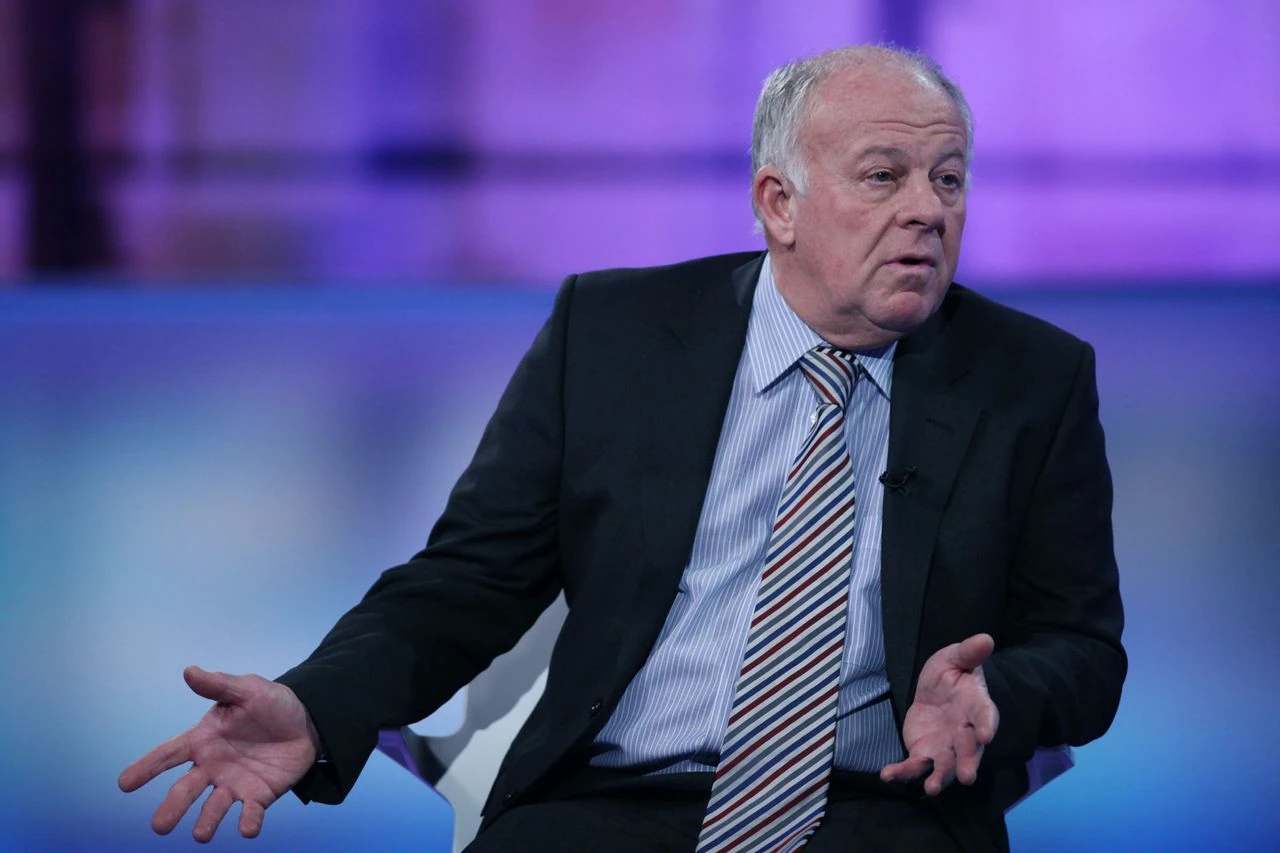
Peter Hargreaves helped build Hargreaves Lansdown from a small operation trading out of a bedroom into a major UK financial services company. He and Stephen Lansdown started the business in 1981, offering financial advice by direct mail. Hargreaves’s career then extended beyond the company: he stepped down as its chief executive in 2010, invested in ITM Power and backed the launch of investment firm Blue Whale Capital.
From Clitheroe to financial services
Peter Kendal Hargreaves was born in Clitheroe, Lancashire, on 5 October 1946. He attended Clitheroe Royal Grammar School and trained as an accountant. Before establishing his own financial-services business, he worked as a computer salesman. These details give a more grounded account of his early career than the idea of a self-made financier appearing fully formed: accountancy training and experience in sales preceded the venture that would make his name.
In 1981, Hargreaves and fellow accountant Stephen Lansdown began trading from a bedroom. Their early business offered financial advice through direct mail. That modest setting is a useful part of the story, but the available account does not establish the frequently repeated claim that each founder put in £500. What is clear is that the business began on a small scale and that its founding partners set out to provide financial services directly to individuals.
The direct-mail beginnings matter because they describe how the company first reached customers: not through a network of physical branches, but by communicating with potential investors at home. Hargreaves Lansdown later became known for investment services, but the company’s eventual size should not obscure the practical character of its origins. It was a partnership between two accountants, working from a bedroom and developing a business around advice and access.
Building Hargreaves Lansdown
Hargreaves remained closely associated with the company he co-founded. He stood down as chief executive in 2010 and was succeeded by Ian Gorham. The transition marked a change in his formal role, rather than the end of his connection: the biographical account records that he retained a 10 per cent shareholding. It also notes that he received £18 million in dividends in 2010. These figures describe his position at that time; they should not be mistaken for current measures of his wealth or the company’s present scale.
The company’s growth brought Hargreaves into a wider business landscape. Hargreaves Lansdown was listed on the London Stock Exchange and entered the FTSE 100, connecting a business that had started from a bedroom with the country’s leading publicly listed companies. The firm became known for services including individual savings accounts (ISAs), self-invested personal pensions (SIPPs), fund supermarkets and online trading. Those products and platforms belong to the company’s development; the evidence available does not support assigning every element of its later offering personally to Hargreaves.
That distinction is important in telling the story of a co-founder. Hargreaves’s central achievement was helping establish and lead the business, not acting alone in every product decision or technological change. Nor does the evidence justify claims that the company was invariably transparent, that it had a particular effect on financial literacy, or that its customer service set a definitive industry standard. A measured account can recognise its rise and public-market presence without turning corporate promotional language into settled fact.
Other investments and public positions
After stepping down as chief executive, Hargreaves remained active in business. He joined the board of ITM Power as a non-executive director in 2004 and invested heavily in the company. In 2009, he recruited Graham Cooley as its chief executive. In 2017, Hargreaves announced a £25 million backing for Blue Whale Capital, an asset-management company established by former colleague Stephen Yiu, and became a partner in the firm. The two ventures show different strands of his later activity: investment in a technology company and support for a new investment business.
Hargreaves also became a prominent donor to the Leave campaign during the 2016 European Union referendum. He supported Leave.EU and donated £3.2 million to the campaign, and wrote to 15 million UK households urging them to support leaving the European Union. His public comments included the observation that Brexit would lead to insecurity, which he said would prove effective, and a call for Theresa May to reassure EU nationals in the UK that their existing rights would be maintained. In 2019 he donated £1 million to the Conservatives’ election fund. These political activities form part of his public record alongside his business career.
His business contribution was recognised in the 2014 New Year Honours, when he was appointed Commander of the Order of the British Empire for services to business innovation, financial services and the City of Bristol. An honour is a marker of recognition, not a substitute for examining the particulars of a career: in Hargreaves’s case, the clearest particulars are the company he co-founded, his leadership there, and his subsequent investments.
Why Peter Hargreaves deserves a place in British Legacy
Peter Hargreaves’s place in British business history rests first on the creation of Hargreaves Lansdown with Stephen Lansdown. They began in 1981 with a bedroom-based operation offering financial advice by direct mail; the company later became a London-listed business and a FTSE 100 constituent. That development is a specific example of entrepreneurial growth in the UK financial-services sector. It is also a story of changing routes to customers: a business that began by reaching people through the post went on to offer investment services through online trading and other platforms.
His contribution is best understood as that of a co-founder and business leader, rather than as the sole author of every product or outcome associated with the firm. Hargreaves’s later investments in ITM Power and Blue Whale Capital, together with his formal recognition for services to business innovation and financial services, extend the record beyond one company. His political donations and campaigning also show how his influence reached public life, though they are distinct from his commercial achievements. Remembering him in British Legacy means preserving that fuller account: the small beginnings, the institutional growth, the later business ventures and the public choices, without relying on unsupported claims about universal empowerment or personal virtue.
Sources
Peter Hargreaves (revision 1368927973) · Peter Hargreaves
Adapted in part from Peter Hargreaves by Wikipedia contributors, under CC BY-SA 4.0. Text has been edited and combined with the existing article; this adapted text is shared under the same licence. Contributor history.