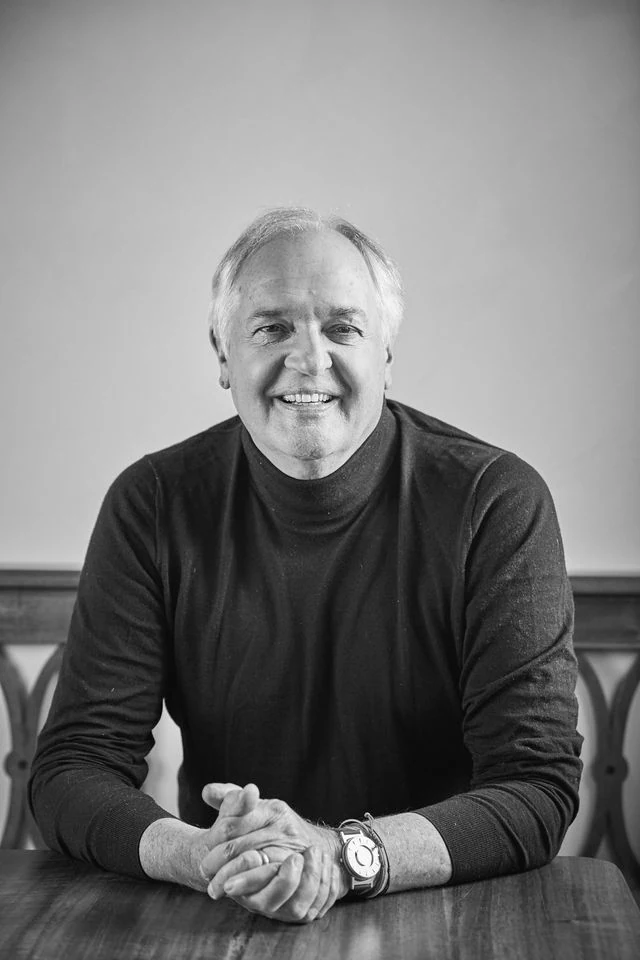
When Paul Polman became chief executive of Unilever in 2009, he challenged the idea that a public company should organise its decisions around quarterly earnings expectations. During his decade in the role, the Dutch executive made sustainability a prominent part of the company’s strategy, most visibly through the Unilever Sustainable Living Plan. His tenure also brought shareholder criticism, missed sales targets and difficult decisions about the company’s future. That mixed record gives his approach its substance: it was an attempt to make long-term environmental and social aims part of everyday corporate management, not a claim that business could avoid commercial pressures.
From Enschede to international business
Polman was born and raised in Enschede, in the Netherlands, on 11 July 1956. He studied at the University of Groningen, graduating in 1977 with a Bachelor of Business Administration and a bachelor’s degree. He then went to the University of Cincinnati, where he completed a master’s degree in economics and an MBA in finance and international marketing in 1979.
His career began at Procter & Gamble in 1979, where he worked for 27 years. The roles took him from cost analysis into management: he became managing director of P&G UK in 1995, led global fabric care from 1998, and was group president for P&G Europe from 2001. In 2006 he joined Nestlé as chief financial officer; in 2008 he became vice-president and head of its Americas branch.
These positions made Britain one significant part of an international career, rather than Polman’s birthplace or sole professional base. His appointment as Unilever chief executive on 1 January 2009 placed him at the head of a company with a substantial British presence and a global business. He remained in the post until the end of 2018, with Alan Jope succeeding him on 1 January 2019.
Making sustainability a company strategy
At Unilever, Polman argued against managing the business to satisfy short-term market expectations. He discontinued short-term earnings guidance, saying that quarterly targets could encourage decisions harmful to long-term performance. The stance drew attention to the tension at the heart of his approach: a company could set wider social and environmental goals, but still had to satisfy customers, investors and commercial targets.
In 2010, Unilever launched the Sustainable Living Plan. Its stated direction was to reduce the company’s environmental impact while expanding social initiatives. The plan included ambitions on health and hygiene, emissions and waste, sustainable resources, and the livelihoods of farmers and workers. It framed sustainability not as a separate charitable activity but as part of how the company understood growth and its responsibilities across its operations.
The plan became the defining initiative of Polman’s Unilever years, but his leadership was not free of dispute. Unilever missed sales targets in six of eight quarters in 2013 and 2014. Some shareholders questioned the emphasis on sustainability; Polman attributed the shortfalls to currency movements and slower growth in emerging markets rather than the company’s strategy. He also aimed to increase the share of sales from emerging markets from 57 per cent to 70 per cent. The contrast between those ambitions and the sales debate shows the practical difficulty of reconciling long-term commitments with near-term performance.
His time as chief executive also coincided with questions about Unilever’s corporate structure. In 2018, the company cancelled plans to move its headquarters from London to Rotterdam. That episode, alongside the broader debate about the business’s direction, forms part of the British context of his leadership: Unilever’s place in London mattered to the company and its stakeholders, even as Polman’s work and arguments operated internationally.
Advocacy beyond Unilever
Polman’s work on sustainability extended into business and international organisations. He chaired the World Business Council for Sustainable Development and led sustainability work at the Consumer Goods Forum. He served on the board of the UN Global Compact and was one of the members of the UN High Level Panel of Eminent Persons on the Post-2015 Development Agenda, invited by Secretary-General Ban Ki-moon. In 2016, Ban selected him as an advocate for the Sustainable Development Goals; António Guterres appointed him again in 2019.
In July 2019, Polman co-founded Imagine World, an organisation working with corporations on poverty and climate-related initiatives connected to the UN Sustainable Development Goals. Systemiq acquired it in 2022, and Polman remained a board member and major shareholder. He was also a member of The B Team, which he chaired from 2018 to 2021. These roles carried his interest in corporate responsibility into settings where companies, public institutions and advocates discuss how to pursue development goals.
He co-authored Net Positive: How Courageous Companies Thrive by Giving More Than They Take, extending the argument that a company’s contribution should be assessed by more than its immediate returns. His public work also included the Global Commission on the Economy and Climate and the World Economic Forum’s International Business Council. In 2019, he was appointed chair of the board for the University of Oxford’s Saïd Business School.
Recognition and a contested record
Polman’s contribution attracted recognition from business, environmental and civic organisations. His awards included the Oslo Business for Peace Award in 2015 and the Lifetime Achievement Award from the UN Environment Programme’s Champions of the Earth in the same year. In 2018, he received an honorary KBE. The distinction recognised his work, but it did not make him British: his connection to the UK rests chiefly on his senior role at Unilever, including his earlier leadership of P&G UK, and the company’s London presence.
Recognition sits alongside evidence of disagreement about his priorities. Shareholders challenged the sustainability emphasis during a period of missed sales targets, while Polman defended the strategy and pointed to external economic factors. This does not settle the debate over results. It does show why his tenure became a reference point in arguments about the duties of large companies: he made an explicit case for judging business decisions by their longer-term consequences, while facing the immediate tests that investors apply.
Why Paul Polman deserves a place in British Legacy
Polman’s place in British Legacy is grounded in a specific institutional connection, not in a claim that he was British. He led Unilever, a company with a major British presence, for a decade, and earlier ran P&G UK. In those roles he brought environmental and social objectives into the public discussion of how a large company should be governed. His decision to end short-term earnings guidance was a concrete expression of that argument: he believed quarterly expectations could distort choices about long-term performance.
The Sustainable Living Plan made the argument operational, setting aims that addressed environmental impact and social initiatives across a global business. Its importance lies both in the ambition and in the scrutiny it attracted. Missed sales targets and shareholder criticism demonstrate that responsible-business strategies have to contend with commercial performance, rather than sitting outside it. Polman’s record therefore offers British readers more than a celebratory account of corporate responsibility: it provides a case study in the opportunities and tensions involved in trying to build sustainability into a company’s central strategy. His later work through Imagine World, The B Team and international development forums continued that effort to make business part of debates about poverty, climate and collective goals.
Sources
Adapted in part from Paul Polman by Wikipedia contributors, under CC BY-SA 4.0. Text has been edited and combined with the existing article; this adapted text is shared under the same licence. Contributor history.