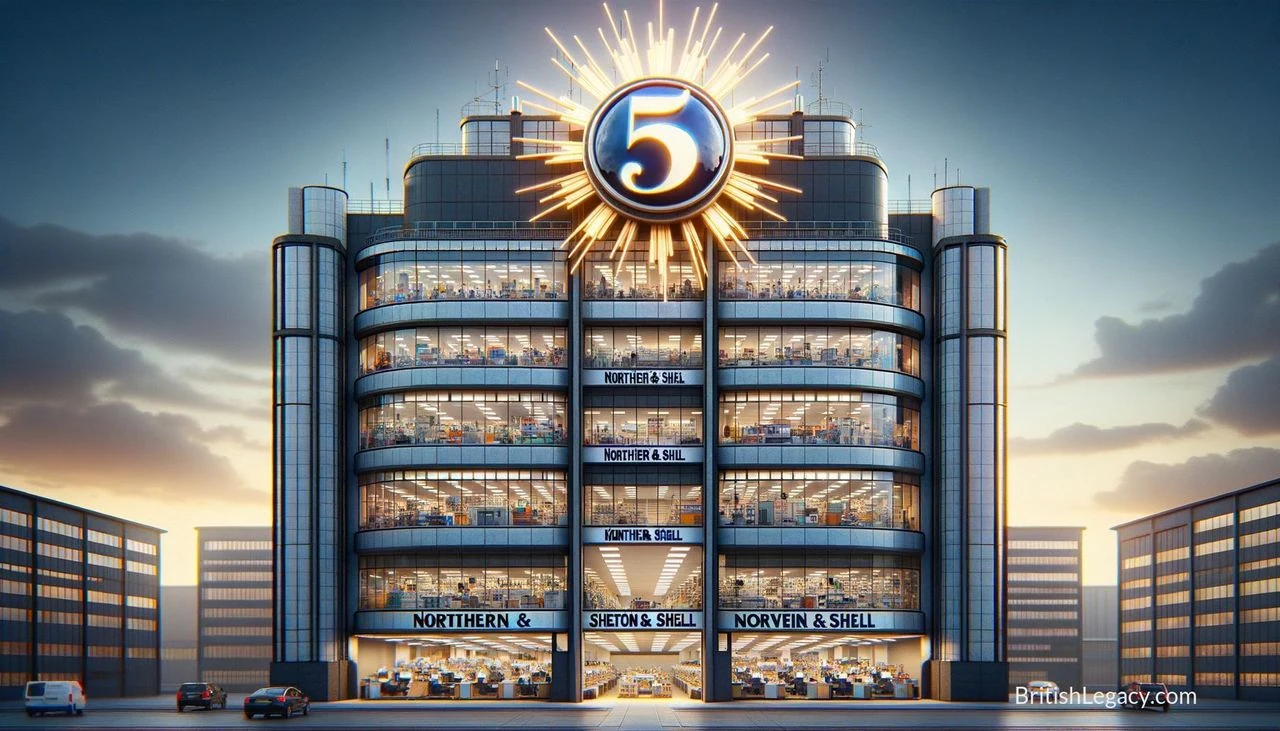
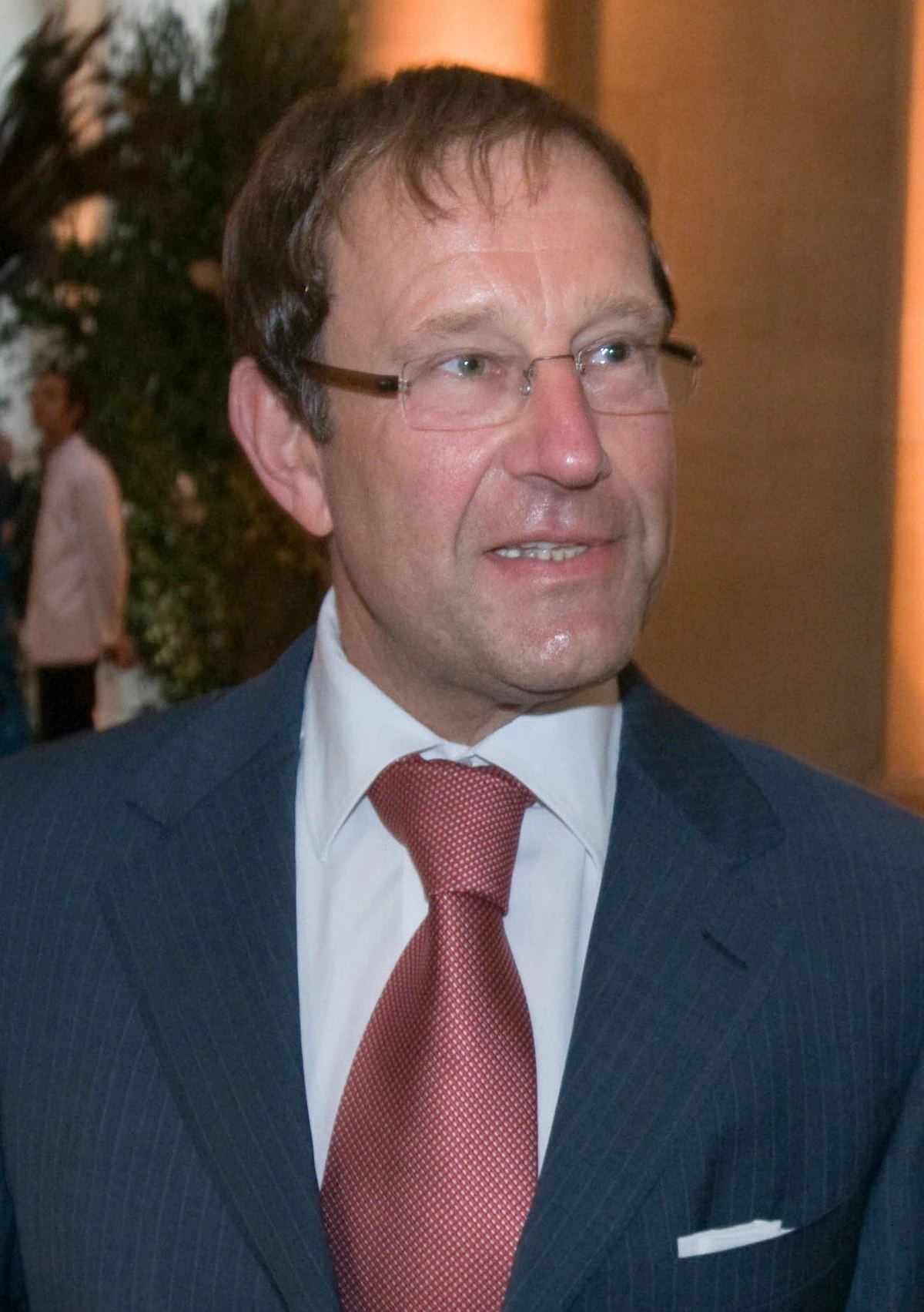
Richard Desmond’s career moved from music magazines into celebrity publishing, adult entertainment, national newspapers and television. Through Northern & Shell, the company he founded, he built a diverse media business whose holdings included the Daily Express, OK! and Channel 5. He later sold those prominent titles, but his years as an owner left a distinctive mark on British publishing and broadcasting—and brought disputes over the press, politics and property into public view.
Early work and a publishing company
Born Richard Clive Desmond in Hampstead, north London, on 8 December 1951, he was raised in Edgware. His father, Cyril, worked in cinema advertising. After his parents divorced, Desmond moved with his mother into a flat above a garage. He attended Edgware Junior School and Christ’s College, Finchley, leaving school at 15 to work in the classified advertising section of the Thomson Group. He also played drums at gigs after work.
Desmond moved into music publishing as advertising manager at Beat Publications, publisher of Beat Instrumental. By the age of 21 he owned two record shops. In the mid-1970s, he and Ray Hammond founded Cover Publication, combining Desmond’s experience in advertising with an interest in music. Its first major title, International Musician and Recording World, was a monthly magazine for musicians that later appeared in several international editions. Home Organist followed. Desmond eventually bought out Hammond, and in 1979 renamed the company Northern & Shell.
The company’s publishing extended into other markets. It began publishing the UK edition of Penthouse in 1982 and developed its own adult-magazine titles. Northern & Shell launched celebrity magazine OK! as a monthly in 1993; it became a weekly in 1996. The company also entered satellite television, launching The Fantasy Channel in 1995, later renamed Television X. Desmond put the adult magazines up for sale in 2001, and the business was sold to Remnant Media. Northern & Shell’s remaining adult television operation was sold in 2016.
Newspapers, celebrity magazines and Channel 5
In November 2000, Northern & Shell bought Express Newspapers for £125 million. The purchase brought the Daily Express and Sunday Express into the group, alongside the Daily Star and Daily Star Sunday, which Desmond started. Northern & Shell’s newspaper interests became a major part of his public profile, though the group did not retain them permanently: Express Newspapers was sold to Reach plc in 2018.
Desmond added broadcasting to the business when he bought Channel 5 from RTL Group in July 2010 for £103.5 million. The channel had been losing money. His ownership combined cost-cutting—including the departure of most of its directors and proposed staff reductions—with a larger programming budget. In the first full year under the new owner, Channel 5’s revenue rose by 28 per cent, a result the account links to factors including the arrival of Big Brother and the return of a major media-buying contract. Desmond sold the channel to Viacom in 2014 for £463 million.
Other ventures extended beyond publishing and television. Northern & Shell launched the Health Lottery in 2011, with grants intended to support local health causes. Its proposed share of ticket income for good causes drew criticism in comparison with the National Lottery’s contribution. The business later increased the share it said would go to charity. In 2019 Desmond announced an intention to bid for the National Lottery licence; Northern & Shell’s bid was unsuccessful.
Public disputes and charitable work
Ownership of national newspapers brought Desmond into public arguments about their coverage and standards. At the Leveson Inquiry in 2012, he defended the Daily Express over its reporting on the disappearance of Madeleine McCann. In 2008 the newspaper paid damages to McCann’s parents over defamatory articles. Desmond said at the inquiry that the paper had been scapegoated by the Press Complaints Commission; in a 2015 BBC interview, he said he did not regret its reporting. The episode illustrates the scrutiny that accompanied his stewardship of a national newspaper group.
In 2020, Desmond was involved in a separate dispute concerning plans for the former Westferry Printworks site in London. His company’s housing proposal had been rejected by the council and the Planning Inspectorate before the then housing secretary, Robert Jenrick, approved it. Jenrick later accepted that his approval had been unlawful, while denying bias; the decision was subsequently overturned. The episode became a public controversy about the planning process and Desmond’s contact with the minister.
Desmond also undertook charitable work. In 2003 he and Roger Daltrey formed the RD Crusaders, a rock group that raised money for charitable causes. He became president of the UK Jewish charity Norwood in 2006 and donated £2.5 million towards a children’s centre at Moorfields Eye Hospital. These documented activities give a more specific account of his philanthropy than broad claims about support for causes such as cancer research or autism awareness.
Why Richard Desmond deserves a place in British Legacy
Richard Desmond belongs in a record of British business and media because he built a company that crossed several influential parts of the industry. Northern & Shell began with music publishing and went on to produce titles for musicians and organ enthusiasts, launch the celebrity magazine OK! and acquire the Daily Express and Sunday Express. Desmond’s purchase of Channel 5 extended that reach from print into national broadcasting. Each venture had a different audience and commercial model; together, they show how a privately owned publisher could assemble a broad portfolio across magazines, newspapers and television.
His record is not simply a story of expansion or success. The sale of the newspaper group and Channel 5, the criticism of newspaper coverage and the Westferry planning dispute form part of the public history of his ownership. So do the Health Lottery, the RD Crusaders and his support for Norwood and Moorfields Eye Hospital. Keeping these strands together gives British Legacy a more useful account than an uncomplicated celebration of entrepreneurship: it connects the scale and variety of Desmond’s media ventures with the consequences of owning outlets that shape public debate, and with the charitable work associated with his career.
Sources
Richard Desmond — revision 1370355519
Adapted in part from Richard Desmond by Wikipedia contributors, under CC BY-SA 4.0. Text has been edited and combined with the existing article; this adapted text is shared under the same licence. Contributor history.