Eddie Redmayne’s career has moved between demanding stage roles and films seen around the world. He made his professional stage debut as Viola in Shakespeare’s Twelfth Night in 2002, before winning major awards for performances in Red and The Theory of Everything. Later, his return to the West End in Cabaret brought another Olivier Award and a Broadway engagement. Alongside acting, he has backed charities working in film education, motor neurone disease and theatre access.
A London childhood and a Cambridge education
Edward John David Redmayne was born in Westminster, London, on 6 January 1982. He attended Jackie Palmer Stage School from the age of ten, where he developed an interest in acting and singing. He later studied at Colet Court and Eton College, having won music scholarships to both schools. At Eton he was in the same year as Prince William.
Redmayne went on to the University of Cambridge on a choral scholarship, reading History of Art at Trinity College. He specialised in Venetian architecture and surrealism, graduating with a 2:1 honours degree in 2003. His academic background was distinct from his professional training: his route into acting began through stage and television work rather than a drama-school qualification.
His first screen appearance was in an episode of the television series Animal Ark in 1998. On stage, he made his professional debut as Viola in Shakespeare’s Twelfth Night at Shakespeare’s Globe in 2002. Two years later, he appeared in Edward Albee’s The Goat, or Who Is Sylvia? at the Almeida Theatre. That performance brought him the Evening Standard Theatre Award for Outstanding Newcomer; the Critics’ Circle Theatre Award for Best Newcomer followed in 2005.
Building a stage and screen career
Redmayne’s early theatre work included Christopher Shinn’s Now or Later at the Royal Court Theatre. In 2009, he played Ken in John Logan’s Red at the Donmar Warehouse, opposite Alfred Molina. The production transferred to Broadway in 2010, and Redmayne won both the Laurence Olivier Award for Best Actor in a Supporting Role and the Tony Award for Best Featured Actor in a Play. He returned to Shakespeare in Michael Grandage’s production of Richard II at the Donmar Warehouse in 2011–12.
His screen career developed alongside his work in the theatre. Film roles included The Other Boleyn Girl (2008), My Week with Marilyn (2011), in which he played filmmaker Colin Clark, and Marius in the 2012 film adaptation of Les Misérables. On television, he appeared in the BBC miniseries The Pillars of the Earth and Birdsong.
In The Theory of Everything (2014), Redmayne played physicist Stephen Hawking. The performance earned him the Academy Award, BAFTA, Golden Globe and Screen Actors Guild Award for Best Actor. The film portrays Hawking’s life with motor neurone disease, also known as ALS. Redmayne received another Academy Award nomination for playing Lili Elbe in The Danish Girl (2015). The casting prompted criticism from members of the transgender community; Redmayne later stressed the importance of transgender actors being cast to play transgender characters.
Redmayne became widely associated with Newt Scamander, the central character in the Fantastic Beasts film series, beginning with the 2016 film. He reprised the role in The Crimes of Grindelwald and The Secrets of Dumbledore. His other screen work includes the stop-motion film Early Man (2018), The Trial of the Chicago 7 (2020) and The Good Nurse (2022). In 2024, he starred as the Jackal in the television thriller The Day of the Jackal.
Returning to the West End in Cabaret
In 2021, Redmayne returned to the West End as the Emcee in a revival of Cabaret at the Playhouse Theatre, reworked as the Kit Kat Club. He had played the role as a teenager at Eton and later at the Edinburgh Fringe. The London revival won seven Olivier Awards in 2022, including Best Musical Revival and Best Actor in a Musical for Redmayne.
The production transferred to Broadway’s August Wilson Theatre in 2024, with Redmayne again playing the Emcee, this time opposite Gayle Rankin as Sally Bowles. He received a Tony Award nomination for Best Actor in a Musical. The two productions extended a pattern in his career: major roles developed in London theatre have taken him to Broadway, while his awards span both sides of the Atlantic.
Redmayne’s theatre work has also included productions beyond the West End. He appeared in The Children’s Monologues at the Old Vic in 2010 and made his Broadway debut in Red that same year. His career has encompassed Shakespeare, new writing, musical theatre and film, rather than following a single path from stage to screen.
Charitable work and public service
Redmayne became an ambassador for the film education charity Into Film in 2014. Since 2015, he has been a patron of the Motor Neurone Disease Association; his connection with the organisation followed his portrayal of Hawking. He is also an ambassador for Teenage Cancer Trust and a patron of Go Live Theatre Projects, which works to enrich the lives of children and young people through theatre, particularly those who are disadvantaged or have additional needs.
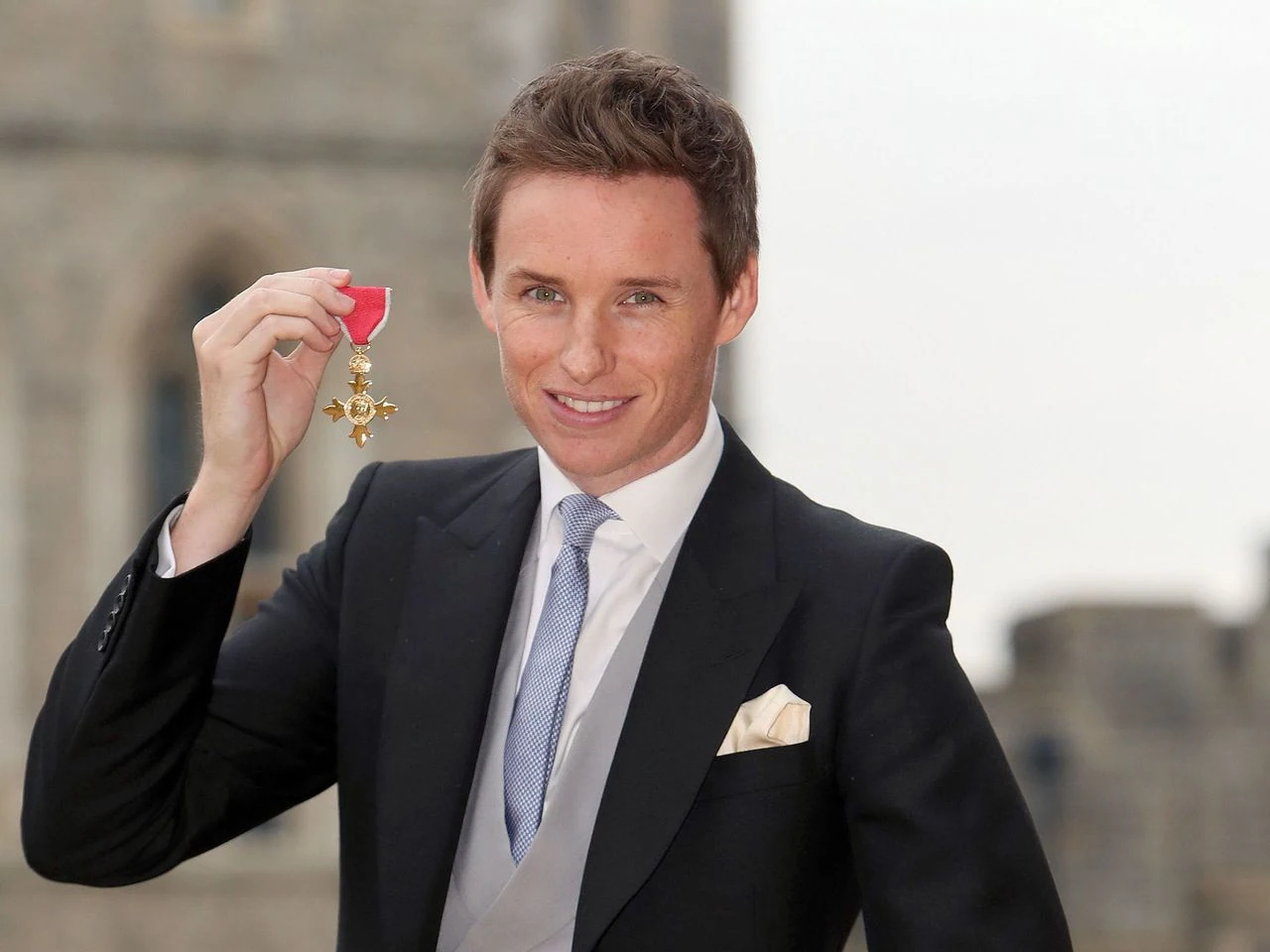
These roles give a more specific account of his charitable activity than broad claims that he supports a general range of causes. They connect his public work to film education, people affected by motor neurone disease, young people with cancer and widening access to theatre. Redmayne was appointed an Officer of the Order of the British Empire in the 2015 Birthday Honours for services to drama.
His recognition as an actor includes an Academy Award, a British Academy Film Award, a Golden Globe, a Tony Award and two Olivier Awards, among other honours. The range reflects a career that has reached audiences through British theatre and television as well as international film and Broadway. His public profile has grown through those performances, while his charity roles have maintained a practical connection to arts access and health causes.
Why Eddie Redmayne deserves a place in British Legacy
Redmayne’s place in British Legacy rests first on the breadth of a career formed in British performance culture. He began on the London stage as Viola in Twelfth Night, won recognition at the Almeida and Donmar Warehouse, and established a continuing relationship with the West End. His work in Red carried that theatre achievement to Broadway, where he won a Tony Award. Later, Cabaret brought him back to London and then to Broadway, with an Olivier Award and a further Tony nomination. These milestones show how a British actor’s work in London theatre can travel internationally without losing its grounding in live performance.
His screen work has also given him a significant place in contemporary British acting. The Academy Award-winning portrayal of Stephen Hawking brought international attention to a British physicist’s life, while roles in My Week with Marilyn, Les Misérables and the Fantastic Beasts films have connected him with varied audiences. His charitable work adds a distinct public contribution: as a patron or ambassador, he supports film education, the Motor Neurone Disease Association, Teenage Cancer Trust and Go Live Theatre Projects. Those commitments relate directly to learning, health and opportunities to experience theatre. Taken together, his acting achievements and defined charity roles offer an evidenced British legacy rooted in cultural work and support for access to the arts.
Sources
Adapted in part from Eddie Redmayne by Wikipedia contributors, under CC BY-SA 4.0. Text has been edited and combined with the existing article; this adapted text is shared under the same licence. Contributor history.