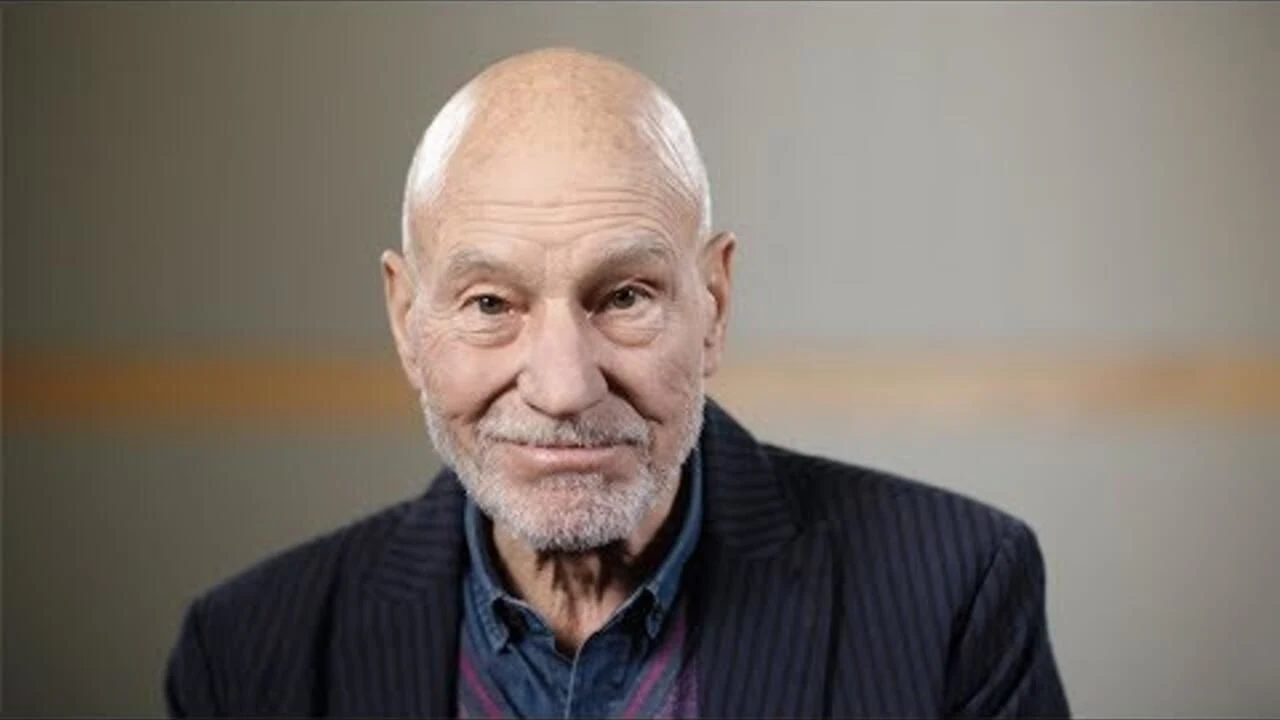
Patrick Stewart’s career has crossed between classical theatre and popular screen culture without leaving either behind. A member of the Royal Shakespeare Company for 16 years, he became internationally known as Captain Jean-Luc Picard in Star Trek: The Next Generation, then took on another major franchise role as Professor Charles Xavier in the X-Men films. His path from Mirfield to the world’s stages and screens is also a story of an actor who returned repeatedly to Shakespeare, and who has spoken publicly about the domestic violence he witnessed as a child.
A Yorkshire start and a stage education
Stewart was born in Mirfield, in the West Riding of Yorkshire, on 13 July 1940. He attended Crowlees Junior and Infant School, where English teacher Cecil Dormand encouraged him to perform Shakespeare. At 15, he left school and became more involved in local theatre, supporting himself with work as a newspaper reporter and obituary writer. He later took a job in a furniture shop that allowed him to attend rehearsals. He also trained in boxing.
Stewart and fellow actor Brian Blessed received grants to attend Bristol Old Vic Theatre School. Stewart’s first professional stage appearance followed in 1959, at the Theatre Royal, Bristol, in Cyrano de Bergerac. After a period at Manchester’s Library Theatre, he joined the Royal Shakespeare Company in 1966. He remained with the company until 1982, appearing in more than 60 productions over the course of his career and becoming an associate artist.
His early screen work included a 1967 appearance in Coronation Street, followed by parts in television dramas including Fall of Eagles, I, Claudius and Tinker Tailor Soldier Spy. He also appeared in films including Excalibur and Dune. These roles brought professional experience, but his international breakthrough came when he accepted a part in an American science-fiction series.
Picard, Xavier and an international audience
Stewart was cast as Captain Jean-Luc Picard in Star Trek: The Next Generation, which ran from 1987 to 1994. He had expected the revival to be short-lived and initially regarded the role as a temporary departure from theatre. Instead, the series made him a familiar face to viewers around the world. He reprised Picard in several Star Trek films, appeared in the series’ Deep Space Nine, and returned to the character in Star Trek: Picard, which ran from 2020 to 2023.
The role did not define the limits of his screen work. From 2000, Stewart played Professor Charles Xavier in the X-Men film series, returning for several films through 2017. In 2022 he appeared as an alternate version of Xavier in Doctor Strange in the Multiverse of Madness. Other television roles included Captain Ahab in Moby Dick, Ebenezer Scrooge in A Christmas Carol, and comic appearances in Frasier and Extras. He also voiced CIA Deputy Director Avery Bullock in the animated series American Dad!.
Stewart’s work in popular entertainment has sat alongside, rather than replaced, his stage career. He played the many characters in a solo version of Dickens’s A Christmas Carol, performing it on Broadway, in London and elsewhere. The production earned him a Drama Desk Award and a Laurence Olivier Award. His Shakespeare roles included Prospero in The Tempest, Othello, Macbeth, Antony and King Claudius in Hamlet. For the last of these, in a 2008 production opposite David Tennant, Stewart won the Olivier Award for Best Supporting Actor.
Returning to the theatre
After the long filming schedule of Star Trek: The Next Generation, Stewart spoke of missing the stage. His later theatre work gave him room to return to Shakespeare and to take on plays beyond the classical repertory. In 2009, he appeared with Ian McKellen in Samuel Beckett’s Waiting for Godot. The two actors reunited on Broadway in 2014, alternating that play with Harold Pinter’s No Man’s Land.
Stewart’s career has also included extensive voice work, from recordings of Peter and the Wolf—for which he received a Grammy—to narration and animated roles. His honours include appointment as an Officer of the Order of the British Empire in 2001 and a knighthood for services to drama in 2010. He served as chancellor of the University of Huddersfield from 2004 to 2015 and later became chancellor emeritus. In 2012, he carried the Olympic torch during the London Games relay.
Speaking about violence and its consequences
Stewart has spoken publicly about the physical violence his father inflicted on his mother, and about its effect on him as a child. In 2006, he made a video for Amnesty International about domestic violence and supported a University of Huddersfield scholarship for postgraduate study in the subject. He also became a patron of Refuge, the UK charity supporting women and children affected by domestic abuse. In 2009, he spoke about his childhood experience at the launch of a book on women’s rights; in 2011, he presented a BBC Lifeline appeal for Refuge.
His public work has also included support for Combat Stress, after learning more about his father’s wartime experiences and post-traumatic stress disorder while researching his family history for Who Do You Think You Are? Stewart is a patron of the United Nations Association – UK and spoke at its 2012 UN Forum about his father’s wartime service and the importance he attached to the United Nations. These activities give a specific shape to his advocacy: he has connected personal experience and family history with public discussion and charitable work.
Why Patrick Stewart deserves a place in British Legacy
Patrick Stewart’s place in British Legacy rests first on a career that has carried British theatre into international popular culture. His years with the Royal Shakespeare Company, his Shakespeare performances and his later work in productions such as Waiting for Godot demonstrate a sustained commitment to live performance. At the same time, his portrayal of Picard brought a classically trained British actor to a global television audience, while his role as Xavier extended that reach into major cinema. These are not separate accomplishments: Stewart’s stage experience is part of the history behind performances that became familiar far beyond Britain.
His legacy also includes the way he has used his public standing to address domestic violence. By speaking about what he witnessed at home, supporting Refuge and backing postgraduate study into domestic violence at the University of Huddersfield, he helped connect an individual account with practical advocacy and education. His work with Combat Stress and the United Nations Association – UK adds further evidence of a public life engaged with the effects of conflict and the institutions intended to prevent it. Together, his acting and advocacy make his British connection concrete: a Yorkshire-born performer shaped by British theatre, honoured for services to drama, and active in causes with a clear UK presence.
Sources
Adapted in part from Patrick Stewart by Wikipedia contributors, under CC BY-SA 4.0. Text has been edited and combined with the existing article; this adapted text is shared under the same licence. Contributor history.