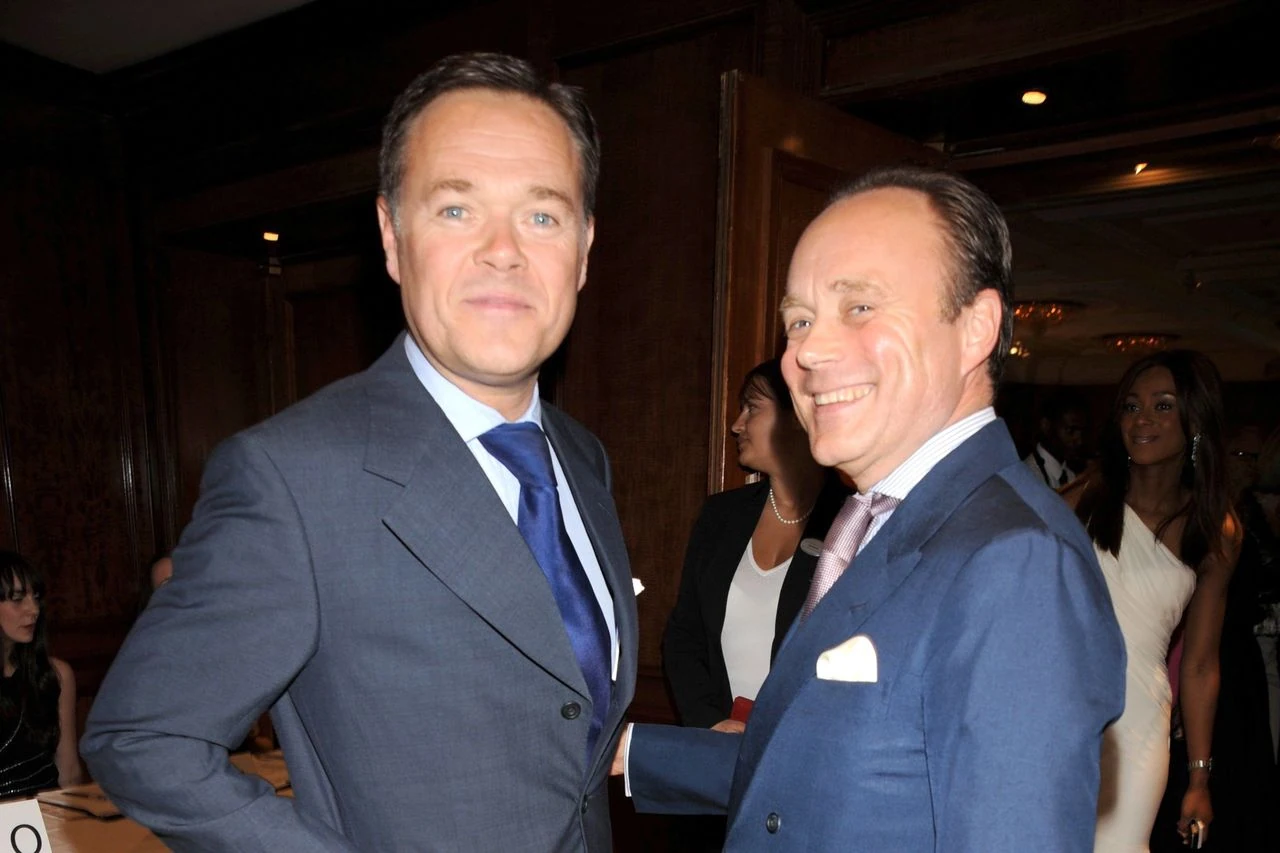
David and Frederick Barclay built a business empire that reached from London hotels and department-store brands to national newspapers. The identical twins became especially associated with two prominent British institutions: the Ritz in Piccadilly, which they bought in 1995, and the Telegraph newspapers, acquired in 2004. Their ownership brought them influence over businesses and publications with a substantial public presence, but it did not last indefinitely: the Ritz was sold in 2020, David died in 2021, and the Telegraph was sold in 2025.
Their careers were shaped by closely held family businesses, large acquisitions and a preference for avoiding publicity. A fuller account must also include the businesses they sold, the disputes surrounding some of their dealings and the fact that their ventures did not preserve permanent control of the landmarks most associated with them.
From a family business to property and hotels
David Rowat Barclay and Frederick Hugh Barclay were born in Hammersmith, London, on 27 October 1934, to Scottish parents Beatrice Cecilia Taylor and Frederick Hugh Barclay, a travelling salesman. Their father died when they were 12. The brothers left school in 1950, four years later, and worked in the accounts department of the General Electric Company before setting up as painters and decorators.
By the end of the 1950s they were running Candy Corner, a tobacconist and confectioner in Kensington. The business failed in 1960 after the landlord seized the shop over a breach of its lease, and Frederick and their brother Douglas were declared bankrupt. David had become a director of Hillgate Estate Agents in 1962. Frederick later took a leading role in the family businesses; David paid the creditors, and Frederick was discharged from bankruptcy.
The brothers went on to redevelop old London boarding houses as hotels. In 1970 they bought Gestplan Hotels, which operated the Londonderry House Hotel in Park Lane. Their interests expanded into breweries, shipping, property and casinos. In 1975 they bought the Howard Hotel, overlooking the Thames at Temple Place. In 1983 they acquired Ellerman, a brewing and shipping group, for £45 million. After selling its brewing division for £240 million, they sold the shipping business in 1985.
Their approach often involved buying businesses and selling parts of them. The Ellerman transaction became one example of a broader strategy: the proceeds helped fund later purchases, including the Ritz. The brothers also bought Gotaas-Larsen, a Bermuda-based shipping company, and the Automotive Financial Group, a motor retail chain, in 1994.
The Ritz and a changing portfolio
The brothers bought the Ritz Hotel in London's Piccadilly in 1995, using proceeds from the sale of Ellerman's brewing division. The hotel became one of the most recognisable parts of their portfolio. Their ownership ended in 2020, when it was sold to Abdulhadi Mana al-Hajri. The hotel therefore belongs in the story of their business careers, but not as an asset they retained for future generations.
Retail was another substantial part of their work. In 2002 they bought Littlewoods from the Moores family for £750 million and combined it with their earlier purchase of The Very Group. The business became a major UK home-shopping operator. They also closed and sold the Littlewoods department-store chain: many of its former sites were leased to retailers including Primark, Marks & Spencer, New Look and British Home Stores.
In 2009 their Shop Direct Group bought the Woolworths and Ladybird brand names after Woolworths Group failed. The Woolworths brands were sold to Woolworth in Germany in 2021; The Very Group retained Ladybird. Their investments also included Yodel and handbag.com, which they sold in 2006. These varied interests show an empire assembled not around a single industry, but through purchases, restructuring and disposals.
Newspapers, ownership and public influence
The brothers entered newspaper publishing in 1992, buying The European, which closed in 1998. They bought The Scotsman in 1995 and sold its publishing company in 2005. In 1998 they bought and relaunched Sunday Business; it became the weekly magazine The Business in 2006 and was merged into The Spectator in 2008.
In July 2004 they acquired the Telegraph Group, later known as Telegraph Media Group, after a contested sale. Its titles included The Daily Telegraph and The Sunday Telegraph. The company also included The Spectator during part of the brothers' ownership. Their years as newspaper proprietors were marked by newsroom changes and conflict over editorial direction. More than 100 journalists were made redundant in 2006, and several editors came and went. In 2015, Peter Oborne resigned as chief political correspondent in protest at the newspaper's editorial direction.
The newspapers were not a permanent family holding. In June 2023, the shares in the holding company were put up for sale amid a dispute over almost £1 billion in unpaid debts. The Spectator was sold in 2024. The Telegraph business was sold in 2025 to RedBird Capital Partners, after regulatory problems affected an earlier bid. The changes marked the end of the brothers' ownership of a major presence in British newspaper publishing.
Philanthropy, controversy and the brothers' later years
The brothers were knighted in 2000 for their support of medical research. Between 1987 and 2000, they were estimated to have donated £40 million to that cause. This specific record supports their association with philanthropy; it does not establish the wider claims sometimes made about support for healthcare, education and the arts.
Other parts of their business history attracted scrutiny. The brothers bought the lease of Brecqhou, a small island beside Sark, in 1993, and became involved in legal and political disputes with Sark's authorities, including challenges concerning inheritance rules and the island's system of government. In 2008 they withdrew investments from Sark after local election results did not favour candidates they supported; the withdrawal led to job losses. Their campaign against Sark's arrangements reached the UK Supreme Court, which rejected their challenge to the presence of unelected figures in the island's government.
David and Frederick were often described as reclusive. David died aged 86 on 10 January 2021 after a short illness. Frederick survived him. The twins' reputation for working outside the public eye sat alongside the public consequences of their ownership: decisions about newspapers, retail businesses, hotels and island investments affected employees, readers and communities well beyond their private business circle.
Why David and Frederick Barclay deserve a place in British Legacy
The Barclays belong in a record of modern British business because their acquisitions and disposals connected them to institutions and industries that shaped everyday life and public debate. Their ownership of the Ritz placed them at the centre of a renowned London hotel; their purchase of the Telegraph Group gave them control of influential national newspapers. Their retail ventures reached customers across the country, from Littlewoods home shopping to the Woolworths and Ladybird brands. These are specific points of contact with British commercial and cultural life, rather than evidence for a vague claim that they embodied a national spirit.
Their legacy also shows why ownership and stewardship should be described precisely. They bought the Ritz and the Telegraph Group, but later sold both; David's death in 2021 means the brothers' story did not continue as a joint enterprise beyond his lifetime. Their business record included expansion and profitable sales, alongside bankruptcy early in their careers, newsroom upheaval and disputes over their conduct and influence in Sark. A balanced account preserves both the scale of their reach and the limits of the claims made for them. For British Legacy, their lives offer a useful case study in how private business decisions can shape public institutions—and how the effects of ownership may outlast the owners themselves.
Sources
David and Frederick Barclay (revision 1379365603)
Adapted in part from David and Frederick Barclay by Wikipedia contributors, under CC BY-SA 4.0. Text has been edited and combined with the existing article; this adapted text is shared under the same licence. Contributor history.