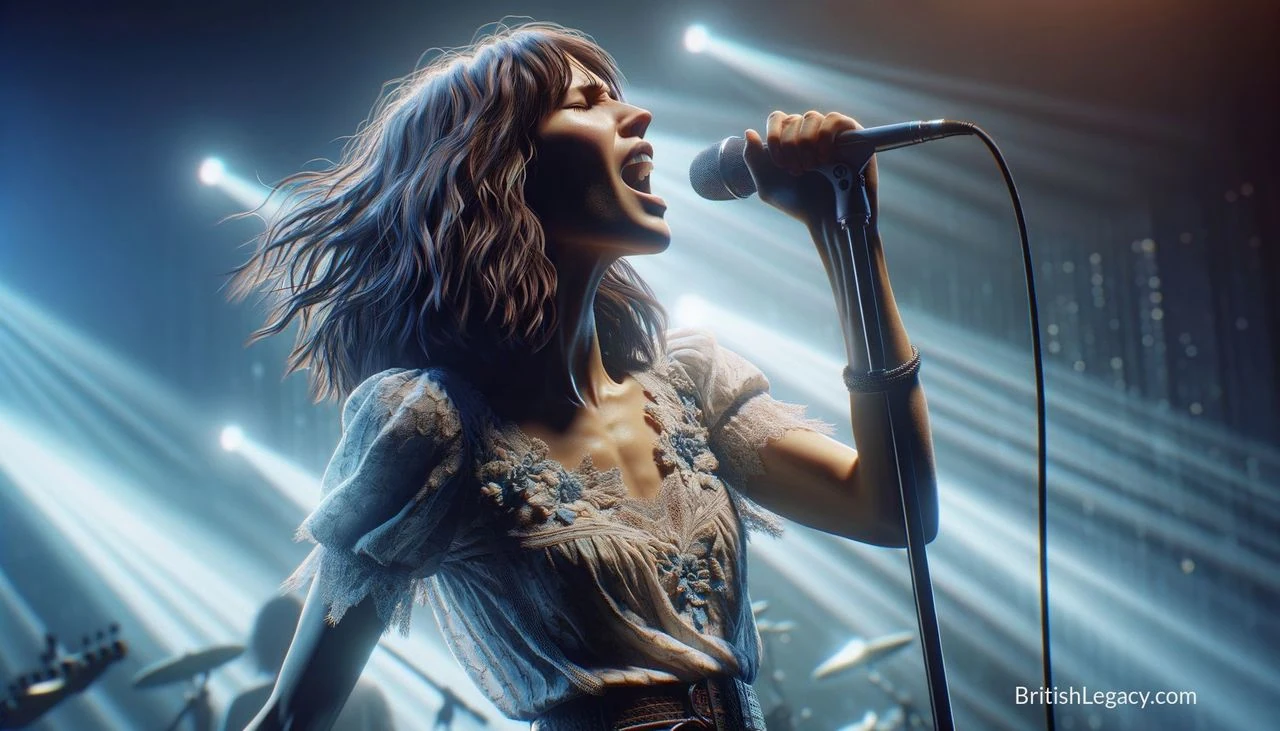
Florence Welch’s songs make room for both the physical force of a band and the intimacy of a confession. As lead vocalist and primary songwriter of Florence + the Machine, she has built a career around a distinctive voice, vivid imagery and arrangements that move between indie rock, art pop and more theatrical sounds. The band’s 2009 debut, Lungs, topped the UK Albums Chart; the work that followed carried Welch from small London venues to festival headlining, major collaborations and a book of lyrics and poetry.
From south London to the first gigs
Welch was born in Camberwell, London, on 28 August 1986. Her father, Nick Russell Welch, worked in advertising; her mother, Evelyn Welch, is an academic. Her mother’s interest in Renaissance studies and her father’s enthusiasm for rock music offered different routes into culture. Welch has recalled being impressed by one of her mother’s lectures as a teenager, and later described wanting to address music’s large themes—love, death and violence—with something of the scope she saw in Renaissance art.
She attended Thomas’s London Day School and Alleyn’s School in south-east London. After leaving secondary school, she spent time working in a pub and studied illustration at Camberwell College of Arts, before leaving to focus on music. In 2006, performances with Isabella Summers in small London venues under the name Florence Robot & Isa Machine began attracting notice. The eventual name Florence + the Machine grew out of a private joke: Welch was Florence Robot, while Summers was Isabella Machine. In 2007, Welch also recorded with the band Ashok; its album Plans included an early version of “Kiss with a Fist”, then titled “Happy Slap”.
Lungs and a breakthrough
Florence + the Machine released Lungs in the UK on 6 July 2009. It reached number one on the UK Albums Chart and number two in Ireland. Its success gave a wider audience songs including “Dog Days Are Over” and “You’ve Got the Love”, while the album’s emotional directness and layered sound established a recognisable foundation for Welch’s work. The album won the Brit Award for Best British Album.
The follow-up, Ceremonials, arrived in 2011 and also debuted at number one in the UK. Water imagery runs through the record, reflecting what Welch has described as an interest in drowning. “Shake It Out” became one of its best-known songs. In 2012, a remix of “Spectrum” by Calvin Harris gave the band its first UK number-one single. Welch also appeared on Harris’s “Sweet Nothing”, which topped the UK Singles Chart that year, and sang with A. R. Rahman at the 2011 Academy Awards, performing “If I Rise”.
Expanding the sound and the stage
The band’s third album, How Big, How Blue, How Beautiful, was released in 2015 and reached number one in several markets, including the UK. That summer, after Dave Grohl broke his leg before the Foo Fighters’ Glastonbury headline appearance, Florence + the Machine took their place and headlined the festival for the first time. Welch’s movement and visual choices on stage have become part of the band’s presentation; she has described her performance style through a mix of literary and gothic images, while her music draws on a wide range of influences, including Patti Smith, Stevie Nicks, Grace Slick and Siouxsie Sioux.
High as Hope, the band’s fourth album, followed in 2018. Welch published Useless Magic: Lyrics and Poetry that year, bringing together her writing with artwork associated with her albums. Later work has continued to cross forms. In 2021, she announced that she would contribute music and lyrics to a stage musical adaptation of The Great Gatsby; Gatsby: An American Myth premiered at the American Repertory Theater in 2024. The band’s fifth album, Dance Fever, was released in 2022. In 2024, Florence + the Machine performed with the Jules Buckley Orchestra at the Royal Albert Hall for the BBC Proms; the performance was released as Symphony of Lungs. Welch’s sixth album, Everybody Scream, was released in 2025.
Writing, influences and public voice
Welch’s work often puts ordinary experience beside images of religion, myth and mortality. She has said that she is agnostic, while explaining that religious imagery and themes recur in her songs because they connect to questions of sex, love, death and guilt. Her lyrics also engage with literary references: in discussing Renaissance art, she has pointed to its continuing concern with love, death, time and pain. Her interest in books extends beyond songwriting; she has described herself as an introvert and has held events with the fan-run book club Between Two Books.
Her career includes work beyond the band’s albums. She recorded “Hey Girl” with Lady Gaga for Gaga’s 2016 album Joanne, contributed to the soundtrack of Wonder Woman, and appeared in Terrence Malick’s film Song to Song. In 2025, she collaborated with Everything Is Recorded on “Never Felt Better”. She has also used live performances to show support for LGBTQ+ rights, including waving the rainbow flag at concerts. These projects sit alongside, rather than replace, the central work of a band whose albums have continued to reach the top of the UK chart.
Why Florence Welch deserves a place in British Legacy
Florence Welch’s place in British Legacy rests on a body of work that connects a particular voice and songwriting sensibility with sustained achievement in British popular music. Lungs reached number one in the UK and won the Brit Award for Best British Album; Ceremonials also topped the UK chart, and later records continued the band’s success. “Spectrum” and “Sweet Nothing” brought number-one singles, while the 2015 Glastonbury headline appearance marked the band’s arrival at the top of one of Britain’s most prominent festival stages. Those milestones give substance to the claim that Welch has helped shape the sound and public profile of contemporary British music.
Her contribution also lies in the range of forms through which she works. Alongside six studio albums with Florence + the Machine, she has published lyrics and poetry, contributed music and lyrics to a musical, collaborated with artists in different genres and performed with an orchestra at the BBC Proms. Her songs bring literary and religious imagery into popular music without leaving behind its direct emotional address. That combination—ambitious presentation, recognisable songwriting and achievement across British charts and stages—makes Welch a significant figure in the country’s recent musical history. Her career is not simply the story of a striking voice: it is also the record of an artist who has kept widening the ways that voice can be heard.
Sources
Florence Welch (revision 1376631346)
Adapted in part from Florence Welch by Wikipedia contributors, under CC BY-SA 4.0. Text has been edited and combined with the existing article; this adapted text is shared under the same licence. Contributor history.