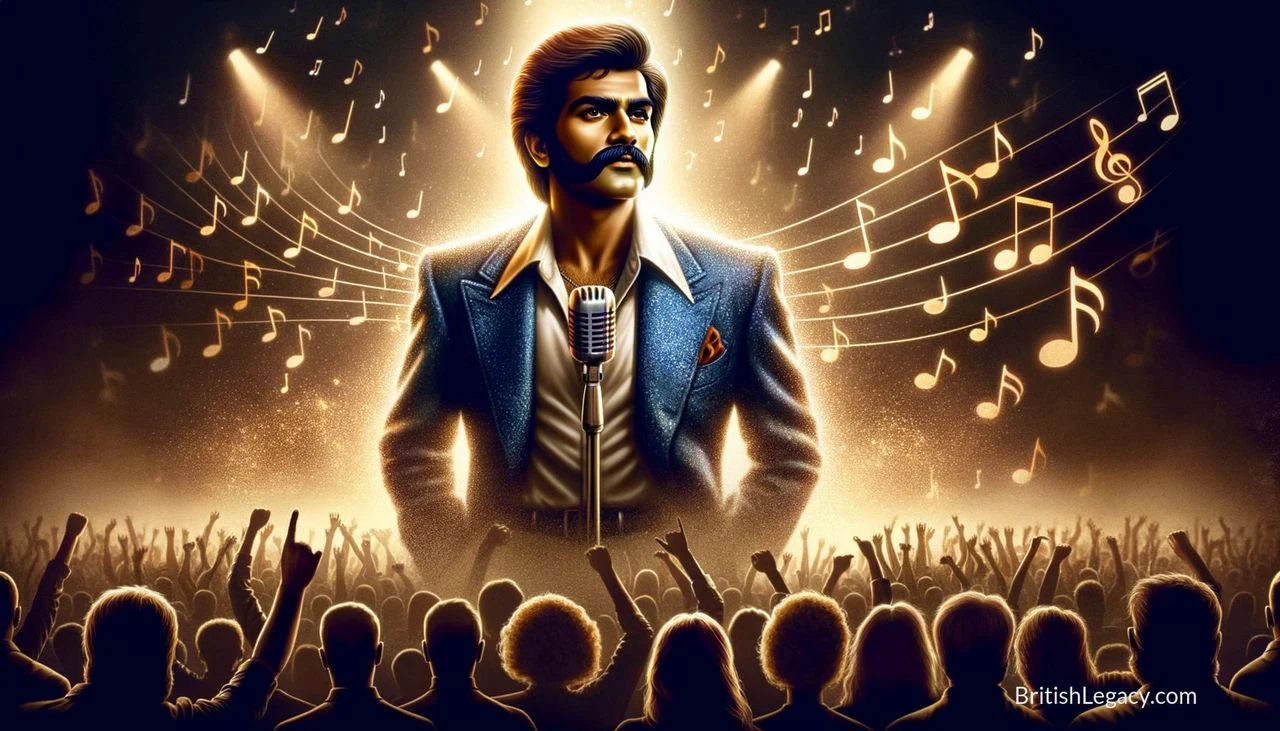
Freddie Mercury made the rock frontman’s role his own: a singer who could move from piano-led songwriting to commanding a stadium crowd. As Queen’s lead vocalist and pianist, he helped create music that ranged from the operatic construction of “Bohemian Rhapsody” to the direct, communal chorus of “We Are the Champions”. Born in Zanzibar to a Parsi family and educated in India and England, he became a defining figure in a band formed in Britain.
From Zanzibar and India to west London
Mercury was born Farrokh Bulsara in Stone Town, Zanzibar, on 5 September 1946. Zanzibar was then a British protectorate. His parents, Bomi and Jer Bulsara, were Gujarati Parsis from western India. Aged eight, he was sent to St Peter’s School, a British-style boarding school in Panchgani, India. He began piano lessons there and, at 12, formed a school band, the Hectics, which played rock and roll songs. He returned to Zanzibar in 1963.
In 1964, Mercury and his family fled to England during the violence of the Zanzibar Revolution, settling in Middlesex. He studied art at Isleworth Polytechnic and then graphic art and design at Ealing Art College, graduating with a diploma in 1969. That training had a practical use: Mercury designed Queen’s crest, the band emblem incorporating the four members’ zodiac signs.
Before Queen, he joined several groups, including Ibex, later renamed Wreckage, and Sour Milk Sea. He also sold second-hand clothes and scarves at Kensington Market with Roger Taylor, who would become his bandmate. In April 1970, Mercury joined Taylor and guitarist Brian May in Smile. Bassist John Deacon joined in 1971, and the group became Queen. Mercury chose the band’s name and changed his surname from Bulsara to Mercury.
A singer, songwriter and musical experimenter
Mercury’s voice was noted for its range and flexibility. His known range extended from bass low F to soprano high F, though range alone does not account for his effect as a singer. His speaking voice was naturally in the baritone range, while he delivered most songs in the tenor range. He could shift between forceful rock singing and a lighter, more delicate tone, shaping phrases to suit the character of each song.
He wrote ten of the 17 songs on Queen’s Greatest Hits, among them “Killer Queen”, “Somebody to Love”, “We Are the Champions”, “Don’t Stop Me Now” and “Bohemian Rhapsody”. His writing could be harmonically and structurally intricate. “Bohemian Rhapsody” moves through contrasting sections rather than following a conventional repeating song form. Elsewhere, he could choose economy: “Crazy Little Thing Called Love” uses only a few chords. He often composed at the piano, although he said he could barely read music.
Released in 1975, “Bohemian Rhapsody” brought ballad, rock and operatic passages together in one recording. Its unusual structure became a distinctive part of Queen’s repertoire. Other songs reached listeners in different ways: “We Are the Champions” became familiar at sporting events, while “Somebody to Love” and “Radio Ga Ga” showed other sides of Mercury’s work with the band.
His musical work extended beyond Queen. He played piano on many of the band’s best-known songs and used the instrument to develop compositions. He also released two solo albums: Mr. Bad Guy (1985) and Barcelona (1988), recorded with Spanish soprano Montserrat Caballé. The title track of Barcelona later featured at the 1992 Summer Olympics in the city. Mercury’s solo work did not replace his work with Queen, but it gave him space to explore music beyond the band’s sound.
Making a stadium feel close
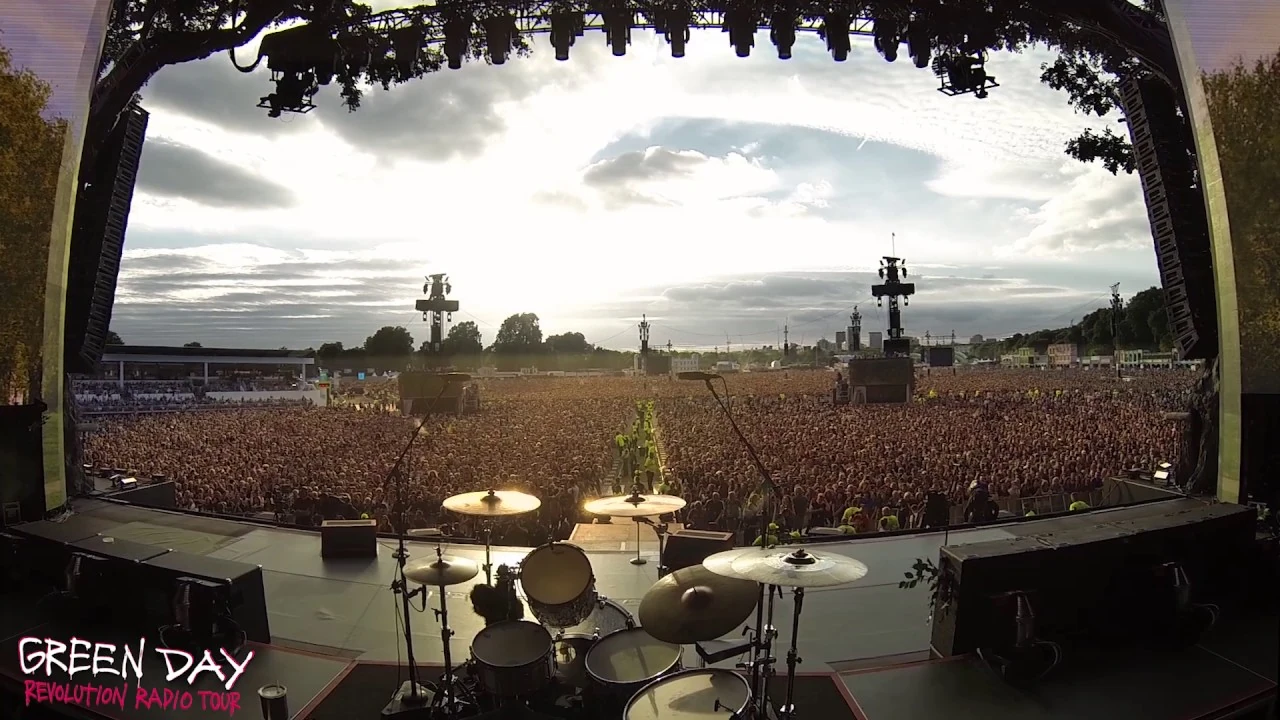
Mercury combined theatrical movement and flamboyant dress with a close attention to the audience. He used gesture and call-and-response to involve the crowd, making a large venue feel like a shared performance. A microphone stand whose heavy base had broken off became one of his characteristic stage props. His command depended not just on spectacle but on timing and the ability to draw people into the show.
Queen’s set at Live Aid, held at Wembley Stadium in 1985, became one of the most discussed performances in the band’s history. Mercury led the audience through its call-and-response passages, turning a short set into a concentrated display of the group’s live strengths. The performance is often remembered as a high point of stadium rock, but its lasting appeal is also visible in the way it made audience participation central to the event.
Queen’s live career took the group to audiences around the world, including South American stadiums in 1981 and Budapest in 1986. Mercury’s final live performance with Queen was at Knebworth Park in England on 9 August 1986. The band continued recording after his touring career ended. He worked on Queen sessions in 1991; recordings made during those final years appeared on the posthumous album Made in Heaven in 1995.
Illness, public memory and the work that followed
Mercury was diagnosed with AIDS in 1987 and kept his illness private for several years. On 23 November 1991, he made a public statement confirming that he had HIV and AIDS. He died the following day, aged 45, at his home in Kensington, London. The cause of death was bronchial pneumonia resulting from AIDS.
In 1992, Queen’s remaining members organised the Freddie Mercury Tribute Concert for AIDS Awareness at Wembley Stadium and founded the Mercury Phoenix Trust. The concert brought performers together to celebrate Mercury and raise money for AIDS research. The Trust has since raised millions of pounds for AIDS charities. These efforts gave public remembrance a practical purpose: the tribute concert and the charity helped direct attention and funds towards the disease.
Commemorations have also connected Mercury’s international reputation to places and institutions in Britain. Royal Mail issued a stamp featuring him on stage in 1999. In 2009, a star marking his achievements was unveiled in Feltham, where his family settled after arriving in England. English Heritage unveiled a blue plaque at the family’s former home there in 2016. Queen’s musical We Will Rock You brought the band’s songs to the West End, and Queen performed “We Will Rock You” at the London 2012 Olympic closing ceremony.
Queen received the Brit Award for Outstanding Contribution to British Music in 1990; Mercury received the same award individually, posthumously, in 1992. The band was inducted into the UK Music Hall of Fame in 2004, and Mercury was voted 58th in the BBC’s 2002 poll of the 100 Greatest Britons. Such milestones do not sum up his life, but they show how a performer born outside Britain became part of the country’s popular cultural history.
Why Freddie Mercury deserves a place in British Legacy
Freddie Mercury deserves a place in British Legacy because his achievements are tied to a specific British musical history without being confined by birthplace or background. He arrived in England with his family in 1964, studied in Middlesex and helped form Queen with musicians he met in Britain. His design training, piano playing and songwriting became part of a band whose music was ambitious in both form and scale. “Bohemian Rhapsody” is a clear example: a hit built from contrasting musical sections rather than a standard verse-and-chorus pattern. On stage, Mercury made the relationship between performer and crowd central to Queen’s identity, most memorably at Wembley’s Live Aid concert.
His legacy in Britain also includes what followed his death. Queen’s tribute concert and the Mercury Phoenix Trust connected public remembrance with fundraising for AIDS research and charities. The Feltham plaque and commemorative star, the Royal Mail stamp and Queen’s place in British music honours link his international reputation to real places and institutions in the country where his career took shape. Mercury’s life began in Zanzibar and included formative years in India; it should not be reduced to a claim that he embodied a single national character. He belongs in British Legacy because migration, education and creative partnership in England helped produce music that became part of British cultural life, while his work continues to reach audiences far beyond it.
Sources
Freddie Mercury — revision 1379651217
Adapted in part from Freddie Mercury by Wikipedia contributors, under CC BY-SA 4.0. Text has been edited and combined with the existing article; this adapted text is shared under the same licence. Contributor history.