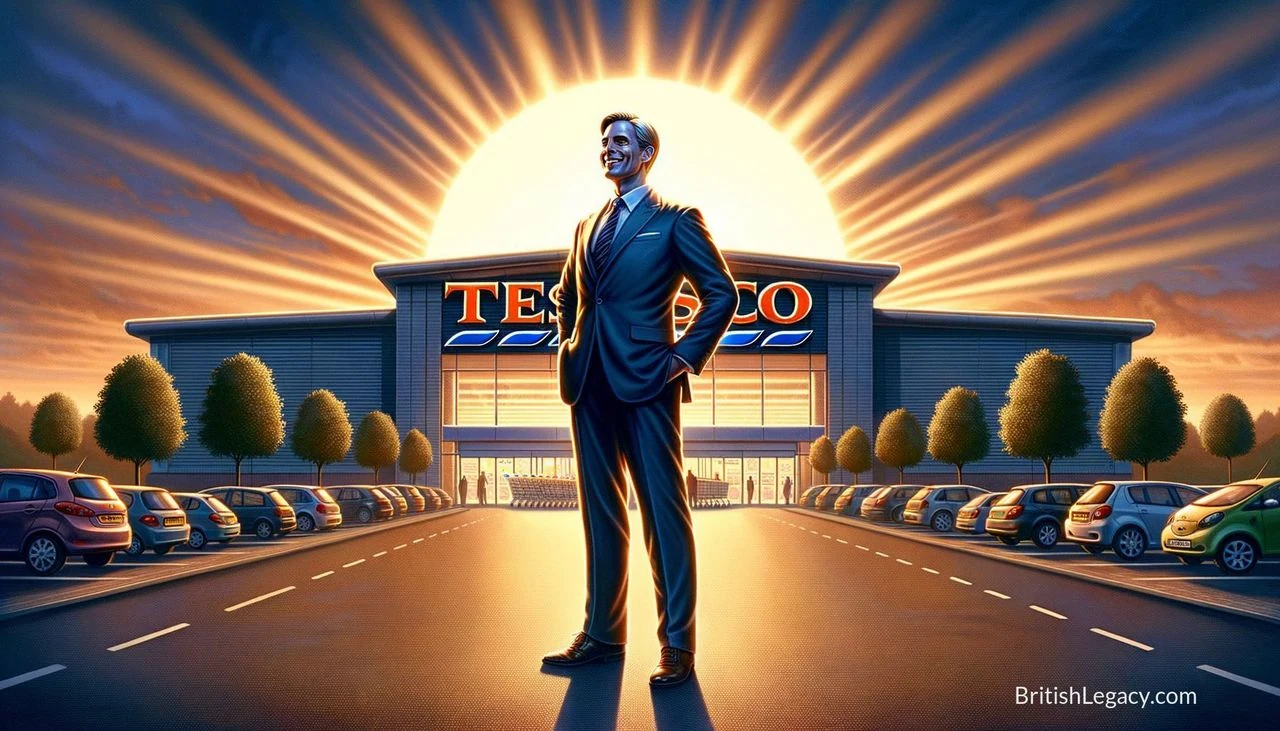
When Terry Leahy became chief executive of Tesco in 1997, the British supermarket was already a major retailer. He set out to make it more than a follower of established competitors: a business guided by closer knowledge of its customers, with shops suited to different needs and a reach beyond the UK. During his 14 years in charge, Tesco became Britain’s largest retailer and expanded internationally. The methods behind that growth—especially the Clubcard—also helped change how retailers understood and served their customers.
A Liverpool education and an early start at Tesco
Terence Patrick Leahy was born in Belle Vale, Liverpool, on 28 February 1956. His parents were Irish immigrants, and he grew up in a prefabricated home. His father, a merchant seaman injured during the Second World War, worked as a bookmaker to support the family. Leahy attended Our Lady of the Assumption Primary School and passed the 11-plus examination, winning a scholarship to St Edward’s College, a direct-grant grammar school in Liverpool.
He later described those schools as providing a framework for rising from an impoverished background. At university, he studied Management Sciences at the University of Manchester Institute of Science and Technology (UMIST), graduating in 1977. His route into retail was not entirely direct: after following his girlfriend to London, he applied for a product-manager post with Turkey Foil and was turned down. He also missed out on a Tesco job before returning in 1979 as a marketing executive.
That first Tesco role became the start of a long career inside the company. Leahy joined its board in 1992. In 1995, Tesco became the UK’s biggest retailer, and in the same year the Clubcard loyalty programme began to take shape under his direction. Lord MacLaurin, then Tesco’s chief executive and Leahy’s mentor, retired in 1997; Leahy succeeded him.
Learning to lead with the Clubcard
Before Leahy’s rise, Tesco was often described as a market follower, looking to leading retailers such as Marks & Spencer and Sainsbury’s. Leahy argued for a different approach: instead of simply catching up, Tesco should use knowledge of its own market to lead. The Clubcard was central to that change. Developed and implemented from 1995 onwards, it gave Tesco a way to monitor the shopping habits of participating customers and use that information in its retail decisions.
The scheme made customer data a prominent part of Tesco’s commercial strategy. It supported more tailored offers and helped the company understand how people shopped. The importance of the Clubcard was not only the rewards customers could earn; it was also the regular flow of information it gave the retailer. This approach became one of the defining features of Leahy’s leadership and a reference point for data-led retailing.
His broader strategy was to make Tesco available in more ways than the traditional large supermarket. The company developed a mix that included local convenience shops, large out-of-town stores and hypermarkets, alongside online shopping. Together, these formats allowed it to serve customers shopping in different places and for different reasons. Leahy’s emphasis on adaptation was part of a wider aim: to make Tesco’s range of shops and services fit more closely into everyday shopping.
Growth at home and overseas
As chief executive, Leahy oversaw a period of expansion in Britain and abroad. Tesco extended its lead in the UK, while opening and developing businesses in markets including Ireland, Poland, Thailand and South Korea. International growth gave the retailer a wider business beyond its home market; the company’s expanding presence also carried a British retail business into very different national settings.
Tesco’s scale grew markedly during Leahy’s time in charge. The earlier account of his career gives revenues of about £12 billion in 1997 and nearly £62 billion by the time he left. The company also increased its UK market share from 20 per cent to 30 per cent during his tenure. On 8 June 2010, Tesco announced that Leahy would retire as chief executive in March 2011. By then, Tesco had established itself as the UK’s largest retailer, and his long association with the company had taken him from marketing executive to the head of its expansion.
In April 2005, after Tesco announced profits of £2 billion, Leahy responded to protests that the company had become “too successful”. The episode captured an important tension in Tesco’s growth: the commercial achievement of building a dominant retailer could also prompt concern about the influence of its size. The question of how large a supermarket should become was part of the public debate surrounding the business, not merely a matter of its internal strategy.
Work after Tesco
After leaving Tesco, Leahy became a senior adviser at the private-equity firm Clayton, Dubilier & Rice, and later focused on start-up investments. In December 2012, he became chairman of B&M Retail. During his five years in the role, the discount retailer was floated on the stock market. Its revenues rose from £993 million to £2.7 billion, while its store portfolio increased from 331 shops to 893, following an aggressive expansion plan. He stepped down as chairman in 2017 and continued as a senior adviser to CD&R.
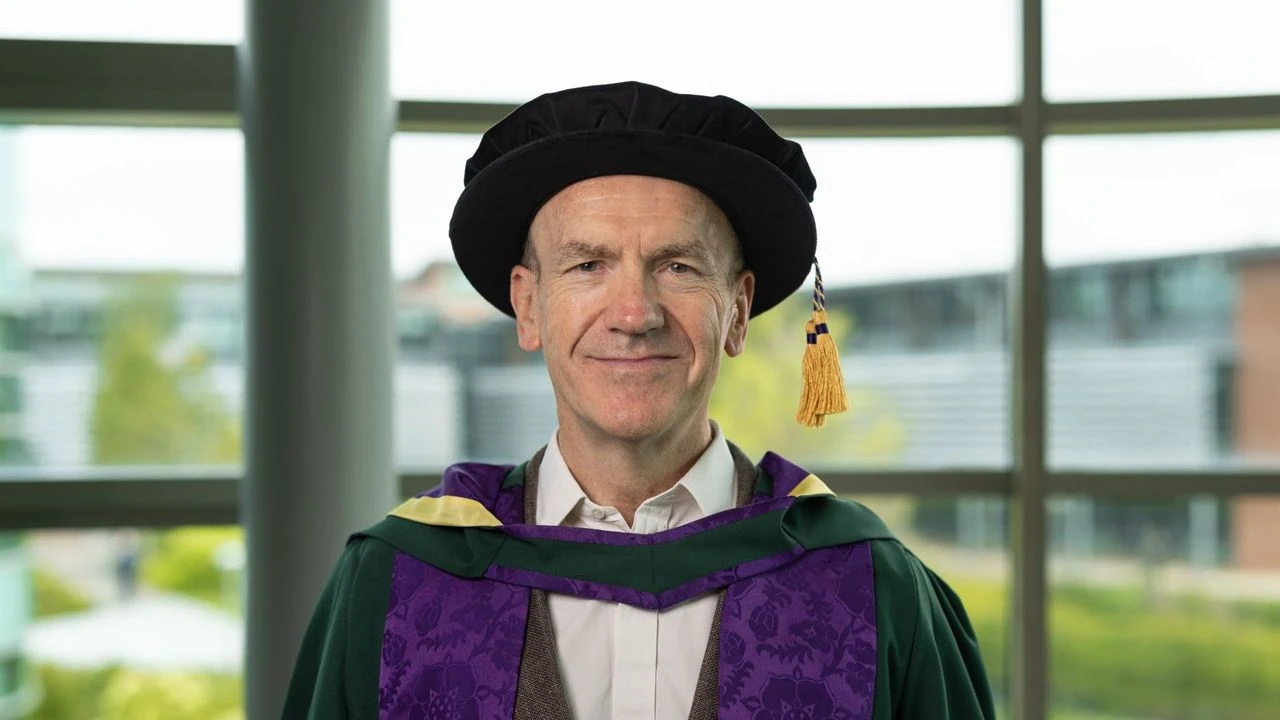
Leahy also maintained links with higher education. He was chancellor of UMIST from 2002 until its merger with the Victoria University of Manchester on 1 October 2004, when he became one of the new University of Manchester’s two co-chancellors. Cranfield University awarded him an honorary Doctor of Science degree in 2007. His book, Management in 10 Words, was published in 2012.
Why Terry Leahy deserves a place in British Legacy
Leahy’s place in British business history rests on specific changes to how a major British retailer operated. The Clubcard helped Tesco move away from competing chiefly by watching rival chains and towards using information about its own customers. The programme connected a loyalty offer to a more systematic understanding of shopping habits. Alongside a range of shop formats and online retail, that shift gave Tesco practical ways to respond to customers across different settings. These were not abstract management principles: they formed part of the company’s route to becoming the UK’s largest retailer.
His career also illustrates how British retail growth extended beyond the high street and national borders. Under his leadership, Tesco enlarged its position at home and established operations in several overseas markets. After Tesco, his chairmanship at B&M coincided with a substantial expansion in its shops and revenues, taking the retailer on to the stock market. Leahy was knighted in 2002, and his work at UMIST and the University of Manchester connected his business career with higher education. Taken together, these achievements make his legacy more than a story of corporate size: it is a record of changes in customer data, retail formats, international growth and business leadership that shaped a prominent British company.
Sources
Terry Leahy — revision 1374222382 · Terry Leahy
Adapted in part from Terry Leahy by Wikipedia contributors, under CC BY-SA 4.0. Text has been edited and combined with the existing article; this adapted text is shared under the same licence. Contributor history.