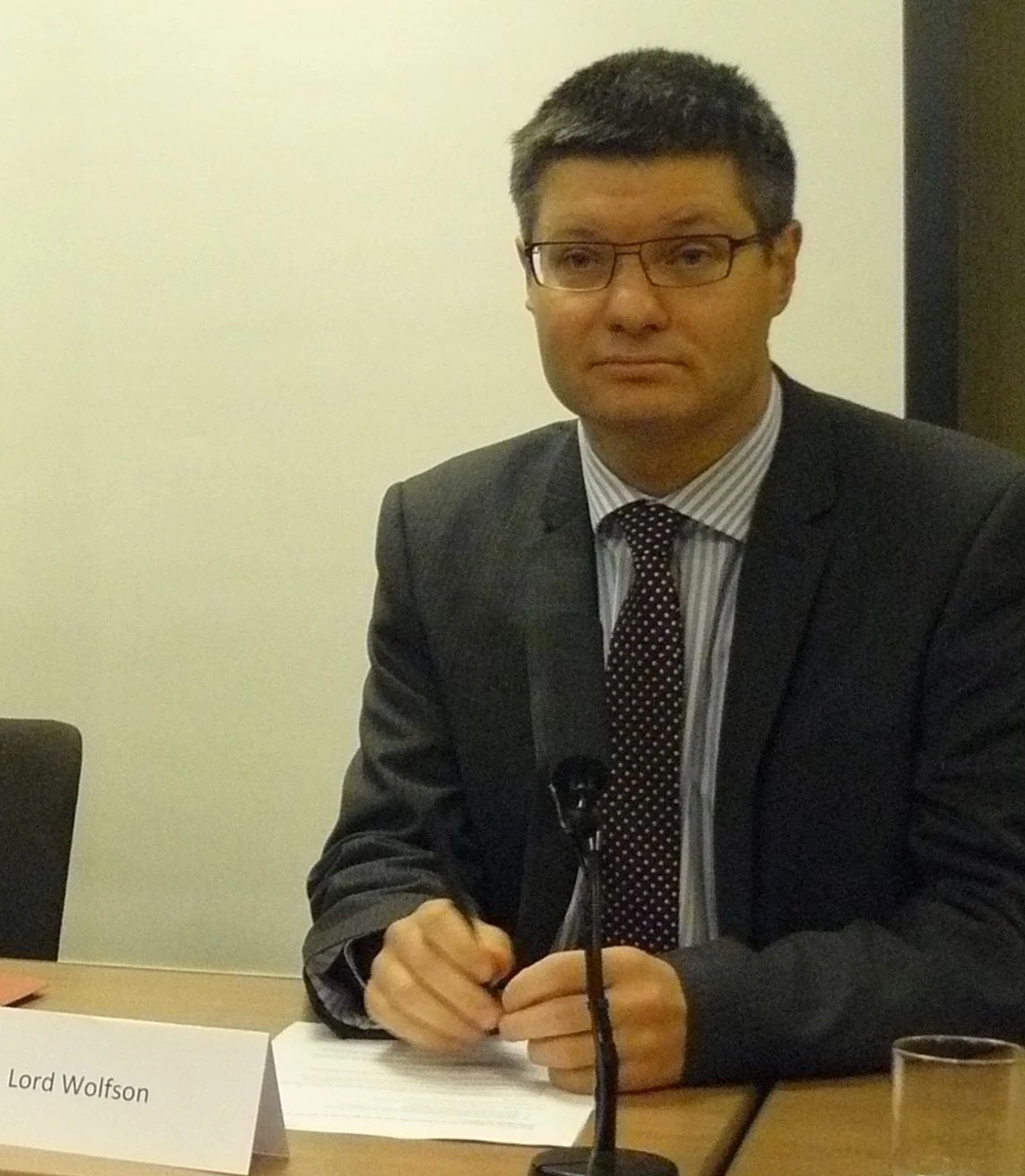
Simon Wolfson joined Next as a sales assistant in 1991. Ten years later, aged 33, he became chief executive of the clothing retailer, then the youngest chief executive of a FTSE 100 company. His rise took him from the shop floor to the boardroom and, in 2010, to the House of Lords as Baron Wolfson of Aspley Guise. His record includes high-profile decisions on staff bonuses and a public role in debates about economic policy and Brexit.
Education and an early start at Next
Born in London on 27 October 1967, Simon Adam Wolfson attended Radley College before studying law at Trinity College, Cambridge. His father, David Wolfson, Baron Wolfson of Sunningdale, was a former chairman of Next and Great Universal Stores, as well as a Conservative life peer. That family connection formed part of the context for Wolfson’s appointment to the company, which drew an allegation of nepotism from at least one city analyst.
Wolfson joined Next as a sales assistant at its Kensington branch in 1991. The following year, he became assistant to the company’s chief executive, David Jones. His progression continued: he joined the board of directors in 1997 and became chief executive in August 2001. At 33, he was the youngest chief executive of a FTSE 100 company. The sequence gives a more precise picture of his rapid advancement than a simple account of an employee rising through the ranks: he moved from a shop role to work directly with the chief executive, then to a board position and the top job.
Wolfson was among the businesspeople who predicted the 2008 financial crisis. In December 2016, he was appointed to the chair of the Open Europe think-tank. Both roles placed him in public debates that extended beyond the daily management of a retailer.
Running a major retailer
As chief executive, Wolfson led Next through a period in which the company’s mail-order and online business became an important part of its retail offer. The company’s Next Directory operation is associated with that development. The available account of Wolfson’s career, however, does not establish the details of his personal role in creating or transforming the Directory, so his leadership of the retailer is clearer than any claim that he alone drove that change.
His tenure also encompassed the financial crisis of 2008 and the COVID-19 pandemic. These were major tests for retailers, but claims that Next emerged stronger than competitors, or that a particular response was due to Wolfson’s foresight, need specific evidence. His career can be understood without turning those broad assertions into settled facts: he led one of Britain’s large clothing retailers through changing economic and trading conditions, while also becoming a prominent figure in business and public life.
Pay and working conditions at Next have formed a contested part of that record. In 2013, Wolfson waived a bonus of £2.4 million and distributed it among staff who had been with the company since 2010. He repeated the gesture the following year, sharing about £3.8 million. The sums were substantial, but the bonuses did not settle broader arguments about wages and terms of work. In 2013, the GMB trade union criticised Next over staff pay, with musician Paul Heaton supporting a campaign that took anti-social behaviour awards to stores. The next year, a dispute arose over the removal of extra Sunday pay: Retail Week reported that some staff could be up to £1,000 a year worse off, while the union challenged the company’s approach to employees who refused changed terms.
The contrast between the bonus distributions and continuing arguments over pay is important to a rounded account of his leadership. The distributions were a direct, documented decision by Wolfson; they do not, on their own, demonstrate that every issue affecting Next employees was resolved. In 2017, after a reported 3.8 per cent fall in profits, the salaries of some senior staff were cut, while Wolfson’s salary rose by one per cent. The figures illustrate why public accounts of a chief executive’s record should include both individual decisions and the wider employment debates around them.
Politics, peers and public debate
Wolfson has been a prominent Conservative supporter. He donated to David Cameron’s leadership campaign in 2005 and co-chaired the party’s Economic Competitiveness policy review. In 2007, the Daily Telegraph named him as the 37th most important British conservative. He also signed an open letter urging Chancellor George Osborne to pursue the coalition government’s deficit-reduction plans within one parliamentary term.
On 18 June 2010, Wolfson was created Baron Wolfson of Aspley Guise, of Aspley Guise in the county of Bedfordshire. He took his seat in the House of Lords on 6 July. His peerage gave a formal parliamentary dimension to a public profile that had developed through business and Conservative politics.
Wolfson was reported as supporting Brexit in 2016. After the Leave campaign won, he argued that Britain’s success depended on international trade negotiations. In January 2017, he said the Government should set out its negotiating objectives and avoid rushing the process. In 2022, he suggested taxing employers who recruited foreign workers as a trade-off for allowing greater numbers of foreign workers into Britain. These interventions reflect the practical concerns of a retailer and the policy positions of a Conservative peer, though they are political arguments rather than evidence of a particular outcome.
Why Simon Wolfson deserves a place in British Legacy
Simon Wolfson’s place in British Legacy rests on an unusually visible combination of business leadership and public service through the House of Lords. He joined Next in a sales role, moved through work with its chief executive and onto its board, and took over as chief executive in 2001. At 33, he became the youngest chief executive of a FTSE 100 company. That career makes his story relevant to the history of British retail: it shows how leadership at a major clothing company can extend beyond products and shops into national arguments about employment, economic policy and trade.
His record is not only one of advancement or recognition. Wolfson’s decisions to waive two large bonuses for distribution among staff sit alongside disputes about wages and Sunday working, giving a more useful account of leadership than unqualified praise would. His support for Conservative policy, appointment as a life peer and interventions on Brexit connect the boardroom to the institutions and choices shaping Britain’s economic life. These specific links—not a generic claim about entrepreneurial spirit—explain his British significance. Remembering Wolfson means holding both parts of the record together: the direction of a major British retailer and the contested effects of the decisions made under his leadership.
Sources
Simon Wolfson — revision 1376094146
Adapted in part from Simon Wolfson by Wikipedia contributors, under CC BY-SA 4.0. Text has been edited and combined with the existing article; this adapted text is shared under the same licence. Contributor history.