Duncan Bannatyne’s business career began with an ice-cream van bought for £450. From that modest start, he moved through care homes and children’s nurseries into health clubs, spas and hotels. His turn as an investor on the BBC’s Dragons’ Den later made business decisions and entrepreneurs’ pitches part of prime-time television. The arc of his career is not a simple leap from small beginnings to a single success: it is a sequence of ventures, sales and new investments.
Starting out in Clydebank
Bannatyne was born in Clydebank on 2 February 1949. His father worked in a foundry after wartime service and captivity, and the family lived in one room in a house shared with six other families. At Dalmuir Primary School, Bannatyne showed an aptitude for arithmetic. He passed the eleven-plus and went to Clydebank High School, where he was more interested in physical education and woodwork than academic study. He left at 15 without qualifications.
A paper round became an early lesson in finding a way past a closed door. When a local newsagent did not want to employ him, she challenged him to find 100 new customers. He returned with the names and got the round. After a few weeks working for a cabinet-maker, he joined the Royal Navy in 1964 as a junior engineering mechanic. He served for several years, including a period aboard the aircraft carrier HMS Eagle.
His naval service ended after he threw an officer off a boat landing jetty in Scotland. Bannatyne later described the incident as involving the officer’s use of authority, a dare from shipmates and his own disillusionment with the Navy. He was 19 and served nine months in a military detention centre at Colchester. This episode is a stark early break in his working life, not a business origin story in itself.
From odd jobs to a first business
After returning to civilian life, Bannatyne trained as an agricultural vehicle fitter and travelled around repairing tractors. He later spent four years in Jersey, from 1974, taking on various jobs, including as a deckchair attendant, hospital porter and ice-cream seller. He gained a heavy goods vehicle licence there. At 29, he and his first wife moved to Stockton-on-Tees. Bannatyne has said that he was poor and did not have a bank account until he was 30.
His first business began soon after the move: an ice-cream van costing £450. He expanded the operation by buying more vans, then sold the business for £28,000. That sale provided capital for further ventures, but it was not the end point of his enterprise. He moved into residential care, establishing Quality Care Homes, which he sold for £26 million in 1997. He also built the children’s nursery chain Just Learning, which he sold for £12 million.
These businesses mark a shift from a one-van operation to companies that required staff, premises and larger-scale management. They also show how Bannatyne’s career developed: income from one venture helped him enter another, while selling businesses allowed him to redirect both money and attention. His next major expansion was into health and leisure.
Health clubs, spas and hotels
Bannatyne expanded into health clubs, spas, hotels and property. In August 2006, his group acquired 26 health clubs from Hilton Hotels for £92 million. The scale of the deal illustrates the distance between his first van and the later leisure business, as well as his move from building companies to acquiring established operations.
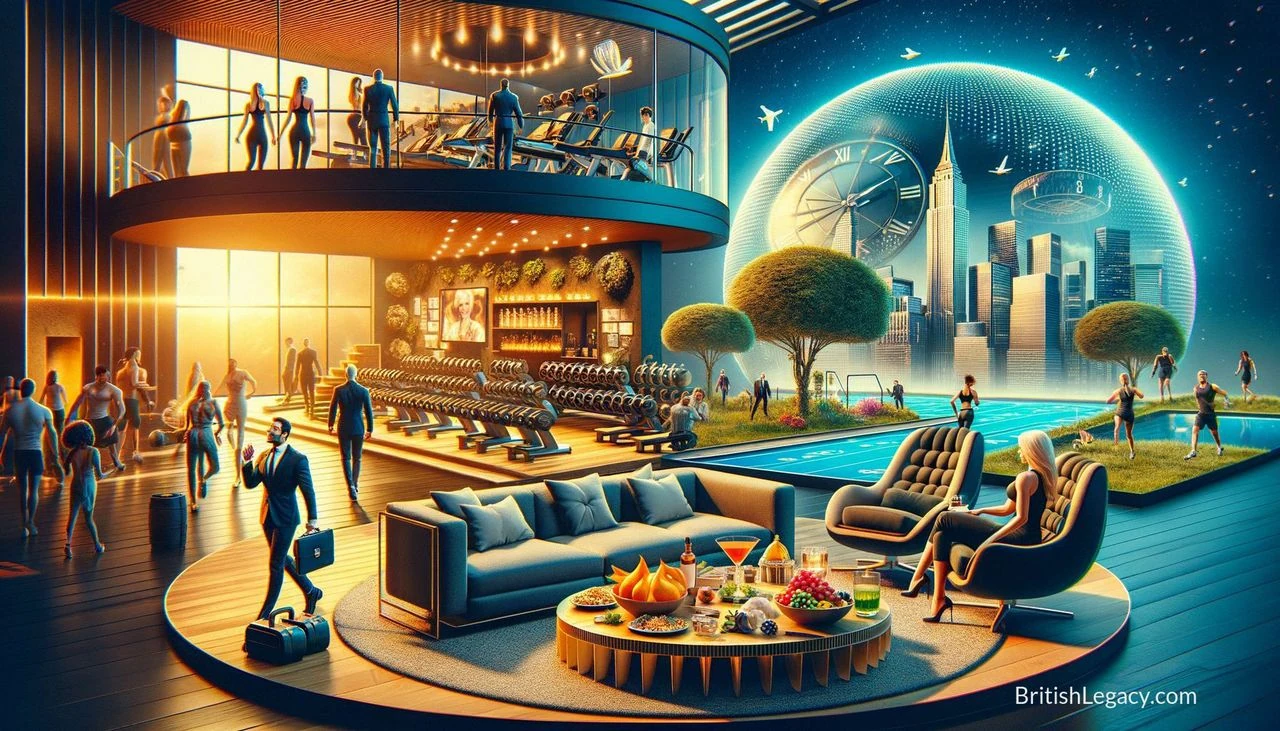
The Bannatyne Group’s portfolio came to include health clubs, spas and hotels across the UK. The Wikipedia account describes it as the country’s largest independent health-club chain and records 69 clubs, 45 spas and three hotels as of February 2025. Those figures are time-specific, rather than a timeless measure of the business. The original article’s broader description of a group with more than 60 clubs, hotels and spas is consistent with that scale, but claims that its facilities or customer service were exceptional are promotional judgements rather than necessary facts about the company.
His business interests extended beyond health and leisure. Bannatyne also became an author, writing seven books on subjects including business, money and time. In 2006 he received an honorary doctorate of science from Glasgow Caledonian University for services to business and charity; Teesside University awarded him an honorary doctorate of business administration in 2009.
A television investor
Bannatyne joined the BBC’s Dragons’ Den in 2005 as one of the investors hearing pitches from entrepreneurs seeking backing. He remained on the programme until 2015, not 2014. During his time on the show he invested in 36 businesses. He left after the twelfth series, alongside Kelly Hoppen and Piers Linney.
The format made negotiation and investment choices visible to a large audience. A pitch had to withstand questions about its product, finances and prospects; the Dragons could offer money and business involvement in return for a stake. Bannatyne’s role connected the public image of an entrepreneur to the practical questions facing smaller businesses: what a company sells, how it can grow and what an investor is being asked to risk. The show also gave him a platform beyond the companies he owned or managed.
His television work continued in other formats. In 2015 he appeared in I’m a Celebrity…Get Me Out of Here!, finishing seventh; his appearance fee was donated to Operation Smile. In 2020 he took part in the BBC series The Real Marigold Hotel. These programmes broadened his public profile, while Dragons’ Den remained the television role most closely associated with his business career.
Charitable work
Bannatyne’s charitable activity has included support for projects in Romania. Over a ten-year period, he funded several projects there, including Casa Bannatyne, a hospice for orphans with HIV and AIDS in Târgu-Mureș, in which he invested £80,000. He established the Bannatyne Charitable Trust in March 2008. These specific commitments give substance to a record often described in broad terms as philanthropy.
He also supported the Geared for Giving campaign, launched at the House of Commons in May 2008 to encourage businesses to set up workplace-giving schemes for UK-registered charities. Later that year he appeared on Who Wants to Be a Millionaire? and raised £20,000 for the charity NCH. In October 2008, he became president of No Smoking Day, the annual campaign supporting people who want to stop smoking. In 2010, he agreed to become patron of the Blue Lamp Foundation, founded by Northumbria Police Constable David Rathband.
Bannatyne was appointed an OBE for his contribution to charity. His charitable work is best understood through the activities and organisations recorded here, rather than through general claims about a single cause or a sweeping social impact.
Why Duncan Bannatyne deserves a place in British Legacy
Duncan Bannatyne’s place in British Legacy rests first on the breadth and progression of his business career. He began with an ice-cream van in Stockton-on-Tees, expanded that operation and sold it, then built businesses in residential care and children’s nurseries before moving into health clubs, spas and hotels. The purchase of 26 Hilton health clubs in 2006 was a major step in that expansion. This sequence offers a concrete account of enterprise: starting with a small operation, developing it, and using the proceeds and experience to build or acquire businesses in other sectors.
His public contribution is not limited to the companies bearing his name. On Dragons’ Den, he invested in 36 businesses and helped make the pressures of pitching and investment familiar to a broad television audience. His recorded charitable work includes funding a Romanian hospice for orphans with HIV and AIDS, establishing a charitable trust, supporting workplace giving and raising money for charity on television. These are distinct forms of activity—business ownership, public discussion of investment and direct charitable support—and the evidence for them is specific. Together, they make Bannatyne a notable figure in modern Scottish and British business and media, without needing to turn his story into a claim that one person transformed an entire industry or society.
Sources
Duncan Bannatyne — Wikipedia revision 1379847042
Adapted in part from Duncan Bannatyne by Wikipedia contributors, under CC BY-SA 4.0. Text has been edited and combined with the existing article; this adapted text is shared under the same licence. Contributor history.