
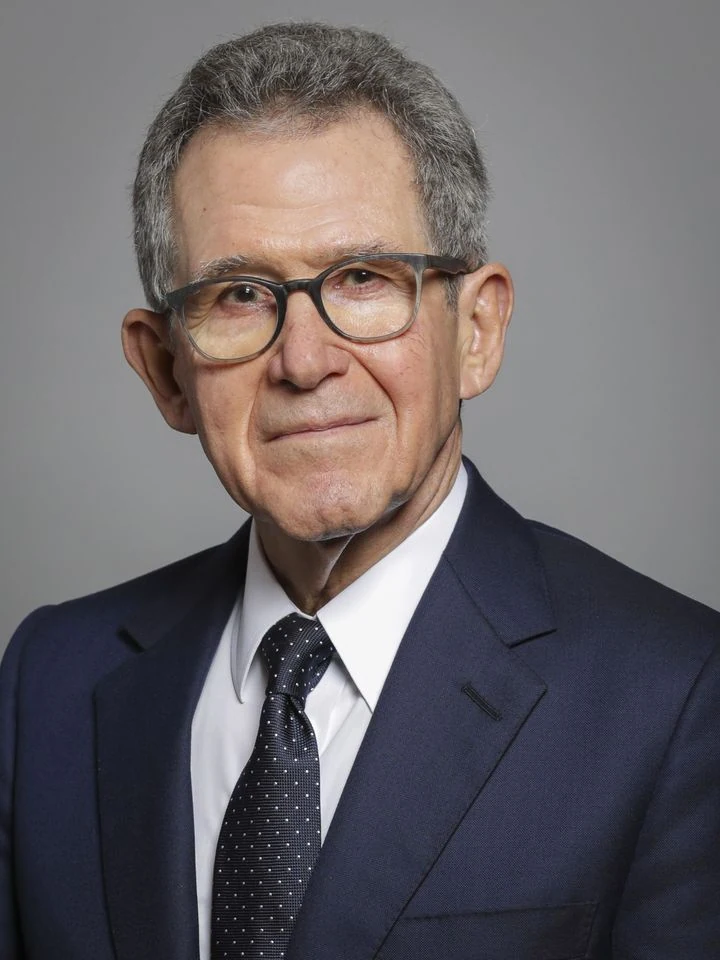
When John Browne became chief executive of BP in 1995, he began a 12-year tenure that reshaped the company through major mergers and a public turn towards alternative energy. The branding that accompanied that shift—“Beyond Petroleum”—became closely associated with his leadership. Browne’s career also encompassed engineering, public service and advocacy for greater openness in business, although his departure from BP in 2007 followed a highly publicised dispute over his private life.
From physics to BP
Edmund John Phillip Browne was born in Hamburg on 20 February 1948. He studied at The King’s School, Ely, and St John’s College, Cambridge, where he gained a first-class degree in physics. He later earned a master’s degree in business from Stanford University. The original account describes this as an MBA; the degree is identified in the biographical account as an MS in business.
Browne joined BP as an apprentice in 1966, at his father’s suggestion, while still at university. Rather than rising through a single office, he moved through a sequence of operational, financial and executive posts. From 1969 to 1983 he held exploration and production roles in Anchorage, New York, San Francisco, London and Canada. He became group treasurer and chief executive of BP Finance International in 1984, then executive vice-president and chief financial officer of Standard Oil of Ohio in 1986.
Following BP’s merger with Standard Oil in 1987, Browne took senior roles in BP America and Standard Oil Production Company. He became chief executive of BP Exploration in 1989 and joined BP’s board as a managing director in 1991. This long experience across the company’s international operations and finances preceded his appointment as group chief executive on 10 June 1995.
Expansion and the “Beyond Petroleum” message
Browne’s period at the top was marked by expansion and diversification. BP merged with Amoco in 1998, and Browne also oversaw the company’s merger with ARCO. The creation of TNK-BP gave the group access to Russian oil reserves. The Amoco merger made Browne head of the combined group at the end of 1998. His tenure, which ended on 1 May 2007, is described as a period of substantial growth for BP.
From 1997, Browne pursued a change in how BP presented itself. The company connected its initials with the phrase “Beyond Petroleum” and gave greater prominence to environmental concerns and alternative energy. Browne argued that meeting present needs should not cause excessive harm to the environment and that the company should develop more sustainable sources of energy. He also set BP a target of reducing its own carbon dioxide emissions by 10 per cent by 2010. That target was achieved nine years early, according to the biographical account.
The language of the rebrand expressed an ambition; it did not mean that BP had ceased to be an oil and gas company. Browne’s record therefore combines a real effort to build renewable and alternative-energy activity within a large fossil-fuel business with the continued expansion of that business. His approach to climate change attracted praise, while the company’s environmental record and safety failures also drew criticism.
Leadership, safety and departure
Browne was known as a forceful executive, and his management style earned him the nickname “Sun King”. His years at BP were also marked by serious industrial accidents. The 2005 explosion at the company’s Texas City refinery was among the events that brought scrutiny of safety at BP. Critics, including author Tom Bower, have argued that cost-cutting compromised safety; Browne rejected Bower’s account as inaccurate. The available account reports both the criticism and the denial, rather than presenting the disputed judgement as settled fact.
Browne’s planned retirement was brought forward in 2007 amid a court case and press coverage of his personal life. He had sought an injunction against publication of allegations made by a former partner. A court later found that Browne had lied about how the two had met. In his resignation statement, he said that he had regarded his sexuality as a private matter and was disappointed that allegations about his personal life had become public. He resigned as BP chief executive on 1 May 2007; Tony Hayward succeeded him.
The circumstances of his departure are significant to Browne’s later work on inclusion, but they should not be reduced to a simple corporate triumph. His experience connected the limits of privacy for a senior executive with the barriers faced by LGBT people in working life. In The Glass Closet: Why Coming Out Is Good Business, published in 2014, he argued for policies that support LGBT inclusion in business.
Public service, engineering and writing
After BP, Browne continued to hold positions across business and public institutions. He was a partner at Riverstone Holdings and later chaired L1 Energy. His board roles included Goldman Sachs, Intel and Daimler Benz. He also served as president of the Royal Academy of Engineering from 2006 to 2011 and was elected a Fellow of the Royal Society in 2006.
His public appointments extended beyond industry. Browne chaired the trustees of Tate and led an independent review of higher-education funding, published in 2010 as Securing a Sustainable Future for Higher Education. The review recommended removing the cap on university tuition fees, leaving institutions to set their own fee levels. He also served as the Government’s lead non-executive director, with a remit that included helping to appoint business leaders to departmental boards.
Books provided another route for Browne to address the relationship between business, science and society. His publications include Beyond Business (2010), Seven Elements that Have Changed the World (2013), The Glass Closet (2014), Connect (2015) and Make, Think, Imagine: Engineering the Future of Civilisation (2019). In 2015 he co-authored a report launching the Global Apollo Programme, which called for co-ordinated research to make carbon-free baseload electricity less costly than electricity from coal.
Browne entered the House of Lords as a life peer in 2001, taking the title Baron Browne of Madingley and sitting as a crossbencher. He was knighted in 1998 and received the Prince Philip Medal from the Royal Academy of Engineering in 1999 for his contribution to engineering. His honours and appointments reflect a career spanning corporate leadership, science and engineering institutions, and government advisory work.
Why John Browne deserves a place in British Legacy
John Browne’s place in British Legacy rests on the scale and range of his contribution to British business and public life. As BP chief executive from 1995 to 2007, he led a company that expanded through major mergers, including Amoco, and established itself as a global energy group. His “Beyond Petroleum” strategy made alternative energy and climate change part of BP’s public corporate identity. The emissions target set under his leadership was achieved ahead of schedule, while the company’s continuing reliance on oil and gas and the safety controversies of his tenure remain essential parts of an honest account. Remembering both the stated ambition and the difficult record gives readers a more useful understanding of what corporate leadership can—and cannot—change.
His British legacy is not confined to BP. Browne’s presidency of the Royal Academy of Engineering, his work on higher-education funding and his service in the House of Lords placed him within institutions that shape engineering, education and policy in the UK. His writing and advocacy also brought questions of LGBT inclusion in business into public discussion, informed by the events surrounding his own departure from BP. These strands—industrial influence, engineering leadership, public service and a case for more inclusive workplaces—make his career relevant beyond the fortunes of one corporation. They offer a specific account of how a British executive’s decisions and arguments reached into energy, institutions and working life.
Sources
John Browne, Baron Browne of Madingley
Adapted in part from John Browne, Baron Browne of Madingley by Wikipedia contributors, under CC BY-SA 4.0. Text has been edited and combined with the existing article; this adapted text is shared under the same licence. Contributor history.
.jpg)