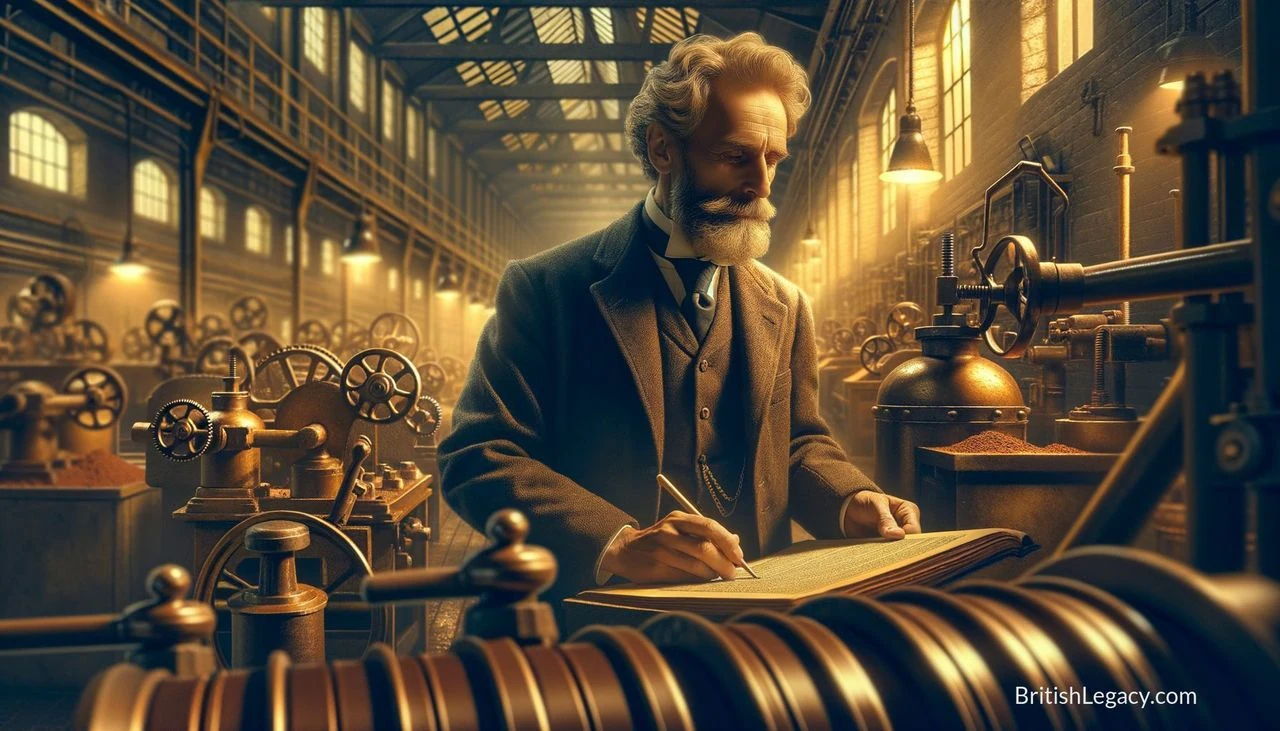
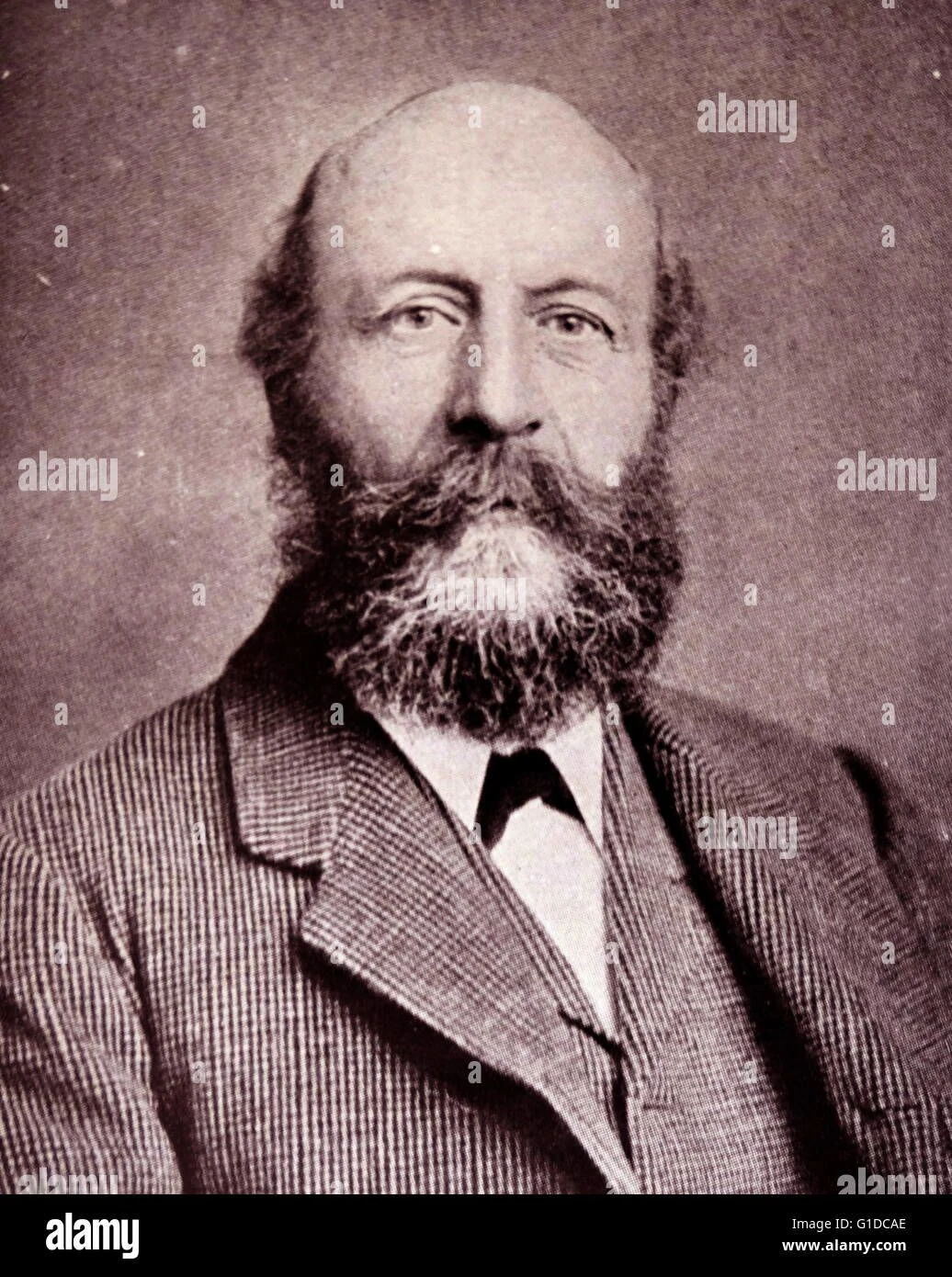
John Cadbury’s business began with a shop, not a factory. In 1824, he opened a premises in Birmingham selling cocoa and drinking chocolate alongside tea, coffee and other goods. His Quaker commitments shaped both his business and his public life: he abstained from alcohol, promoted drinking chocolate as an alternative and became active in causes that included workers’ rights, temperance and industrial reform.
A Birmingham shop and a growing trade
Cadbury was born in Birmingham on 12 August 1801 into a Quaker family. His father, Richard Tapper Cadbury, was a linen draper. John attended Joseph Crosfield’s Quaker School at Hartshill and, in 1818, began an apprenticeship with a tea dealer in Leeds. Six years later he opened his own shop at 93 Bull Street in Birmingham. He prepared the cocoa and drinking chocolate himself, selling them with tea, coffee, hops and mustard.
The shop was the starting point for a larger trade. Cadbury opened a warehouse in Crooked Lane in 1831 and, by 1842, was selling sixteen varieties of drinking chocolate and eleven of cocoa. In 1846, he went into partnership with his brother Benjamin, establishing Cadbury Brothers. The company moved to a new factory in Bridge Street the following year. The brothers left retail in 1850, passing the shop to John’s son Richard; their manufacturing partnership was dissolved by mutual consent in 1856.
John retired from business in 1861, following the death of his wife. Control of the manufacturing concern passed to his sons Richard and George. This chronology places his achievement in perspective: he established the business and helped it develop from a shop into a manufacturer, while its subsequent growth belonged to the next generation as well.
Quaker commitments in public life
Cadbury’s religious life extended well beyond the shop. He was an elder in the Birmingham Friends Meeting, served as clerk of the Warwickshire North Friends Monthly Meeting and supported the Friends’ Reading Society and the Seven Street Friday-day Schools. He also made missionary journeys to Ireland on behalf of the Quakers.
His abstinence informed his advocacy of drinking chocolate as an alternative to alcoholic drinks. Cadbury was active in the temperance movement, serving for many years as a vice-president of the United Kingdom Alliance and taking part in the Birmingham Temperance Society. He supported the Blue Ribbon campaign and, according to the account of his life, remained a total abstainer for half a century.
His reform work was practical as well as religious. From 1830 to 1841, Cadbury served as a Poor Law guardian, opposing the exploitation of climbing boys and criticising lavish feasting by local officials. He supported the campaign against industrial pollution and reduced pollution at his own factory. His causes also included opposition to bull-baiting and support for the Animals’ Friend Society, the Peace Society and Sunday schools. In later life, he gave attention to hospitals, savings banks and facilities for blind people.
From the business to Bournville
Cadbury’s sons carried the business forward after his retirement. In 1879, Richard and George moved the factory from Birmingham city centre to a site on the then Worcestershire border. There they developed Bournville, which became a model village and, in time, a suburb of Birmingham. The village is associated with the family’s concern for workers’ living conditions, but its development belongs to the later generation and should not be confused with John Cadbury’s own business career.
The original account describes George Cadbury as leading the creation of Bournville in 1893. The earlier factory move and village development in 1879 provide a fuller chronology: Bournville took shape over time, rather than being a single project begun on one date. Its significance lies in the Cadbury family’s attempt to connect industrial growth with the surroundings in which workers lived.
Cadbury’s legacy also reaches forward through the company’s products. Dairy Milk, introduced in 1905, came after his retirement and was created by the business he helped establish, not by John himself. That distinction matters: his contribution was to build the enterprise and its early manufacturing foundations, while later generations made new products and expanded its reach.
Why John Cadbury deserves a place in British Legacy
John Cadbury deserves a place in British Legacy because his story joins the development of a Birmingham business with a record of civic and social engagement. He began with a shop in Bull Street, prepared cocoa and drinking chocolate for sale, and built a trade that grew into manufacturing. His role was foundational rather than solitary: his brother Benjamin joined the enterprise, and his sons took control after his retirement. Recognising those stages gives a more accurate account of how a family business became part of Britain’s industrial history.
His public commitments make that business history more distinctive. Cadbury’s Quaker faith informed his support for temperance, while his work as a Poor Law guardian and his campaigning on industrial pollution connected personal conviction with public reform. He also supported education, animal welfare and healthcare. The later development of Bournville by Richard and George extended the family’s concern with workers’ lives into the built environment. Together, these documented strands show a British legacy grounded in a particular place, a manufacturing enterprise and sustained civic activity—not simply in the later fame of the Cadbury name or the success of products created after John had left the business.
Sources
John Cadbury (revision 1379003104) · John Cadbury
Adapted in part from John Cadbury by Wikipedia contributors, under CC BY-SA 4.0. Text has been edited and combined with the existing article; this adapted text is shared under the same licence. Contributor history.