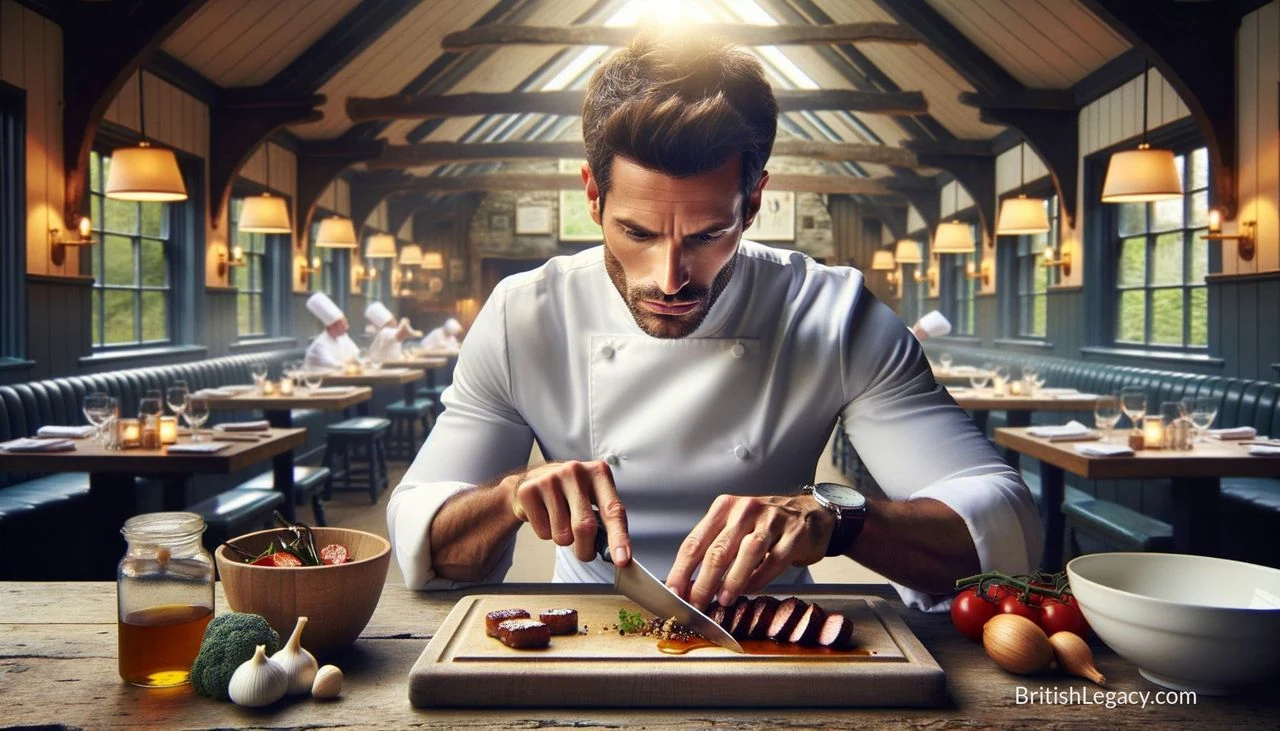
Michael Wignall’s career is associated with two restaurants that earned two Michelin stars under his leadership: The Latymer at Pennyhill Park in Surrey and Gidleigh Park in Devon. His cooking has been described as combining contemporary creativity with classic technique, and his menus have drawn on seasonal British produce. Dishes in the account of his work range from venison with beetroot, kale and salsify to smoked eel with horseradish, caviar and dill.
A route through professional kitchens
Born in Lancashire, Wignall developed his career through experience in Britain and abroad. His training and work took him to France, Germany and the United States, where he encountered different professional kitchens and culinary traditions. Those experiences informed a style that joined established techniques to more contemporary presentation and combinations of flavour.
The available account offers few details about his early life or the individual stages of his training, but it places international experience before his best-known British restaurant appointments. Rather than treating those influences as a change of direction away from British cooking, Wignall’s work brought them into dialogue with seasonal ingredients and recognisable British elements.
The Latymer and Gidleigh Park
Wignall spent six years at The Latymer, the restaurant at Pennyhill Park in Surrey. During his tenure, it reached two Michelin stars. The achievement established The Latymer as one of the principal settings for his cooking, and the account credits his inventive approach and attention to quality as part of the restaurant’s development.
In 2016, Wignall succeeded Michael Caines at Gidleigh Park in Devon. He retained the restaurant’s two Michelin stars. His menus there were associated with precision, creativity and seasonal British produce: qualities that connect his work at Gidleigh Park to his earlier tenure at The Latymer, while giving a distinct setting to his interest in modernising familiar ingredients.
Examples attributed to Wignall’s cooking include venison with beetroot, charred kale and salsify; scallops with burnt apple, celeriac and truffle; and smoked eel with horseradish, caviar and dill. These combinations bring together strong, contrasting flavours and ingredients familiar in British cooking with a more contemporary arrangement. They also suggest the range of his menus, from game and root vegetables to seafood, without reducing his work to a single signature dish.
A modern approach to flavour
Wignall’s approach has been characterised by attention to detail, playfulness and a willingness to experiment. The point is not simply novelty: classic techniques remain part of the picture, while unexpected pairings and careful presentation alter how ingredients meet on the plate. Seasonal produce, particularly in the account of his Gidleigh Park menus, gives that experimentation a connection to place and time.
The recognition attached to his restaurant work includes Michelin stars and AA Rosettes. The account also notes that his recipes and insights have appeared in culinary publications, although it does not identify particular titles or dates. Taken together, these points sketch a career in which restaurant cooking, awards and published work helped bring his approach to a wider audience.
Why Michael Wignall deserves a place in British Legacy
Wignall’s place in British culinary history rests on concrete achievements rather than broad claims of influence: during his six years at The Latymer, the restaurant reached two Michelin stars, and at Gidleigh Park he retained the two stars it held after taking over as head chef in 2016. These appointments connect his work to two prominent British dining rooms in Surrey and Devon. They also show the demands of a career in which a chef must sustain standards while working in different kitchens and settings.
His menus offer another reason to remember his contribution. Ingredients associated with British cooking, including venison, beetroot, kale and smoked eel, appear alongside combinations such as burnt apple with scallops and celeriac, or horseradish with caviar and dill. This is a specific form of modernisation: not a rejection of tradition, but a willingness to use technique, contrast and presentation to renew how familiar ingredients are served. Wignall’s career therefore provides a useful example of contemporary British restaurant cooking that is rooted in its ingredients while open to international experience and experimentation.