Raymond Blanc arrived in England in 1972 with limited English and a career in restaurants already under way. He went on to open restaurants in Oxford and Oxfordshire, build businesses beyond the dining room, and bring cooking to British television viewers. His career joined French technique to British ingredients and hospitality, while his kitchens became places where other chefs learned their trade.
From Franche-Comté to Oxfordshire
Blanc was born near Besançon on 19 November 1949 and grew up in Saône, a village nearby. Food and gardening were part of family life. His mother, known as Maman Blanc, taught his sisters to cook, while his father taught Blanc and his brothers to work in the kitchen garden. For Blanc’s tenth birthday, his father gave him a colander and a map for foraging; his mother then showed him how to cook what he had collected.
Blanc trained as a waiter and worked at the Michelin-starred Le Palais de la Bière in Besançon. In 1972, after a disagreement with the head chef, he was dismissed. The restaurant’s manager knew of a job in England, and Blanc travelled to the Rose Revived in Newbridge, Oxfordshire. His English was limited enough that he relied on a notepad. He later worked under chef-patron André Chavagnon at La Sorbonne, a French restaurant in Oxford.
In 1977, Blanc and his then wife, Jenny, opened Les Quat’ Saisons in Summertown, Oxford. They opened in a row of modern shops; Blanc later recalled that they had mortgaged their house and borrowed from 18 other people. The restaurant quickly won attention, including the Egon Ronay Guide’s Restaurant of the Year award and two Michelin stars. It was the beginning of a career rooted in British hospitality, rather than a venture that began at the country-house hotel for which Blanc later became best known.
Restaurants, gardens and a wider business
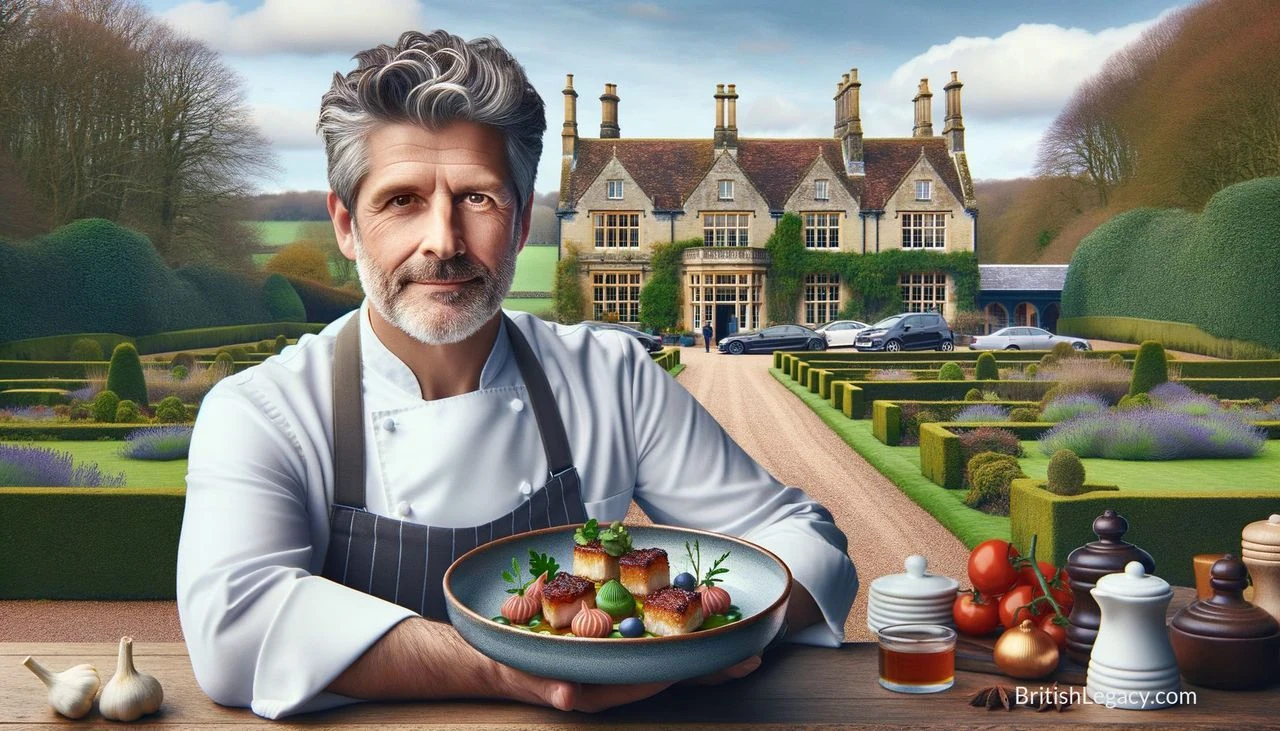
In 1981, Blanc opened Maison Blanc, a bakery and pâtisserie business that grew to 14 branches, including shops in London and Oxford. Its cakes were also sold through Waitrose. The chain closed in 2017 after a change of ownership. In 1983, Blanc bought a manor house in Great Milton, Oxfordshire, where he opened Le Manoir aux Quat’ Saisons, a country-house hotel and restaurant. Its two Michelin stars and setting made it the best-known expression of his cooking.
Le Manoir’s menus combined French cooking with ingredients grown or sourced in Britain. The gardens were described as organic and as growing more than 90 types of vegetables and 70 types of herbs. They offer a practical illustration of the place of produce and seasonality in the restaurant’s identity. Dishes named in earlier accounts of Blanc’s work include Cornish crab with apple and herb soup, Scottish scallops with cauliflower purée, and mushroom risotto made with wild British mushrooms. Other notable recipes include Soufflé Suissesse and lemon tart.
Blanc also sought to bring his approach to food beyond a luxury hotel. In 1996, he opened Le Petit Blanc in Oxford, the first of a group of smaller restaurants intended to make good food part of everyday life. The business later became known as Brasserie Blanc. Its restaurants opened in several British cities; some subsequently closed. In 2003, the four Le Petit Blanc brasseries then operating became part of the Loch Fyne Restaurant Group portfolio. Blanc retained a share and continued to contribute to menus, chef and kitchen teams, and restaurant promotion.
Teaching, television and books
Blanc taught or employed chefs including Heston Blumenthal, John Burton-Race, Michael Caines, Paul Liebrandt and Marco Pierre White. Their later careers show how the influence of his kitchens extended beyond restaurants bearing his name. He also established a cookery school at Le Manoir. In 2013, he took on 21 apprentices across Brasserie Blanc restaurants as part of a scheme to bring young people into food and hospitality.
Television gave his cooking a wider audience. Blanc appeared on British programmes from the 1980s onwards, including Food and Drink and MasterChef. His later work included The Restaurant, the BBC Two series in which couples competed for support to run a restaurant, as well as Kitchen Secrets, The Very Hungry Frenchman and Raymond Blanc: How to Cook Well. In 2014, he and Kate Humble presented Kew on a Plate, demonstrating the growth and preparation of vegetables.
His books carried that teaching into print. Titles include Recipes from Le Manoir aux Quat’ Saisons, Foolproof French Cookery, A Taste of My Life, Kitchen Secrets, Kew on a Plate with Raymond Blanc and Simply Raymond. The range reflects a public career that reached professionals and home cooks through restaurants, television and published recipes.
Food, sustainability and public life
In 2012, Blanc became president of the Sustainable Restaurant Association and culinary director for Eurostar. He was also a patron of the Children’s Food Festival, held in south Oxfordshire. These roles sat alongside his work with restaurants and apprentices, extending his involvement into food education and the wider hospitality industry.
His public record has included controversy as well as acclaim. During the fourth series of The Great British Bake Off, Blanc posted online criticism of contestant Ruby Tandoh, commenting on her weight and tears. Tandoh responded publicly, and Blanc apologised. His appointment as an Officer of the Order of the British Empire was described in the earlier article as having taken place in 2007. The account used here gives the honour as an honorary OBE received in 2008.
Why Raymond Blanc deserves a place in British Legacy
Blanc’s British legacy is grounded in the places and businesses he built here. After arriving in Oxfordshire in 1972, he opened Les Quat’ Saisons in Oxford and later established Le Manoir in Great Milton. Across those restaurants, French technique met British ingredients and the working realities of British kitchens. Maison Blanc extended his business into bakeries and pâtisseries, while Le Petit Blanc and Brasserie Blanc brought his approach to restaurant dining into a wider range of British cities. These ventures made his influence more than a matter of personal reputation: they created workplaces, businesses and public-facing places to eat.
His contribution also travelled through people and teaching. Blanc taught or employed chefs who went on to establish their own reputations, ran a cookery school, and took on apprentices entering hospitality. Television programmes and books brought his recipes and methods to audiences beyond professional kitchens. The gardens at Le Manoir, with their stated range of vegetables and herbs, made growing produce a visible part of the restaurant’s connection between ingredient and dish. His work with the Sustainable Restaurant Association and the Children’s Food Festival extended that engagement into food and hospitality beyond his own restaurants. Blanc’s story belongs in British Legacy because it shows how a French-born chef built a lasting career in British food culture without losing the French roots that shaped his cooking.
Sources
Raymond Blanc — Wikipedia revision 1374105720
Adapted in part from Raymond Blanc by Wikipedia contributors, under CC BY-SA 4.0. Text has been edited and combined with the existing article; this adapted text is shared under the same licence. Contributor history.