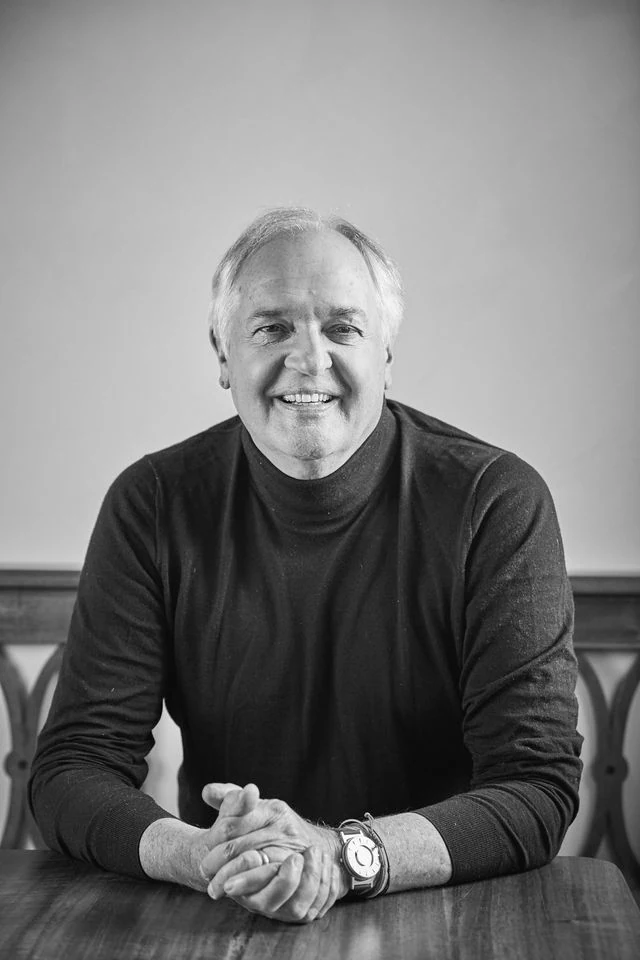
Paul Polman’s decade as chief executive of Unilever put sustainability near the centre of a major consumer-goods company’s strategy. The Dutch executive, who had built his career at Procter & Gamble and Nestlé, took charge in 2009 and oversaw the launch of the Unilever Sustainable Living Plan the following year. Its ambition was to grow the business while reducing its environmental impact and extending its social contribution. That approach became a prominent part of his public work, although it also faced shareholder criticism when the company missed sales targets.
From Enschede to international business
Polman was born in Enschede, the Netherlands, on 11 July 1956. He studied at the University of Groningen, where he gained a Bachelor of Business Administration and a bachelor’s degree in 1977. He went on to the University of Cincinnati, completing a master’s degree in economics and an MBA in finance and international marketing in 1979.
He joined Procter & Gamble in 1979 as a cost analyst and spent 27 years with the company. His roles included managing director of P&G UK from 1995 to 1998, president of global fabric care from 1998 to 2001, and group president for P&G Europe. In 2006 he joined Nestlé as chief financial officer; in 2008 he became vice-president and head of its Americas branch.
On 1 January 2009, Polman succeeded Patrick Cescau as Unilever’s chief executive. He held the post until the end of 2018, with Alan Jope taking over on 1 January 2019. The scale of his earlier experience, spanning financial, regional and product responsibilities, preceded a leadership role at a company whose brands and markets reached around the world.
A plan for growth and responsibility
In 2010, Unilever introduced the Sustainable Living Plan. It set out three broad aims: to improve the health and well-being of more than a billion people, halve the environmental impact of the company’s products across their lifecycle, and improve livelihoods across its value chain. The plan was intended to connect commercial growth with social and environmental objectives rather than treat them as separate concerns.
Polman also challenged the emphasis on short-term performance. He discontinued quarterly earnings guidance, arguing that quarterly targets could encourage decisions harmful to long-term results. The strategy was not without disagreement. In 2013 and 2014, Unilever missed sales targets in six of eight quarters, and some shareholders questioned Polman’s focus on sustainability. He attributed the shortfalls to currency movements and slower growth in emerging markets, rather than to the company’s strategy.
The company’s plan included targets and reporting intended to measure progress. The original account also describes reductions in waste associated with product disposal, water-saving efforts, product reformulation and health and hygiene initiatives. Those examples sit within a wider programme: the Sustainable Living Plan addressed not only the effects of manufacturing and consumption, but also social aims connected to health and livelihoods. Its scale made implementation across products and markets a continuing challenge, rather than a single project with a simple endpoint.
Beyond Unilever
Polman’s work on sustainable business continued through international organisations. He co-founded the Business and Sustainable Development Commission, which sought to encourage private-sector contributions to the United Nations Sustainable Development Goals. He also served as chair of the World Business Council for Sustainable Development and sat on the board of the Consumer Goods Forum, leading its sustainability efforts. In 2016, the UN secretary-general selected him as an SDG Advocate; he was appointed again in 2019.
In 2019, Polman co-founded Imagine World, an organisation focused on poverty and climate change and working with companies on initiatives related to the UN goals. It was acquired by Systemiq in 2022, and Polman remained a board member and major shareholder. He also co-authored Net Positive: How Courageous Companies Thrive by Giving More Than They Take, extending the argument that businesses should account for the wider effects of their activities.
His honours included the Rainforest Alliance Lifetime Achievement Award in 2014 and the Champions of the Earth Lifetime Achievement Award in 2015. In 2018, he was made an Honorary Knight Commander of the Order of the British Empire. This was an honorary award, reflecting his international career rather than British citizenship.
Unilever’s British connection
Polman’s British connection is grounded in work and institutions, not birthplace: he was born and educated in the Netherlands and the United States. His career included leading P&G UK, and his time at Unilever intersected with the company’s British presence. In October 2018, Unilever cancelled plans to move its headquarters from London to Rotterdam. The decision was a company matter, not an action that can be attributed to Polman alone, but it formed part of the setting in which his chief executive tenure ended.
His honorary KBE, awarded in 2018, offers another specific link with Britain. More broadly, his record connects British business with international debates about how large companies should measure performance and responsibility. That connection is meaningful precisely because it is particular: Polman’s influence on a company with a London headquarters and his work in the UK formed part of a career that remained international in outlook and scope.
Why Paul Polman deserves a place in British Legacy
Paul Polman merits a place in British Legacy not as a British-born business figure, but as an international executive whose career had clear British dimensions. He led P&G UK before becoming chief executive of Unilever, and his decade at Unilever included the company’s decision to retain London as its headquarters rather than relocate to Rotterdam. His 2018 honorary KBE recognised an international contribution, while his leadership brought the question of corporate responsibility into the public discussion around one of the largest consumer-goods businesses operating in Britain and worldwide.
The lasting significance of his work lies in the practical challenge he placed before companies: whether growth could be pursued alongside measurable aims for health, livelihoods and reduced environmental impact. The Sustainable Living Plan gave that challenge a structure and a set of stated goals. Its ambitions did not remove commercial pressures or criticism, as missed sales targets and shareholder concerns showed. That tension makes the story more useful than a simple celebration of corporate virtue. Polman’s British legacy is the contribution he made to a debate about how companies based in, or closely connected with, Britain can balance performance with their effects on people and the environment.
Sources
Paul Polman — Wikipedia, revision 1356714117
Adapted in part from Paul Polman by Wikipedia contributors, under CC BY-SA 4.0. Text has been edited and combined with the existing article; this adapted text is shared under the same licence. Contributor history.