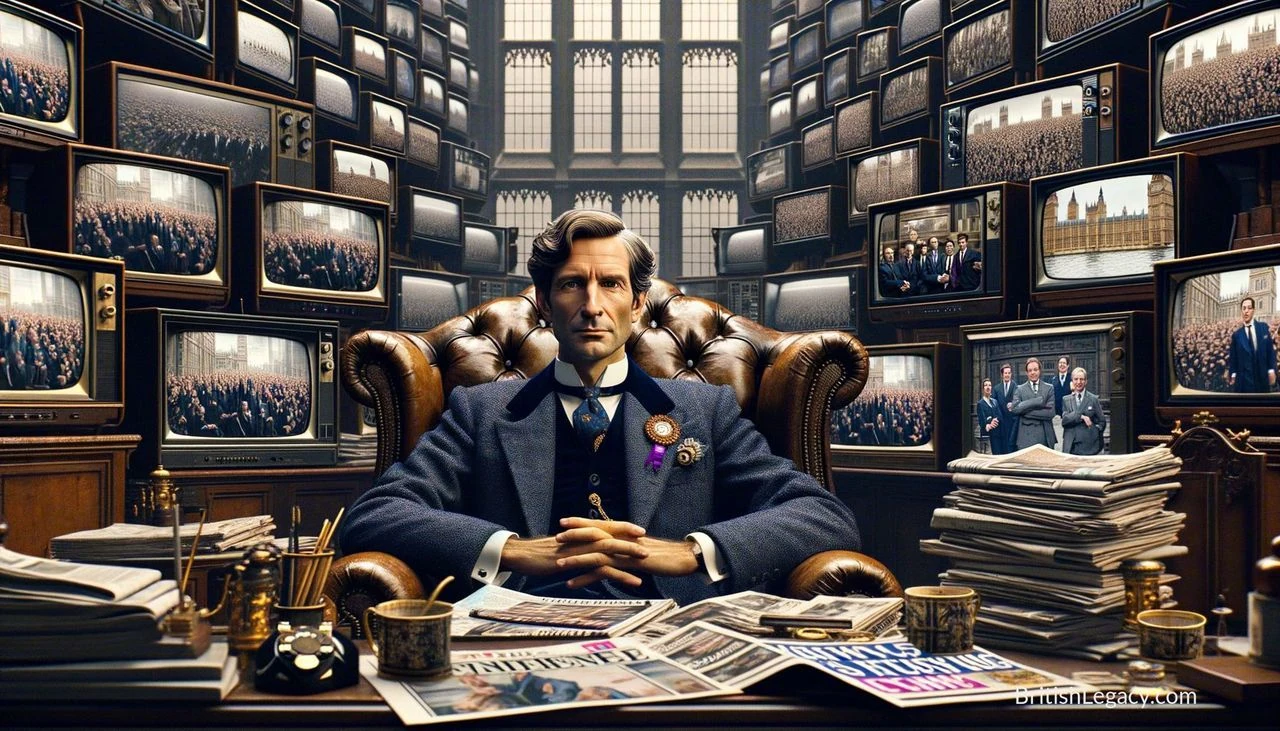
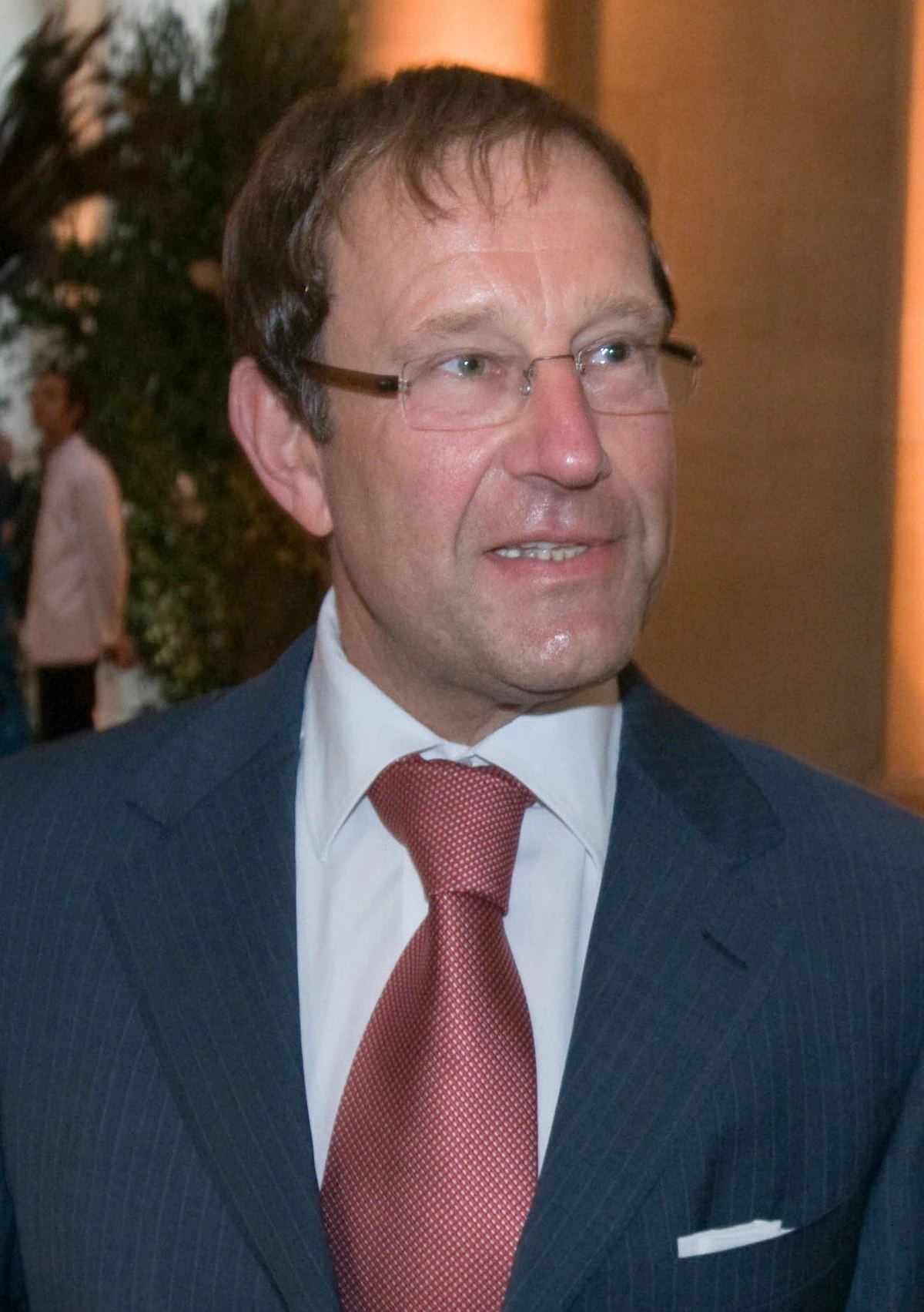
Richard Desmond’s business career began in music publishing and grew into a media group spanning celebrity magazines, newspapers and television. Northern & Shell, the company he founded, made and sold several high-profile acquisitions: it bought Express Newspapers in 2000 and Channel 5 in 2010, then sold the newspaper group in 2018 and the broadcaster in 2014. Its history also included adult magazines and television channels, a less comfortable but significant part of the business’s development.
Early work and a publishing start
Born in Hampstead, London, on 8 December 1951, Desmond was raised in Edgware. His parents divorced after his father lost a substantial amount of the family’s money through gambling. Desmond and his mother moved into a flat above a garage. He attended Edgware Junior School and Christ’s College, Finchley, leaving school at 15.
He went to work in the classified advertising section of the Thomson Group and played drums at gigs after work. He later became advertising manager at Beat Publications, which published the music magazine Beat Instrumental. By the age of 21, he owned two record shops.
In the mid-1970s, Desmond and Ray Hammond set up Cover Publication. One of its early titles was International Musician and Recording World, a monthly magazine for musicians that went on to have editions in the UK, the United States, Australia, Japan and Germany. Desmond eventually bought out Hammond. In 1979, Cover Publication became Northern & Shell, a name Desmond chose with reference to Northern Rock and Shell Oil. The company moved to London’s Docklands in 1982, among the area’s early business arrivals.
Magazines, television and a varied portfolio
Northern & Shell expanded into celebrity publishing with the launch of OK! as a monthly magazine in 1993. It became a weekly in 1996. The company also entered adult publishing and television. It began publishing the UK edition of Penthouse in 1982 and later built a portfolio of adult magazine titles. In 1995, it launched The Fantasy Channel, later renamed Television X, and developed further channels under Portland TV, including Red Hot TV.
Desmond put the adult magazine business up for sale in 2001, saying he wanted to distance himself from that sector. The titles were sold to Remnant Media. Northern & Shell’s remaining adult television interests ended in 2016, when Portland TV was sold in a management buyout. This strand of the company’s history sits alongside its better-known newspaper and broadcasting acquisitions; leaving it out would give an incomplete account of how the group grew.
In November 2000, Northern & Shell bought Express Newspapers. The group included the Daily Express, Sunday Express, Daily Star and Daily Star Sunday; Desmond also started the Irish Daily Star in a joint venture. The acquisition brought national newspapers into a company that had begun with specialist magazines. Northern & Shell sold Express Newspapers to Reach plc in 2018.
In July 2010, Desmond bought Channel 5 from RTL Group for £103.5 million. The channel had been losing money. His company cut costs and raised the programming budget; in its first full year under his ownership, Channel 5’s revenue rose by 28 per cent, with the return of Big Brother among the factors cited. Desmond sold the broadcaster to Viacom in May 2014 for £463 million. The purchase and sale made his ownership a substantial but finite chapter in the channel’s history.
Other ventures and public controversies
Northern & Shell launched the Health Lottery in 2011. Around a fifth of ticket turnover initially went to charitable causes through the People’s Health Trust, supporting local health projects. The proportion was later raised to 25 per cent. The arrangement also attracted criticism: the chief executive of the Association of Chief Executives of Voluntary Organisations accused Desmond of profiting from charitable giving, while the lottery’s share for good causes was compared unfavourably with that of the National Lottery.
In 2020, Desmond’s proposed Westferry Printworks development became the subject of public scrutiny. His company had applied to build housing on the former printworks site in east London. After a revised scheme was rejected by the council and the Planning Inspectorate, then housing secretary Robert Jenrick approved it. Jenrick later accepted that his decision had been unlawful, while denying bias. Desmond had sent him a text after a fundraising dinner referring to the money owed to Tower Hamlets Council for infrastructure. The timing of the approval was reported to save Desmond’s company £40 million. The government later rejected the development. These events are part of the record of Desmond’s business dealings with public authorities, not a finding that he committed an offence.
Desmond’s charitable activity included forming the RD Crusaders with Roger Daltrey in 2003, a rock group that raised money for charitable causes. He became president of the Jewish charity Norwood in 2006 and donated £2.5 million towards a children’s centre at Moorfields Eye Hospital. Such work provides concrete examples behind broader descriptions of his philanthropy.
Why Richard Desmond deserves a place in British Legacy
Richard Desmond’s place in British Legacy rests on the scale and variety of the media businesses he built. Northern & Shell began with music titles, developed a major celebrity magazine and expanded into adult publishing and television. Its purchase of Express Newspapers brought established national titles into the group; its acquisition of Channel 5 brought Desmond into British broadcasting. Those transactions connect his career to industries that reach large audiences and shape how news, entertainment and popular culture are published and watched.
The account is also a story of ownership changing hands. Desmond did not retain the Express newspapers or Channel 5 indefinitely: both were sold, in 2018 and 2014 respectively. That distinction matters when describing his legacy. His period of ownership included changes to Channel 5’s spending and programming, while the group’s other ventures show the breadth—and the contested nature—of its commercial choices. The Health Lottery and his donations to Norwood and Moorfields add a documented charitable dimension, without erasing public criticism or the controversies surrounding his businesses. Together, these details offer a specific portrait of a British media entrepreneur: a publisher who moved between specialist magazines, mass-market newspapers, television and charitable projects, leaving a record defined by both commercial reach and debate.
Sources
Richard Desmond — Wikipedia revision 1370355519
Adapted in part from Richard Desmond by Wikipedia contributors, under CC BY-SA 4.0. Text has been edited and combined with the existing article; this adapted text is shared under the same licence. Contributor history.