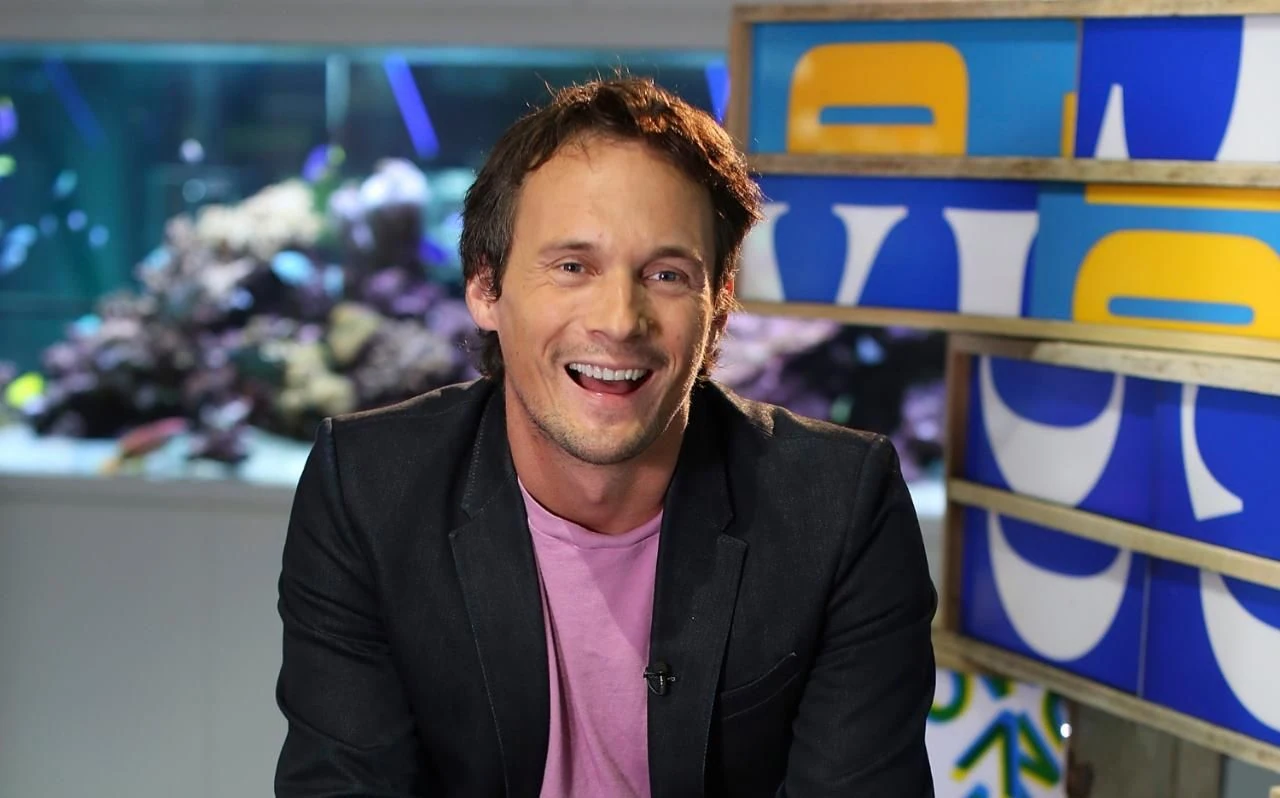
Richard Reed’s first business venture began at a market stall. In 1998, he and fellow Cambridge graduates Adam Balon and Jon Wright began selling smoothies; the company they built, Innocent Drinks, was founded in 1999 and grew into an international drinks business. Its rise was shaped not only by the product but by a recognisable brand voice, built around informal messages on packaging. Reed later co-founded an investment firm and supported charity projects, extending his work beyond the company that first made his name.
From Kirkheaton to Cambridge
Reed was born in Kirkheaton, West Yorkshire, on 13 February 1973, and grew up in Mirfield. He attended Batley Grammar School before studying geography at St John’s College, Cambridge, from 1991 to 1994. There he met Balon and Wright, who would become his business partners. After university, Reed spent four years working as an account manager at an advertising agency.
The group’s experience in advertising would later prove useful in presenting a new product to customers, but their first step was practical: they set up a market stall to sell smoothies. The business began in 1998, and Innocent Drinks was founded the following year. In an interview quoted in the biographical account, Reed recalled that the founders left their jobs with little cash and relied on overdrafts and credit cards. He said it took four years for them to return to the salaries they had given up. That account gives a measure of the uncertainty behind the company’s eventual scale.
A product with a distinctive voice
Innocent’s stated aim was to make it easy for people to do themselves some good. Its smoothies and other products were presented as a convenient way to consume fruit and vegetables. The company’s identity also depended on how it spoke to customers. Reed is associated with “wackaging”: the use of quirky messages on packaging, including on smoothie bottles. The playful tone helped give the brand a personality that was distinct from a straightforward product description.
The original account describes a test at a 1998 music festival, where the founders sold smoothies and asked customers to vote on whether they should leave their jobs to pursue the business. Customers put their empty bottles in bins marked “yes” or “no”; the positive response encouraged them to proceed. The episode captures the founders’ use of direct customer feedback, as well as the modest scale from which the business started.
Innocent expanded from that early stall into an international company producing fruit smoothies and vegetable pots for sale through outlets around the world. Its growth made it, according to the biographical account, Europe’s biggest smoothie brand. In 2013, Coca-Cola acquired the company. The sale brought a global drinks group into the story of a business that had begun with three founders and a market stall.
Beyond Innocent
Reed’s work did not end with Innocent. He is a co-founder of the Innocent Foundation, which supports charitable projects, and founded Art Everywhere, a project that brought art into public spaces. The available account describes Reed as involved with various charities, but does not give enough detail to quantify the foundation’s impact or the results of each initiative. The more secure point is that charity and public projects formed part of his activity alongside business.
In 2012, Reed co-founded JamJar Investments. The firm backs early-stage companies, carrying his experience of building a consumer business into a new role: supporting other founders as they develop their own. It represents a different kind of entrepreneurship from Innocent’s, focused on investment in young companies rather than creating a single brand from the ground up.
Reed also brought business and personal advice to a wider audience. He presented the BBC Three series Be Your Own Boss, and wrote If I Could Tell You Just One Thing... Encounters with Remarkable People and Their Most Valuable Advice, published in 2016. The author’s profits from the book were donated to five charities working in mentoring and social inclusion. In the 2016 Queen’s Birthday Honours, he was appointed a Commander of the Order of the British Empire for services to the food industry and to charity.
Why Richard Reed deserves a place in British Legacy
Richard Reed’s place in British business history rests first on the creation of Innocent Drinks with Adam Balon and Jon Wright. The founders took a product to a market stall in 1998, formed a company the next year and built a business whose smoothies and brand voice became familiar well beyond its beginnings. Reed’s connection to the story is specific: he helped establish the company, shape its identity and take it from an early venture into an international brand. Its 2013 sale to Coca-Cola also illustrates how a British-founded business can grow to a scale that attracts a global buyer.
His later work adds a second strand to that legacy. Through JamJar Investments, Reed has backed early-stage businesses; through charity work, the Innocent Foundation and Art Everywhere, he has supported activity beyond commercial growth. His BBC presenting and book brought advice about business and life to a broader audience, while the donation of the book’s author profits linked that public work to mentoring and social inclusion charities. These are distinct achievements rather than proof of an unqualified claim that business can always reconcile profit and social purpose. Together, they show a career that moved from founding a consumer company to investing in other founders and supporting charitable projects. That combination gives Reed a grounded place in a modern British story of entrepreneurship, public communication and civic contribution.
Sources
Richard Reed — revision 1372578004
Adapted in part from Richard Reed by Wikipedia contributors, under CC BY-SA 4.0. Text has been edited and combined with the existing article; this adapted text is shared under the same licence. Contributor history.