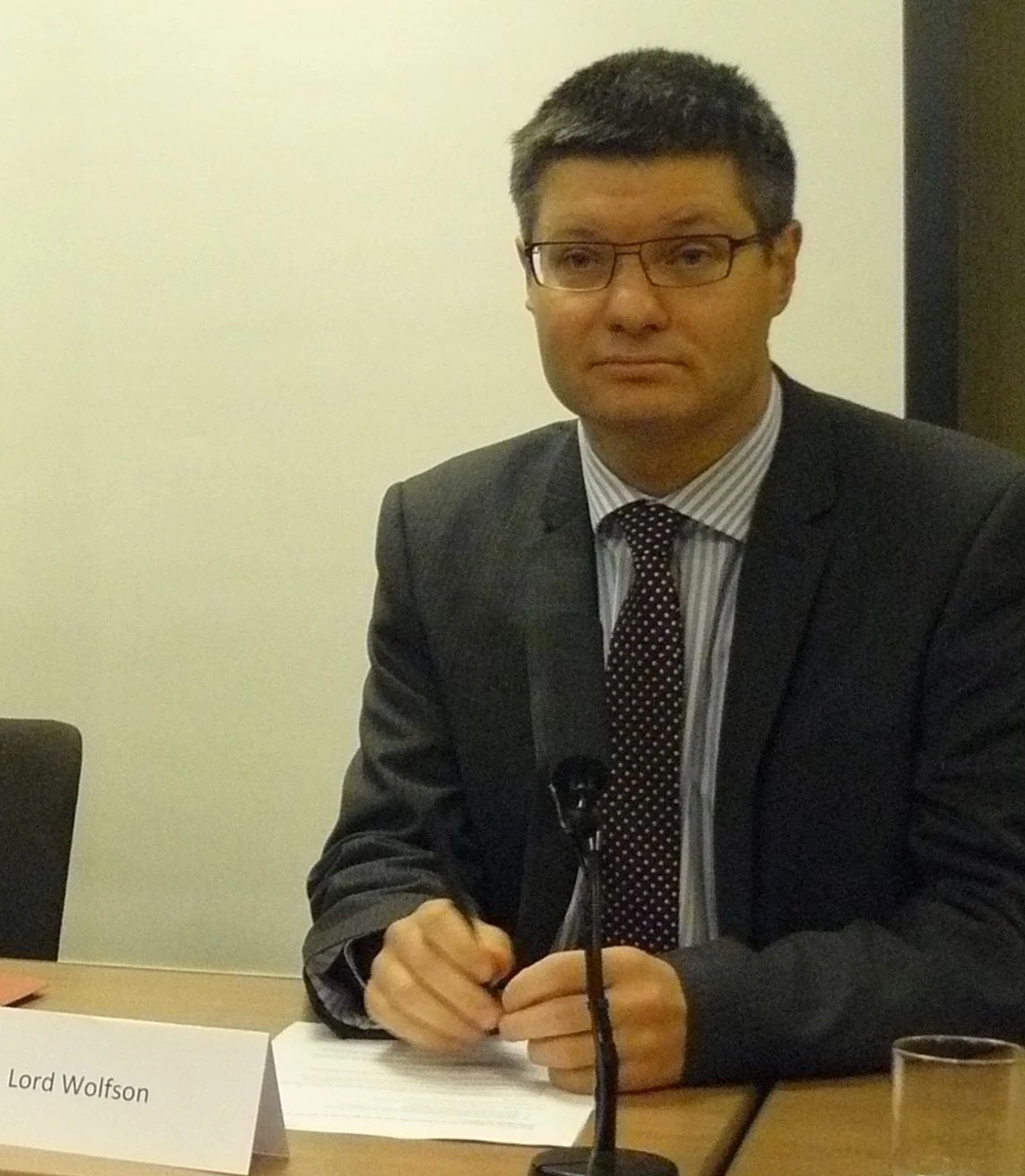
Simon Wolfson’s career at Next began on the shop floor. He joined the retailer as a sales assistant in 1991, became an assistant to its chief executive the following year, joined its board in 1997 and took the top job in 2001. At 33, he was the youngest chief executive of a FTSE 100 company. His rise placed a family connection at the centre of the story, but his route through the business also ran through successive roles and a rapid climb into its senior management.
Family background and education
Born in London on 27 October 1967, Wolfson is the son of David Wolfson, Baron Wolfson of Sunningdale, a former chairman of Next and Great Universal Stores and a Conservative life peer. His family history in business reaches further back: his great-grandfather, Solomon Wolfson, was a Jewish cabinet-maker who settled in Glasgow; Simon’s great-uncle, Sir Isaac Wolfson, made his fortune through Great Universal Stores. Simon Wolfson attended Radley College before studying law at Trinity College, Cambridge.
His family background forms part of the context for his appointment, but the documented sequence of his career is specific. He started at Next’s Kensington branch as a sales assistant in 1991. In 1992, he became assistant to chief executive David Jones, and in 1997 he joined the company’s board. His appointment as chief executive followed in August 2001. The speed of that progression prompted at least one city analyst to allege nepotism; it is a reported criticism, not a settled explanation of his career.
Taking charge at Next
At 33, Wolfson became the youngest chief executive of a FTSE 100 company. That distinction gives a clear measure of the pace of his rise, but the source does not document the specific strategies or operational changes behind the broader claims that he transformed the retailer. It does record a notable instance of his public economic judgement: Wolfson was among the businesspeople who predicted the 2008 financial crisis.
Later accounts of his leadership have emphasised Next’s move into online retail, its attention to customers and its environmental practices. Those claims, as well as descriptions of the online operation as a global powerhouse or of Next as a leader in sustainability, are not substantiated by the available biographical account. The more grounded story here is of a senior executive whose career at one major British retailer began in a shop and progressed through the executive office to the boardroom.
Pay, staff and public criticism
Wolfson’s leadership was also discussed in relation to pay and working conditions. In 2013, he waived a £2.4 million bonus and distributed it among Next employees who had worked for the company since 2010. He earned £4.6 million that year, while the reported average pay of Next employees was £10,000. The gap drew criticism from the GMB trade union, which, with musician Paul Heaton’s support, toured Next shops presenting anti-social behaviour awards to managers over the company’s failure to provide what it described as a living wage.
In 2014, Wolfson waived his bonus for a second successive year, sharing about £3.8 million among staff. That year, Retail Week reported that Next employees could be up to £1,000 a year worse off after the company ended extra pay for Sunday working. Employees who declined revised employment terms were allegedly told they risked redundancy. The GMB accused Wolfson of having a “total disregard for family life”. These episodes show why accounts of his leadership cannot be reduced to corporate performance or personal generosity: both pay decisions and employment terms were contested.
In April 2017, Next cut the salaries of some senior staff after profits fell by 3.8 per cent; Wolfson’s salary, however, rose by 1 per cent. In 2021, his pay package was £3.4 million. These figures provide snapshots from different years, not a complete account of the company’s pay policy or his total earnings over time.
Politics, the Lords and the Wolfson Economics Prize
Wolfson has been a prominent Conservative supporter. He donated to David Cameron’s 2005 party leadership campaign and co-chaired the party’s Economic Competitiveness policy review. In 2010, he was created Baron Wolfson of Aspley Guise and introduced in the House of Lords. His life peerage added a public and political role to his business career.
In 2016, he was appointed chair of the Open Europe think-tank. He was reported as supporting Brexit; after the Leave campaign’s success, he said Britain’s prospects depended on international trade negotiations. In January 2017, he argued that the Government should state its negotiating objectives and avoid rushing the process. In 2022, he suggested a tax on recruiting foreign workers as a trade-off for allowing greater numbers of foreign workers into Britain.
Wolfson founded the Wolfson Economics Prize, with a stated prize fund of £250,000. It gives his public contribution a more direct connection to economic debate than the broad, unsupported claims that he is known generally for philanthropy. The available account identifies the prize and its amount; it does not establish claims about its standing or its effects on policy.
Why Simon Wolfson deserves a place in British Legacy
Simon Wolfson’s place in British Legacy rests on a distinctive combination of business leadership and public involvement. He rose from a sales assistant’s job at Next to become its chief executive and, at 33, the youngest chief executive of a FTSE 100 company. That progression offers a concrete story about the reach of a large British retailer and the route from a shop-floor role to corporate leadership. His prediction of the 2008 financial crisis is another documented element of his business record, while the controversies over pay and Sunday working show the scrutiny that accompanies leadership of a major employer.
His life peerage and work in political debate extend that record beyond retail. Wolfson’s contributions have included supporting a Conservative leadership campaign, chairing Open Europe and commenting on the choices involved in Brexit negotiations. The £250,000 Wolfson Economics Prize is a tangible part of his public legacy: it connects his business success with the sponsorship of economic debate. Taken together, these achievements make him relevant to a British account of commerce and public life, without requiring claims that Next single-handedly shaped the economy, fashion or national culture. His story is strongest when it includes both advancement and controversy, and when it recognises that the decisions of a chief executive affect staff as well as shareholders.
Sources
Simon Wolfson (revision 1376094146)
Adapted in part from Simon Wolfson by Wikipedia contributors, under CC BY-SA 4.0. Text has been edited and combined with the existing article; this adapted text is shared under the same licence. Contributor history.