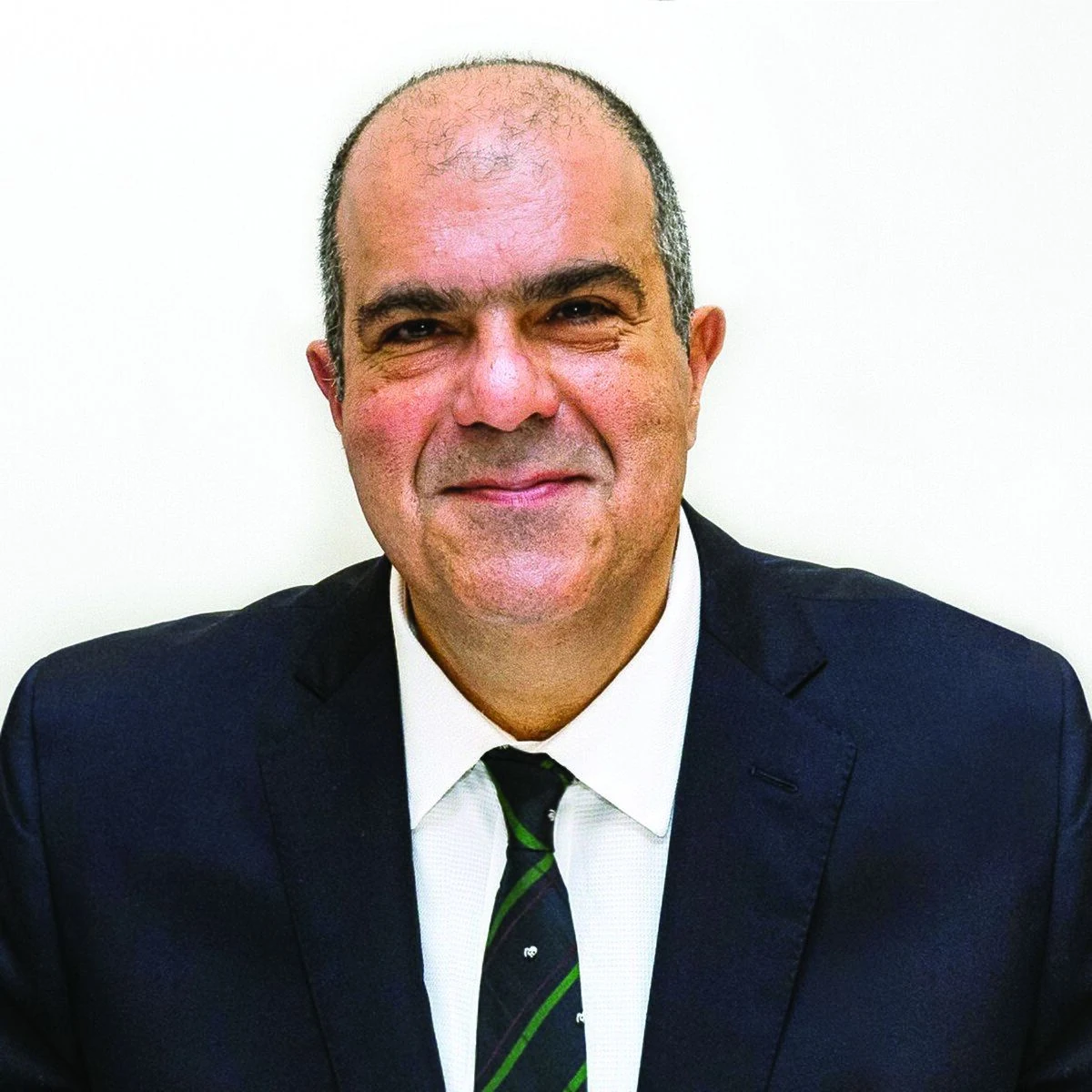
When easyJet began operating in 1995, it offered a direct challenge to the idea that flying had to be expensive. Its founder, Stelios Haji-Ioannou, set out to bring low-cost air travel to more people, starting with a service between Luton and Scotland. The airline became his best-known venture, but it was one part of a broader business career that began in shipping and expanded into a portfolio of companies using the “easy” name.
A shipping family, a London education
Haji-Ioannou was born in Athens on 14 February 1967, the second of three children of Loucas and Nedi Haji-Ioannou. His father was a shipowner, and Haji-Ioannou entered the family’s world of business after studying economics at the London School of Economics, where he graduated in 1987. He later completed an MSc in Shipping, Trade & Finance at City University Business School.
In 1988, he began working for his father’s shipping company, Troodos Shipping. The experience gave him an early grounding in the industry, but he went on to establish a company of his own. At 25, he received £30 million from his father to set up Stelmar Shipping. Stelmar was floated on the New York Stock Exchange in 2001 and sold to the OSG Group in 2005 for approximately $1.3 billion. This first independent business established a pattern that would recur in his career: enter an established market, build a distinct venture and seek a route to growth or sale.
Starting easyJet
Haji-Ioannou founded easyJet in 1995, aged 28. Its first service linked Luton with Scotland, putting a British airport at the centre of the airline’s early operations. The business drew inspiration from low-cost carriers in the United States, adapting that model for European routes. The proposition was straightforward: offer no-frills flights at lower prices and make air travel accessible to customers who might otherwise choose a train or bus.
In its early years, easyJet operated Boeing 737 aircraft. It later used Airbus A319 and A320 models. The company’s approach included quick aircraft turnarounds and direct sales, with the internet becoming an important route to customers. Its orange branding made the airline easy to recognise. The business helped popularise a low-cost approach to flying in Europe, and other airlines followed the model.
EasyJet became a publicly listed company in 2000, when it was partially floated on the London Stock Exchange. Haji-Ioannou remained a significant shareholder, but his relationship with the company was not always straightforward. In 2010, he left its board while seeking to halt expansion plans. In 2013, he said he was concerned about further growth and sold 200,000 shares in protest against plans to buy more aircraft; his siblings also sold shares.
During the Covid-19 pandemic in 2020, he called for the removal of easyJet’s chief executive and chairman, criticising the airline’s aircraft order as it faced severe financial pressure. These disputes show that founding a company did not mean he agreed with every decision taken by its public-company management. His position combined ownership of the brand and a substantial investment with a willingness to challenge the airline’s direction.
From one airline to a family of brands
EasyJet’s launch marked the beginning of a wider set of ventures marketed under the “easy” name. Haji-Ioannou conducts business through easyGroup, which owns the brand and licenses it to companies. The approach extends beyond aviation: easyCar operates in car rental and car sharing, easyBus provides low-cost transport to and from airports, and easyHotel offers budget accommodation. The names share a promise of accessible prices, while the individual companies operate in distinct markets.
Other ventures have had shorter lives or different outcomes. EasyCruise, a low-cost cruise line launched in 2004, was sold to Hellenic Seaways in 2009 and ceased operating in 2010. EasyInternetCafé, once a large internet-café chain, also closed. These examples give the “easy” portfolio a more complicated history than a simple sequence of successes: not every extension of the brand endured.
Haji-Ioannou also returned to shipping with Stelmar, which was sold after its stock-market flotation. His experience across the two sectors demonstrates that his public profile is not solely the story of an airline founder. It encompasses the creation, financing and disposal of separate businesses, as well as the licensing of a brand to ventures run in different fields.
Disputes, public recognition and philanthropy
Haji-Ioannou’s disagreements with business rivals and with easyJet’s management have sometimes brought him into public view. In 2009, he took legal action over Ryanair adverts that depicted him as Pinocchio and called him “EasyJet’s Mr Late Again”. The dispute was settled out of court: Ryanair apologised, and Haji-Ioannou received £50,100. He said he would donate the money to his philanthropic foundation.
That foundation supports education and entrepreneurial and environmental initiatives in the United Kingdom, Greece and Cyprus. It also provides cash prizes through annual awards for entrepreneurs in those countries. The foundation’s work connects his business interests with a stated commitment to supporting enterprise beyond his own companies.
Haji-Ioannou holds both British and Cypriot citizenship. In the 2006 Birthday Honours he received a knighthood for services to entrepreneurship. His British connection is therefore more than the location of easyJet’s first route: he studied and built businesses in Britain, and his best-known company began operating from Luton before becoming a major European airline.
Why Stelios Haji-Ioannou deserves a place in British Legacy
Haji-Ioannou’s place in British Legacy rests most clearly on the business he launched from Luton. EasyJet helped establish low-cost flying as a familiar part of European travel. By making price a central feature of its offer and using direct sales and quick turnarounds, the airline challenged established expectations about who could afford to fly. Its later public listing also made easyJet a substantial corporate enterprise, rather than a small founder-led operation. The story links entrepreneurship to a practical change in how people travel, with a British starting point and an international reach.
His wider career adds useful context to that achievement. Before easyJet, he created Stelmar Shipping with funding from his father; afterwards, he developed easyGroup as a vehicle for licensing the “easy” brand across travel and leisure. Some ventures expanded, while others closed or were sold, illustrating the uncertainty as well as the ambition involved in building businesses. His foundation supports education, entrepreneurs and environmental initiatives in Britain, Greece and Cyprus, extending his contribution beyond commercial activity. Together, these strands—company creation, a low-cost airline launched in the UK, a recognisable business model and philanthropic support for enterprise—make his British connection specific and enduring.
Sources
Stelios Haji-Ioannou — revision 1378638620 · Stelios Haji-Ioannou
Adapted in part from Stelios Haji-Ioannou by Wikipedia contributors, under CC BY-SA 4.0. Text has been edited and combined with the existing article; this adapted text is shared under the same licence. Contributor history.