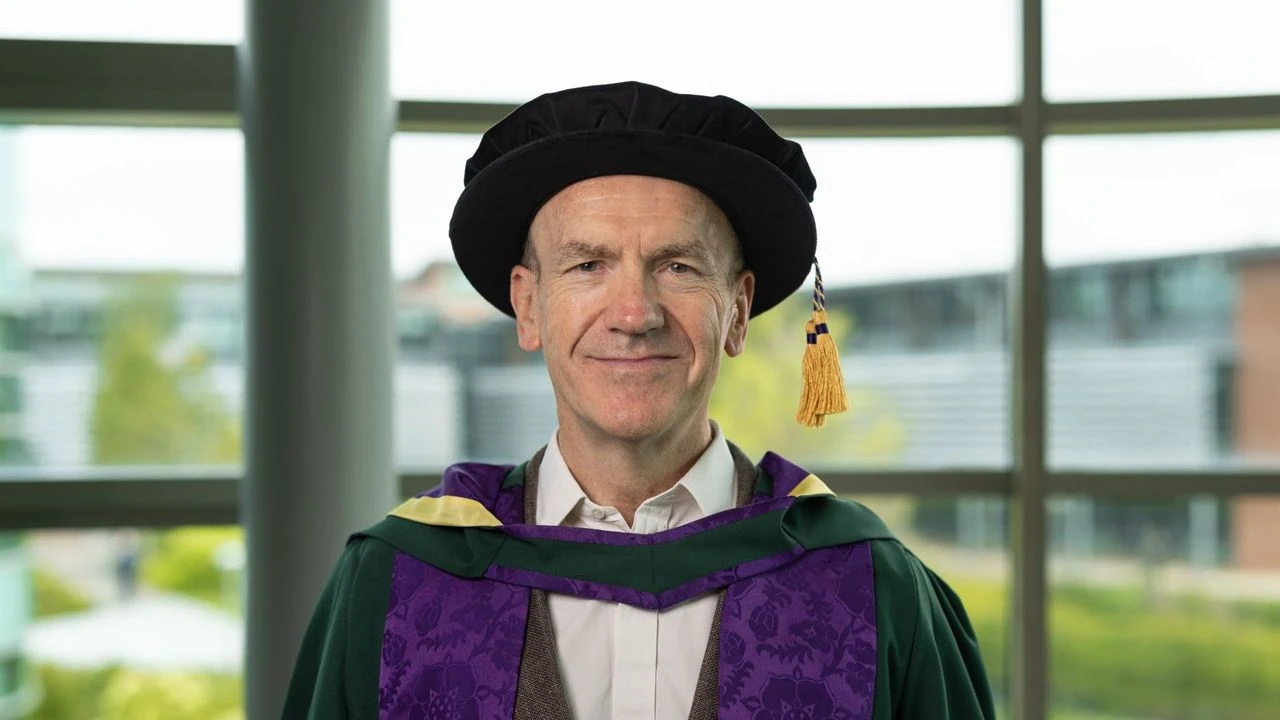
When Terry Leahy became chief executive of Tesco in 1997, the supermarket group was Britain’s largest retailer, but he wanted it to do more than follow its established rivals. His central argument was that the company should lead through a better understanding of its customers. Clubcard, introduced in 1995, made that principle practical: shopping habits could be observed and used to inform business decisions. During Leahy’s tenure, Tesco expanded its UK market share, grew overseas and entered new areas of retail. His career began far from the boardroom, in Belle Vale, Liverpool.
A Liverpool education
Terence Patrick Leahy was born in Belle Vale on 28 February 1956. He grew up in a prefabricated home in Endbrook Road, in a family whose circumstances he later described in the context of an impoverished background. His father, an injured Second World War veteran who had worked as a merchant seaman, supported the family as a bookmaker. Leahy attended Our Lady of the Assumption Primary School before passing the 11-plus and winning a scholarship to St Edward’s College, a direct-grant grammar school.
He began working while still young, including stacking shelves at Tesco. He went on to study Management Sciences at the University of Manchester Institute of Science and Technology (UMIST), graduating in 1977. He later received a Doctor of Science from Cranfield University. These details give a more specific account of the route behind the familiar corporate biography: school, work and university all preceded his return to Tesco as a professional.
Learning to lead through customer knowledge
After following his then-girlfriend to London, Leahy applied for a product-manager role with Turkey Foil and was turned down. He also missed out on his first application to Tesco. When the successful candidate was quickly reassigned to another role, Leahy returned to the company in 1979 as a marketing executive.
Tesco was then a market follower of Marks & Spencer and Sainsbury’s. Leahy came to believe that it should stop concentrating on catching up and instead use market knowledge to make its own decisions. Appointed to the board in 1992, he helped devise and implement Clubcard from 1995. The scheme tracked the shopping habits of participating customers, giving Tesco information with which to understand demand and shape its business. Its significance was not simply that shoppers collected loyalty benefits: it made customer data part of the company’s operating strategy.
In 1995, Tesco became the UK’s biggest retailer. Two years later, Leahy became chief executive, succeeding Lord MacLaurin, who had been his mentor. MacLaurin wanted a successor able to pursue international expansion and increase market share. Leahy’s appointment therefore joined two priorities that would define his leadership: extending Tesco’s position at home and building its business abroad.
Expansion at home and overseas
Under Leahy, Tesco stretched its lead as Britain’s largest retailer and expanded internationally. Its growth went beyond food shopping. The company moved into clothing and electronics, and also developed financial services and telecommunications. These ventures widened the range of businesses operating under the Tesco name; they were part of a broader effort to make the group relevant to customers beyond the weekly grocery shop.
Technology and online retail formed another strand of the company’s development. Tesco launched Tesco.com, entering e-commerce while online shopping was still an emerging part of retail. The service extended the retailer’s relationship with customers beyond its physical stores and added a digital route to buying its products. Clubcard and Tesco.com represented different uses of information and technology: one helped the company learn from purchases, while the other changed how customers could shop.
The strategy brought scale as well as change. Following Tesco’s announcement of £2 billion in profits in April 2005, Leahy responded to protests that the company was “too successful”. During his tenure, its UK market share rose from 20 per cent to 30 per cent. That growth helps explain why his period in charge is associated with both Tesco’s strength and the public debate about the reach of a dominant supermarket.
Beyond Tesco
Tesco announced in June 2010 that Leahy would retire as chief executive in March 2011. After leaving, he focused on start-up investments and became a senior adviser to private-equity firm Clayton, Dubilier & Rice. In December 2012, he was appointed chairman of B&M Retail. He stepped down in 2017 after five years in the role.
At B&M, Leahy steered the retailer on to the stock market. During his chairmanship, revenues rose from £993 million to £2.7 billion, while the store portfolio grew from 331 outlets to 893 as part of an expansion plan. His work there extended his involvement in British retail beyond the company with which he is most closely identified.
Leahy was knighted in 2002. He served as chancellor of UMIST from 2002 until its merger with the Victoria University of Manchester in 2004, when he became one of the new University of Manchester’s two co-chancellors. Cranfield University awarded him an honorary Doctor of Science in 2007. His book, Management in 10 Words, was published in 2012. He is also an Everton supporter and has served as a special adviser to the club.
Why Terry Leahy deserves a place in British Legacy
Leahy’s place in British business history rests on identifiable changes to how a major British retailer operated. Clubcard made customer purchasing patterns a strategic resource, rather than treating loyalty solely as a promotional device. Tesco.com added an online sales channel, while the company’s move into clothing, electronics and services broadened its offer. Under Leahy, the group expanded internationally and increased its UK market share from 20 per cent to 30 per cent. Those results show the scale of his influence, while the debate over Tesco’s success also records the public consequences of that growth.
His story is not only one of a chief executive at the height of corporate power. Leahy grew up in Liverpool, attended local schools and studied at UMIST before returning to Tesco, where his early career began with a marketing role. After Tesco, he applied his retail experience at B&M, helping take the company on to the stock market as its revenues and store estate increased. His later university roles connected that career to institutions in Manchester and Cranfield. Together, these details make his British legacy specific: he changed a household retailer, helped shape the development of modern retailing and continued to work with British businesses and educational institutions after leaving Tesco.
Sources
Terry Leahy — Wikipedia, revision 1374222382
Adapted in part from Terry Leahy by Wikipedia contributors, under CC BY-SA 4.0. Text has been edited and combined with the existing article; this adapted text is shared under the same licence. Contributor history.