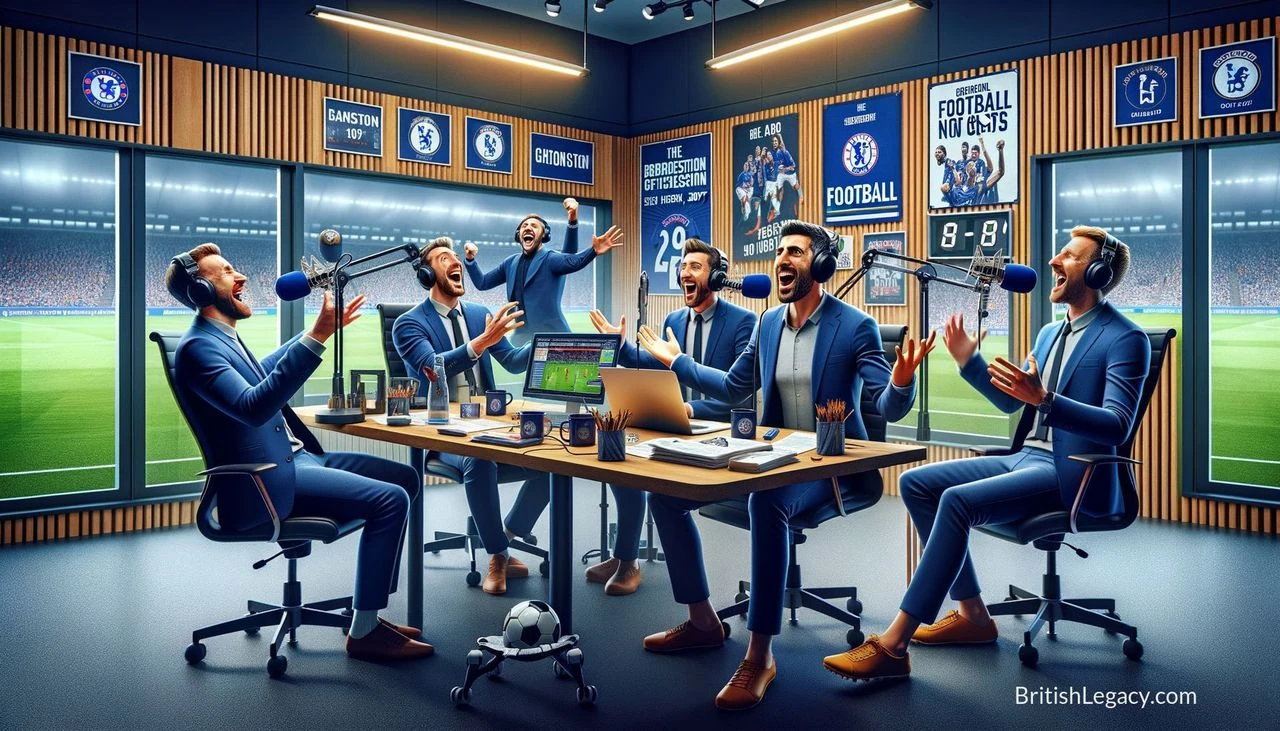
Founded in 2007 by four presenters with backgrounds spanning radio, football, comedy and writing, The Football Ramble developed a conversational approach to football discussion. The supplied account traces its development from a kitchen-based beginning to a wider mix of podcasting, live tours, books and national radio. It also describes a programme shaped by running jokes and interview features, alongside discussion of football on and off the pitch.
Four founders and a conversational format
The Football Ramble was founded by Luke Moore, Marcus Speller, Jim Campbell and Pete Donaldson. The original account describes Moore as having experience in radio production and broadcasting, Speller as bringing knowledge of football, Campbell as a comedian and writer, and Donaldson as having a background in radio and presenting. Those different strengths gave the founding line-up a combination of broadcasting experience, football discussion and humour.
The programme began in a kitchen, according to the supplied article. Rather than presenting the show as a formal sports bulletin, the article emphasises its conversational style and the chemistry among its founders. It gives few details about the early production or how the presenters divided their work, but the range of backgrounds it records helps explain the mix of football talk and comedy associated with the show.
From podcast to tours, books and radio
In 2014, The Football Ramble partnered with Acast. The original account says the partnership enhanced distribution and reach, but provides no figures or other particulars with which to assess that effect. It claims that the programme reached millions of listeners each month; without supporting detail, that audience figure is not repeated here as established fact.
The show later expanded beyond its original podcast format. The supplied article names live tours, books and a presence on national radio as parts of that development, without giving dates, book titles or broadcasters. These formats indicate that the programme was not confined to audio released as a podcast: the account describes its football discussion extending to live events and other media. The available information does not allow a more detailed chronology of those developments.
Running jokes and football debate
An early slogan quoted in the original article was “The best football podcast that you’ve probably never heard of”. The wording presents the show as informal and relatively little-known at that point, though the supplied material does not date the slogan or establish how widely it was used.
The article also names the “Dean Windass Hall of Fame” and “Ramble Meets” interviews as recurring references or features. Alongside such jokes and interviews, it describes discussion ranging from events on the pitch to football’s social and political dimensions. The source offers no examples of particular episodes, so the breadth of those discussions can be recorded without attributing specific arguments or effects to the programme. Claims that it paved the way for other podcasts or transformed sports journalism are not established by the material supplied.
Why The Football Ramble Podcast deserves a place in British Legacy
The Football Ramble deserves a place in British Legacy as a football discussion programme whose reported history connects podcasting with other forms of media. Founded in 2007 by Luke Moore, Marcus Speller, Jim Campbell and Pete Donaldson, it brought together experience in radio production and presenting, knowledge of football, comedy and writing. The supplied account traces a path from a kitchen-based start to a programme associated with live tours, books and national radio. Those particulars make its development worth recording without claiming that it represents the whole of British media or journalism.
Its identity, as described in the source, also rested on the combination of football discussion with humour, interview features and recurring jokes. The early slogan, the “Dean Windass Hall of Fame” and “Ramble Meets” give concrete examples of that informal character. The material does not establish the scale of the audience or the show’s influence on other podcasts, so those claims are unnecessary to its legacy. What it does document is a programme that carried its football conversation beyond its original format and built a recognisable style from the varied contributions of its founders.