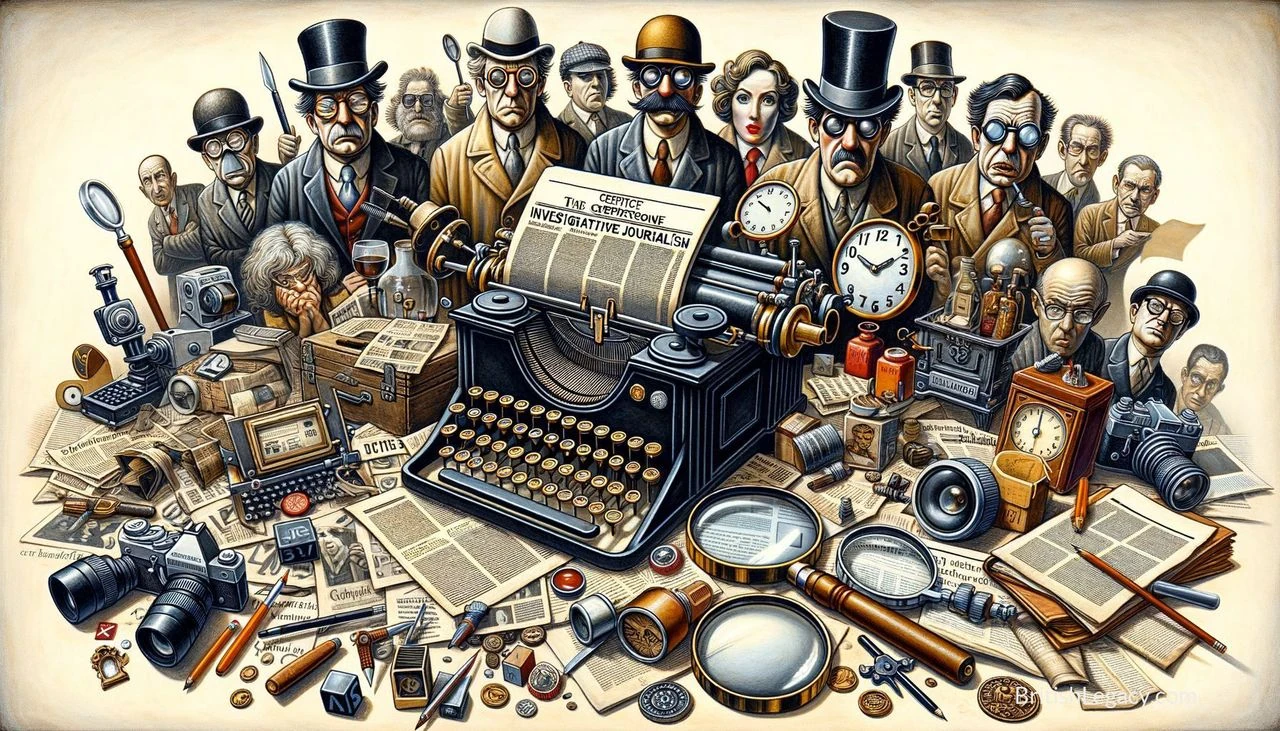
Private Eye began as a joke with a typewriter and a new way of printing. Founded in 1961, the British magazine built its identity around comic irreverence, but it also pursued stories about public institutions, political life and the media itself. That combination has made it influential and legally exposed. Its record includes investigative work that challenged powerful interests, but also reporting errors and controversies that complicate any simple account of its commitment to truth.
From a school magazine to a national title
The magazine’s origins lay in The Walopian, an underground publication produced by pupils at Shrewsbury School in the mid-1950s. Edited by Richard Ingrams, Willie Rushton, Christopher Booker and Paul Foot, it mocked school traditions and authority. After National Service, Ingrams and Foot went to Oxford University, where they encountered other future collaborators, among them Peter Usborne, Andrew Osmond and John Wells.
A new photo-litho offset printing process helped turn the idea into a publication that could be assembled without the resources of an established press. Peter Usborne provided the initial funding, and the first copies were sold in London pubs. Usborne is credited with suggesting the title. Booker edited the early magazine, Rushton designed it and drew cartoons, and Usborne became its first managing director. Ingrams shared the editorship with Booker from around the tenth issue, then took over at issue 40. He remained editor until 1986, when Ian Hislop succeeded him; Ingrams continued as chairman of the holding company.
The early magazine extended the school publication’s juvenile jokes and offered an alternative to Punch. Its circle widened to include Peter Cook, who bought the title with Nicholas Luard in 1962, and contributors such as Auberon Waugh, Claud Cockburn, Gerald Scarfe, Patrick Marnham and Candida Betjeman. The magazine was published by Pressdram Ltd, a company Cook had bought off the shelf in 1961. Its ownership and staffing have not been presented as a conventional public roster: inside its pages, the proprietor is the fictional Lord Gnome, a running joke about press barons.
A deliberately ungainly voice
Private Eye’s appearance has been part of its argument. It has resisted the glossy finish and spacious layouts common to many magazines, retaining cheap paper and a crowded, largely black-and-white page. Its early production involved scissors, paste and typewriters; later changes to its working methods did not erase the deliberately unpolished look. The result can resemble a comic as much as a conventional current-affairs magazine, even when the subject is serious.
Cartoons, parody and recurring jokes sit alongside reporting. The fictional Lord Gnome and contributor pseudonyms give the magazine room for a distinctive comic world, while some anonymous writers are media figures or specialists. A story might come from someone at a mainstream publication who could not get it printed there. The joke is not simply decoration: it can create a recognisable voice and a way to discuss power. But that voice can also obscure the difference between a gag, an allegation and a substantiated report.
Its columns range beyond the political scandals suggested by the older article’s reference to “HP Sauce”. Street of Shame scrutinises newspaper conduct and the influence of proprietors and editors. Rotten Boroughs covers local and regional politics, while the investigative section In the Back has tackled under-reported scandals and cover-ups. The financial column In the City has examined business practices and financial scandals. Architecture, railways, health, and international affairs have also found a place in the magazine’s recurring features.
Investigation, influence and legal risk
Private Eye’s investigative reporting has often addressed subjects its defenders say other outlets avoid, whether because of legal risk or lack of wider interest. Paul Foot was closely associated with In the Back, and the magazine later joined the journalistic organisations analysing the Paradise Papers. Its criticism of the press was also part of a wider conversation about media standards: Street of Shame formed much of Hislop’s evidence to the Leveson Inquiry, where the inquiry’s chairman spoke favourably about the column.
That work has carried a price. The magazine has faced repeated libel actions, and its history includes defeats as well as victories. In 1971, in Arkell v Pressdram, a blunt response to a solicitor’s letter became one of the title’s best-known in-jokes. Other cases were more serious. The magazine paid damages to Robert Maxwell after losing a libel action. Sonia Sutcliffe won a large award in 1989, later reduced on appeal; in her subsequent action against the News of the World, it emerged that she had benefited financially from her husband’s crimes, although details in the Eye’s original article had been inaccurate. These episodes show both the hazards of challenging influential people and the harm a publication can do when its reporting is wrong.
Nor has the magazine’s judgement always stood up to later scrutiny. Its coverage of the MMR vaccine controversy supported Andrew Wakefield’s claims about a possible link with autism and bowel problems, and in 2002 it published a special report advocating that the vaccines be given separately. After Wakefield was disciplined by the General Medical Council, regular columnist Phil Hammond wrote in 2010 that the magazine had got its MMR coverage wrong. This is a significant part of its record: scepticism towards authority can prompt useful questions, but it does not make unsupported medical claims reliable.
Satire that divides its audience
The magazine’s irreverence has provoked complaints as well as affection. A cover following Diana, Princess of Wales’s death in 1997 satirised the newspapers’ abrupt change in tone; it drew complaints and led some newsagents to remove the magazine temporarily. Issues after the Ladbroke Grove rail crash, the September 11 attacks and the Soham murders also caused offence. Such responses reflect the risks of treating humour as a universal defence: a joke that one reader sees as a challenge to public hypocrisy may strike another as callous.
Critics have also accused Private Eye of class prejudice and hostility to trade unions. In 2016, its website briefly appeared on a US lecturer’s list of sites described as “fake news”; the compiler later removed it after the magazine objected that its online material came from its journalism pages. In 2023, a satirical cover about the Gaza war drew both condemnation and support. These disputes underline that the magazine’s provocative style does not exempt it from argument about what it publishes or how its satire is understood.
Why Private Eye deserves a place in British Legacy
Private Eye deserves a place in British Legacy because it has sustained a distinctive form of British journalism: a fortnightly magazine in which cartoons, invented characters and sharp parody share space with investigations into politics, business and the press. From Street of Shame to In the Back, its recurring features have given scrutiny a recognisable home outside the daily news cycle. Its examination of media conduct also reached beyond the magazine’s pages, informing Hislop’s evidence to the Leveson Inquiry. That is a specific contribution to British public life: not merely making jokes about authority, but repeatedly putting institutions and those who report on them under scrutiny.
Its legacy is not a claim to infallibility. The MMR coverage and libel defeats show why investigative ambition must be matched by care, and why a satirical voice cannot substitute for sound evidence. Those failures belong in the account alongside the stories the magazine pursued and the public arguments it helped provoke. Private Eye’s continuing significance lies in that tension: it has made irreverence a vehicle for challenging power, while its own errors and controversies demonstrate the responsibilities that come with doing so. For British readers, it remains a distinctive example of how satire and reporting can meet—and of why both need scrutiny.
Sources
Private Eye — Wikipedia revision 1379633824
Adapted in part from Private Eye by Wikipedia contributors, under CC BY-SA 4.0. Text has been edited and combined with the existing article; this adapted text is shared under the same licence. Contributor history.