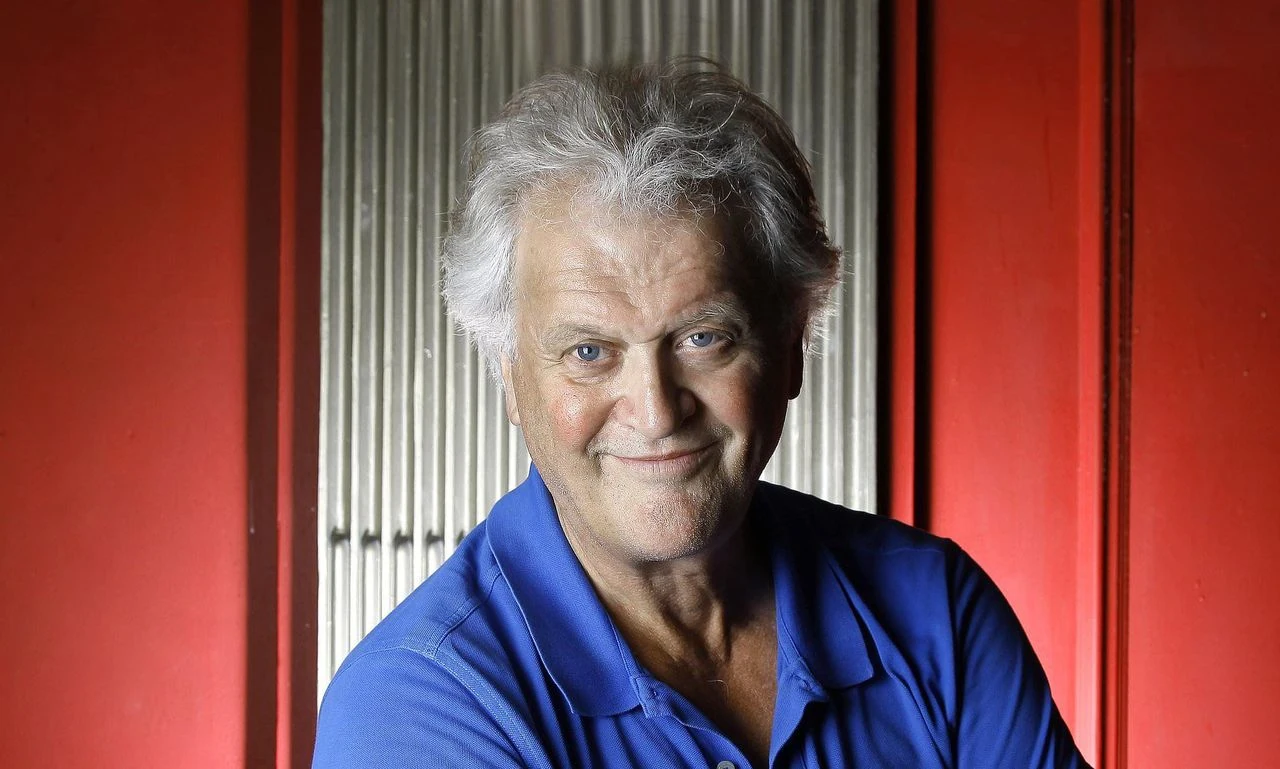
Tim Martin’s first pub opened in Muswell Hill in 1979. From that North London starting point, he built J D Wetherspoon into a pub group operating across the UK and Ireland. The company’s growth, its recognisable approach to its venues and Martin’s public interventions on Brexit and the pub trade have made his career part of the recent history of British hospitality.
From Norwich to the bar
Timothy Randall Martin was born in Norwich on 28 April 1955. His father served in the Royal Air Force and later worked for Guinness, becoming the company’s Malaysian marketing director. Martin attended 11 schools in New Zealand and Northern Ireland, including Campbell College in Belfast, before studying law at the University of Nottingham. He qualified as a barrister in 1979 but never practised.
Before entering the pub trade, Martin worked on a building site in Ware, Hertfordshire, and as a sales representative for The Times. In 1979 he bought a pub in Muswell Hill, initially calling it Martin’s Free House. He later renamed it Wetherspoons, after a teacher in New Zealand who, Martin said, could not control his class. That account gives the name a particular origin: the teacher, rather than the additional fictional character mentioned in an earlier version of the story.
Martin’s legal training did not lead to a career at the Bar. Instead, the first pub became the basis of a business that grew from local premises into a listed company. The change was not an overnight transformation. Wetherspoons opened further pubs in north London before expanding across the country, building its identity venue by venue.
From one pub to a national group
J D Wetherspoon was listed on the Stock Exchange in 1992. Expansion gathered pace through the following years. In July 1998, the company opened 20 venues in a single month, seven of them on the same day. It reached its 400th pub in 2000; by 2008, the group had 800 locations. These milestones show the scale of the operation Martin had developed from his first Muswell Hill pub.
Martin remained closely associated with the company as founder and chairman. In 2005, he was voted the fifth most influential person in the UK pub industry. He admired the business philosophy of Sam Walton, founder of Walmart, and in 2009 was reported to visit at least 15 Wetherspoon outlets each week. The visits suggest a chairman attentive to the day-to-day estate, although they do not, on their own, establish how he ran each venue.
The company’s pubs became known for a format that differed from many traditional venues. The earlier account describes an initial policy of no music and no television, alongside extended opening hours. That combination put conversation and a consistent, recognisable setting at the centre of the experience. The chain also became associated with pubs in buildings that had served other purposes, including former cinemas, banks and theatres. Such conversions could give individual venues a visible connection to local architectural history, though claims that the company as a whole preserved heritage should not be taken to mean that every conversion did so.
Growth, pressures and public arguments
Expansion was not uninterrupted. In January 2023, Wetherspoon closed 11 pubs and put a further 35 up for sale. Martin argued that pubs faced unfairly high taxes compared with supermarkets and called for tax parity, warning that the industry would shrink without it. The closures marked a different phase from the rapid growth of the late 1990s and early 2000s: the chain continued to operate at scale, but its estate was also subject to contraction and commercial pressures.
Martin’s public profile has extended beyond business. He actively campaigned for the UK to leave the European Union and donated £200,000 to Vote Leave in 2016. Wetherspoon later distributed pro-Brexit material to households, prompting criticism from an employee campaign group, while the company defended the publication as a way to stimulate debate. Martin’s political interventions were not incidental to his role as chairman: he used the visibility of the business to put his arguments before a broad public.
He also made decisions about the company’s products in the context of Brexit. In 2018, he announced a plan to stop selling products from other EU countries over 24 months, citing Prosecco and Champagne as examples to be replaced by Australian wines. In 2021 he called for a reasonably liberal immigration system controlled by Britain and proposed a visa scheme for EU workers to help pubs and restaurants recruit staff. These positions show a combination of arguments for leaving the EU and recognition that hospitality businesses needed access to workers.
During the COVID-19 pandemic, Martin criticised the closure of businesses, saying pubs should remain open with social-distancing measures. After the Government required pubs to close, he addressed Wetherspoon employees by video. He acknowledged that wage support would be available but said it could take weeks to arrive; he suggested that staff offered supermarket work should consider taking it and said they would have first preference if they wanted to return. Most staff were later placed on the Government furlough scheme. In 2022, he accused Prime Minister Boris Johnson of hypocrisy over the Partygate controversy, arguing that the scandal would have been avoided if Downing Street staff had been able to visit pubs during restrictions.
Later pressures and recognition
Martin has continued to speak about the economics of the pub trade. In 2023 he warned that rising costs in brewing could push the price of a pint to £8 or more and raised concerns about breweries watering down beer to obtain tax breaks. In 2024 he said the Budget would put further pressure on pub prices, citing increases to the national minimum wage and employers’ National Insurance contributions. In February 2026, he backed Reform UK’s proposal to reduce VAT for pubs, arguing that it would improve their competitiveness.
Martin’s personal life has remained less prominent in his public business profile. He is married to Felicity, whom he met at university; they have four children and live in Exeter, Devon. In the 2024 New Year Honours he was appointed a Knight Bachelor for services to hospitality and culture. The honour recognised a career closely identified with one company, but his public record also includes forceful and sometimes contested arguments about the policies affecting that industry.
Why Tim Martin deserves a place in British Legacy
Tim Martin merits a place in British Legacy because he shaped a substantial part of the modern pub trade through a specific, traceable business achievement: turning a single Muswell Hill pub into a listed group with hundreds of venues across the UK and Ireland. The milestones are striking not simply for their scale but for their chronology: a first pub in 1979, a Stock Exchange listing in 1992, 400 locations by 2000 and 800 by 2008. That growth made Wetherspoon a familiar presence in British towns and cities and established a distinctive alternative to other pub formats.
His contribution also raises questions about what a pub group owes the places in which it operates. Wetherspoon’s presence in converted cinemas, banks and theatres can bring former public buildings into continued use, while its scale and commercial decisions are part of a changing hospitality industry. Martin’s advocacy has made those wider economic questions visible: he has argued over tax, staffing, prices and the effects of pandemic restrictions, and has used the company’s reach to promote his views on Brexit. His career is therefore relevant not only as a story of expansion, but as an example of how a business leader can influence debate about pubs, work and public life in Britain.
Sources
Tim Martin (businessman), revision 1363021932
Adapted in part from Tim Martin (businessman) by Wikipedia contributors, under CC BY-SA 4.0. Text has been edited and combined with the existing article; this adapted text is shared under the same licence. Contributor history.