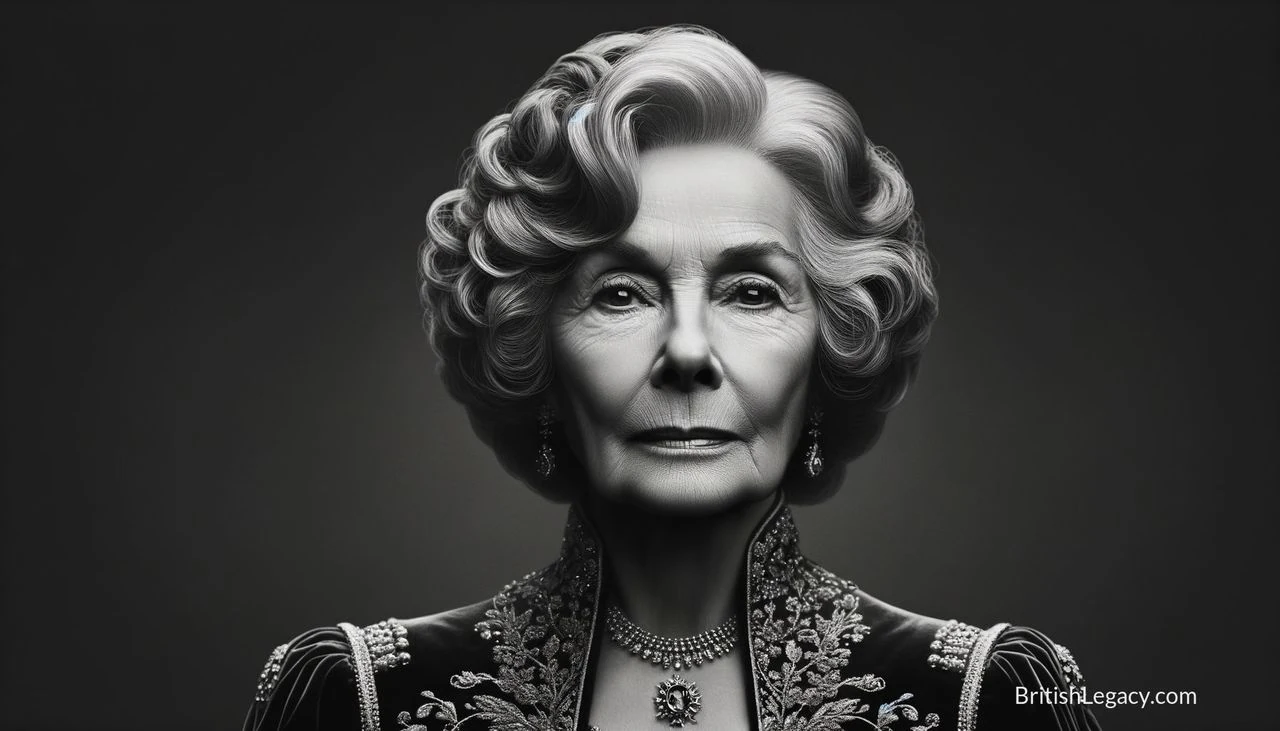
Vanessa Redgrave’s career has moved between Shakespearean stages, international films and political campaigns. She rose to prominence as Rosalind in the Royal Shakespeare Company’s 1961 production of As You Like It, earned an Academy Award for Julia and continued to work in theatre, film and television across several decades. Her public life has also included activism on issues ranging from nuclear disarmament and the Iraq War to human rights and the treatment of refugees.
A theatrical family, and a stage career of her own
Redgrave was born in Blackheath, London, on 30 January 1937, the daughter of actors Sir Michael Redgrave and Rachel Kempson. Her siblings Lynn and Corin also became actors. She entered the Central School of Speech and Drama in 1954 and made her West End debut in 1958. That year she also appeared in the film Behind the Mask, alongside her father.
Her early stage work established a connection with Shakespeare that would continue throughout her career. In 1959, she appeared at the Shakespeare Memorial Theatre as Helena in A Midsummer Night’s Dream and in Coriolanus. She played Rosalind in As You Like It for the Royal Shakespeare Company in 1961, followed by Imogen in Cymbeline in 1962. In 1966 she created the stage role of Jean Brodie in the adaptation of Muriel Spark’s novel.
Redgrave’s work was not confined to classical drama. In 1984, she won the Laurence Olivier Award for The Aspern Papers. Her later theatre roles included Prospero in The Tempest at Shakespeare’s Globe in 2000, Joan Didion in the Broadway adaptation of The Year of Magical Thinking and the title role in Driving Miss Daisy, which transferred to London’s Wyndham’s Theatre in 2011. She returned to the West End as Mrs Higgins in My Fair Lady in 2022.
Film roles and an Oscar
Redgrave’s first starring film role came in Karel Reisz’s Morgan – A Suitable Case for Treatment (1966), which brought her an Academy Award nomination. Her work in Isadora (1968), Mary, Queen of Scots (1971) and The Bostonians (1984) also earned Oscar nominations. In 1977, she won the Academy Award for Best Supporting Actress for playing the title character in Fred Zinnemann’s Julia.
The film’s reception became entangled with Redgrave’s political views. She had produced and appeared in The Palestinian, a documentary about the Palestine Liberation Organization, and her Oscar nomination prompted protests by members of the Jewish Defense League. In her acceptance speech, she criticised what she called “Zionist hoodlums”. Her remarks drew a response from presenter Paddy Chayefsky. The episode illustrates how her activism could become part of the public reception of her work, rather than a separate part of her life.
Her filmography continued to range widely. She played Agatha Christie in Agatha (1979), appeared in the television film Playing for Time (1980), and received another Oscar nomination for her supporting role in Howards End (1992). Later screen work included Mission: Impossible (1996), Atonement (2007), Coriolanus (2011) and Foxcatcher (2014). In television, her performance in If These Walls Could Talk 2 (2000) earned her an Emmy Award. She also narrated episodes of the BBC series Call the Midwife.
Political engagement and public controversy
Redgrave’s activism began early. In 1961 she joined the Committee of 100, which campaigned against nuclear weapons, and in 1968 she took part in an anti-Vietnam War protest outside the United States Embassy in London. In the 1970s she and her brother Corin joined the Workers Revolutionary Party; she stood for Parliament as a party candidate, without winning a seat. She later helped launch the Peace and Progress Party with Corin, campaigning against the Iraq War and for human rights.
Her support for Palestinian causes repeatedly drew criticism and protest. In 1977, she produced The Palestinian, a film about the PLO, and faced protests when nominated for the Oscar for Julia. In 1984, she sued the Boston Symphony Orchestra, arguing that it had dismissed her from a performance because of her support for the PLO. She won on breach of contract, but not on her civil-rights claim. These episodes show that her politics had practical consequences for her work, and that her public record is contested as well as prominent.
Redgrave also spoke against the Iraq War and what she described as violations of human rights. In 2014, she joined a protest outside Pentonville Prison against a rule preventing books from being sent to prisoners; the rule was overturned later that year. Her 2017 documentary, Sea Sorrow, marked her directorial debut. It addressed the European migrant crisis and the situation of people encamped near Calais, including those trying to reach Britain. Redgrave criticised the British government’s approach to refugees.
Recognition and a continuing career
Redgrave’s stage and screen achievements have been recognised with an Academy Award, two Primetime Emmy Awards, a Laurence Olivier Award and a Tony Award, among other honours. She won the Tony for Best Actress in a Play for the Broadway revival of Eugene O’Neill’s Long Day’s Journey Into Night in 2003. Her awards also include a BAFTA and two Golden Globes. In 1995, she became a UNICEF Goodwill Ambassador.
Her family life is also part of her theatrical history. She was married to director Tony Richardson from 1962 to 1967; their daughters, Natasha and Joely Richardson, became actresses. She later had a son, Carlo Gabriel Nero, with the Italian actor Franco Nero. After they reunited, the couple married in 2006. Redgrave’s career continued into later life: she made Sea Sorrow at 80 and was appointed Dame Commander of the Order of the British Empire in the 2022 New Year Honours for services to drama.
Why Vanessa Redgrave deserves a place in British Legacy
Vanessa Redgrave’s place in British cultural history rests on more than longevity. Her work links important strands of British performance: Shakespeare at the Royal Shakespeare Company, West End theatre, and a film career that brought her British acting to audiences around the world. Her early work as Rosalind and Imogen, her Olivier Award for The Aspern Papers and her later performances in London show an artist whose stage career remained active alongside her screen work. The Academy Award for Julia and her subsequent film and television roles added an international dimension without displacing that theatrical foundation.
Her legacy also includes an unusually visible relationship between artistic work and political conviction. Redgrave campaigned, made films and spoke publicly about subjects including nuclear weapons, Palestine, the Iraq War and refugees. These positions brought controversy and, at times, affected the reception of her performances. A balanced account should recognise both the reach of her advocacy and the disputes it generated. Together, her acting, directing and activism offer a specific British legacy: a performer formed in the country’s theatre tradition who carried that work onto international stages and screens, while insisting that public life and political argument could not simply be kept outside the theatre.
Sources
Adapted in part from Vanessa Redgrave by Wikipedia contributors, under CC BY-SA 4.0. Text has been edited and combined with the existing article; this adapted text is shared under the same licence. Contributor history.