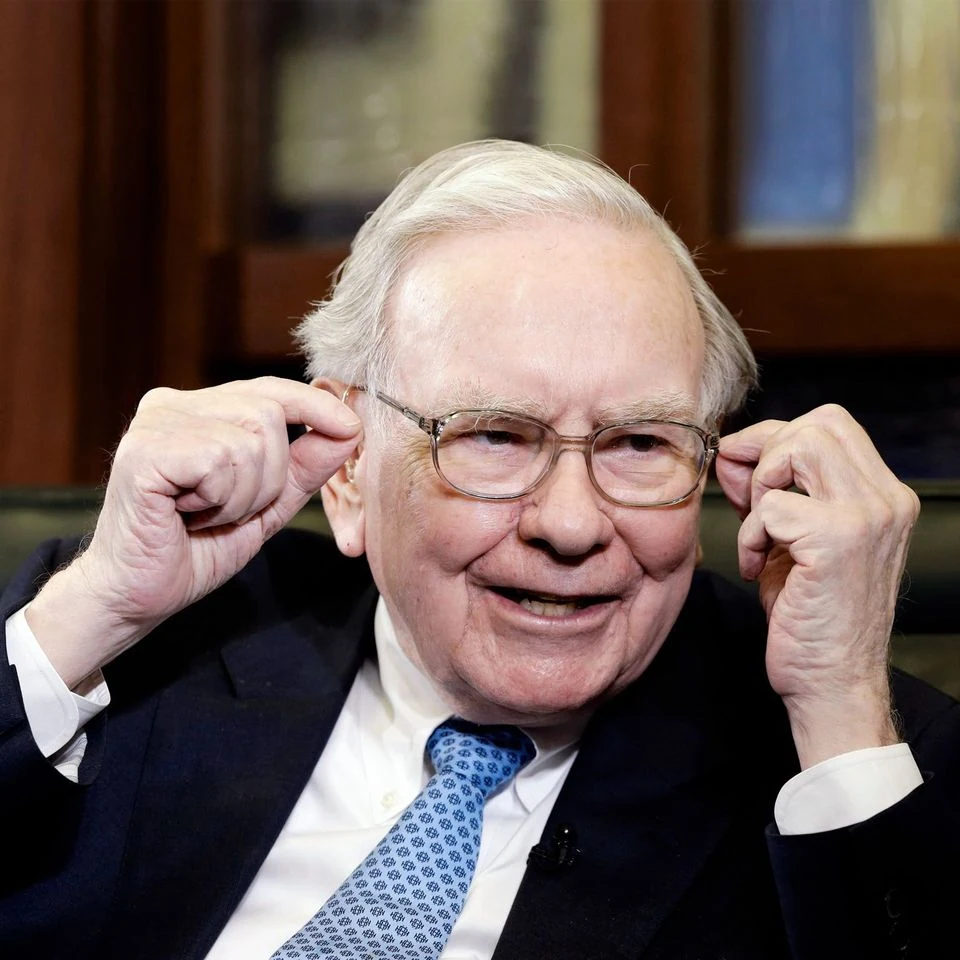
Warren Buffett’s connection with Britain is less a story of personal ties than of investment across borders. Through Berkshire Hathaway, the company he built into a diversified holding group, he took a substantial stake in the British retailer Tesco. The investment ended badly: Berkshire sold its shares after Tesco’s accounting problems and declining profits. Buffett’s British footprint is therefore worth examining without turning a short-lived holding into proof of lasting national influence.
From Omaha to Berkshire Hathaway
Born in Omaha, Nebraska, in 1930, Buffett developed an interest in business and investing while still young. He studied at the University of Nebraska, graduating in 1951, and then earned a master’s degree in economics from Columbia Business School. There he studied under Benjamin Graham, whose approach to valuing businesses helped shape Buffett’s investment philosophy.
Buffett’s early career included work as an investment salesman and securities analyst, followed by a series of investment partnerships. In 1956 he established Buffett Partnership Ltd. His investments eventually brought him control of Berkshire Hathaway, originally a textile manufacturer. He redirected it towards a broader range of businesses and investments, becoming its chairman in 1970. Berkshire grew into a major American holding company, with Buffett its best-known investor and decision-maker for decades.
The company’s development was not a straight line from success to success. Buffett later described the textile business as a poor investment. Berkshire’s transformation came through changes in what it owned, including its move into insurance and its investments in businesses across different sectors. This history matters to the British story: the UK connection was part of an international investment portfolio, not the centre of Buffett’s business.
Tesco: a British investment, and an expensive exit
Berkshire Hathaway’s stake in Tesco was among Buffett’s most visible investments in Britain. Tesco was a major British grocery and general merchandise retailer. The investment reflected Berkshire’s interest in a company with a substantial presence in its home market, but it did not become a lasting success for the investor.
Berkshire eventually sold its shares after Tesco disclosed accounting errors and profits declined. The episode is a useful counterweight to the image of Buffett as an infallible stock-picker. His investment record included celebrated successes, but also decisions that he later had reason to regret. Tesco’s difficulties and Berkshire’s exit show why a large investment should not, by itself, be described as a contribution to a country’s economic stability or as evidence of enduring influence on its business culture.
Buffett’s method placed importance on understanding a business and judging its value over time. Influenced by Graham, he looked for companies whose shares appeared undervalued, while also paying attention to durable competitive advantages, consistent earnings and pricing power. He later advised investors to consider whether they would be comfortable holding a share for years. Tesco illustrates the risk on the other side of that principle: confidence in a business does not prevent problems in its accounts or a change in its prospects.
A wider portfolio, with limits to the British claim
Berkshire’s international investments formed only one part of a portfolio centred on a broad range of businesses. Among its major acquisitions was BNSF Railway, a large North American freight network, while the Marmon Group brought together manufacturing and service businesses. These companies operated in sectors connected with trade and production, but that does not establish a particular effect on British supply chains. Their relevance here is as context for the scale and variety of Berkshire’s holdings, rather than as direct British investments.
In 2006, Berkshire Hathaway acquired an 80 per cent stake in Iscar Metalworking, an Israeli company that made precision cutting tools. The existing account describes Iscar as having significant UK operations and serving industries that include automotive and aerospace. That connection offers another route by which a Berkshire-owned business was linked to British industry. It does not, on the available evidence, establish that the acquisition itself increased Britain’s industrial capacity, so that stronger claim should be treated cautiously.
Buffett’s public reputation rests on more than particular acquisitions. His annual letters to Berkshire shareholders made investment principles accessible to a broad readership, and he became known for explaining the importance of valuation, patience and the costs of investment management. He has also supported low-cost index funds for investors who do not wish to select individual shares. Those ideas circulated internationally, but the available material does not demonstrate a specific change in British investment practice caused by Buffett.
Giving and public influence
Buffett has pledged a large share of his wealth to charitable causes and, for many years, directed much of his giving through the Bill & Melinda Gates Foundation. In 2010, he joined Bill Gates and Melinda French Gates in establishing the Giving Pledge, inviting wealthy people to commit at least half their fortunes to philanthropy. These actions form an important part of his public legacy, but the evidence here does not identify particular UK grants or demonstrate the foundation’s effects on British education or healthcare. Claims of a direct philanthropic impact in Britain should therefore not be overstated.
His influence has also come through the annual shareholder letters and meetings of Berkshire Hathaway. Buffett’s plain-speaking style and recurring emphasis on long-term thinking helped make corporate investment a subject of broad public interest. His approach was not simply to buy shares: Berkshire acquired businesses, held investments for extended periods and, at times, sold holdings when circumstances changed. Tesco belongs in that fuller account, as a British investment that ended in a costly retreat rather than as an uncomplicated success.
Why Warren Buffett deserves a place in British Legacy
Buffett belongs in a British Legacy feature because his career illustrates how decisions made by a major overseas investor can reach British companies and markets. Berkshire Hathaway’s substantial Tesco holding connected one of the world’s best-known investors with a defining British retailer. The subsequent sale, after accounting problems and falling profits, is just as important as the initial investment: it shows that capital crossing borders brings risk as well as confidence, and that a famous investor’s judgement is not beyond error.
The Iscar connection, described as involving significant UK operations, provides a second, more qualified link with British industry. Together, these examples make a specific case for Buffett’s relevance without attributing unproven benefits to him. His wider record also gives British readers a reason to consider the ideas behind his investments: careful valuation, patience, attention to business fundamentals and scepticism about high fees. Those principles have international reach, although the evidence does not show that Buffett reshaped British investment culture. His place in this story is consequently not that of a British business leader, but of an American investor whose choices touched British retail and industry and whose successes and misjudgements offer lessons beyond the United States.
Sources
Warren Buffett — Wikipedia revision 1376705489 · Warren Buffett
Adapted in part from Warren Buffett by Wikipedia contributors, under CC BY-SA 4.0. Text has been edited and combined with the existing article; this adapted text is shared under the same licence. Contributor history.