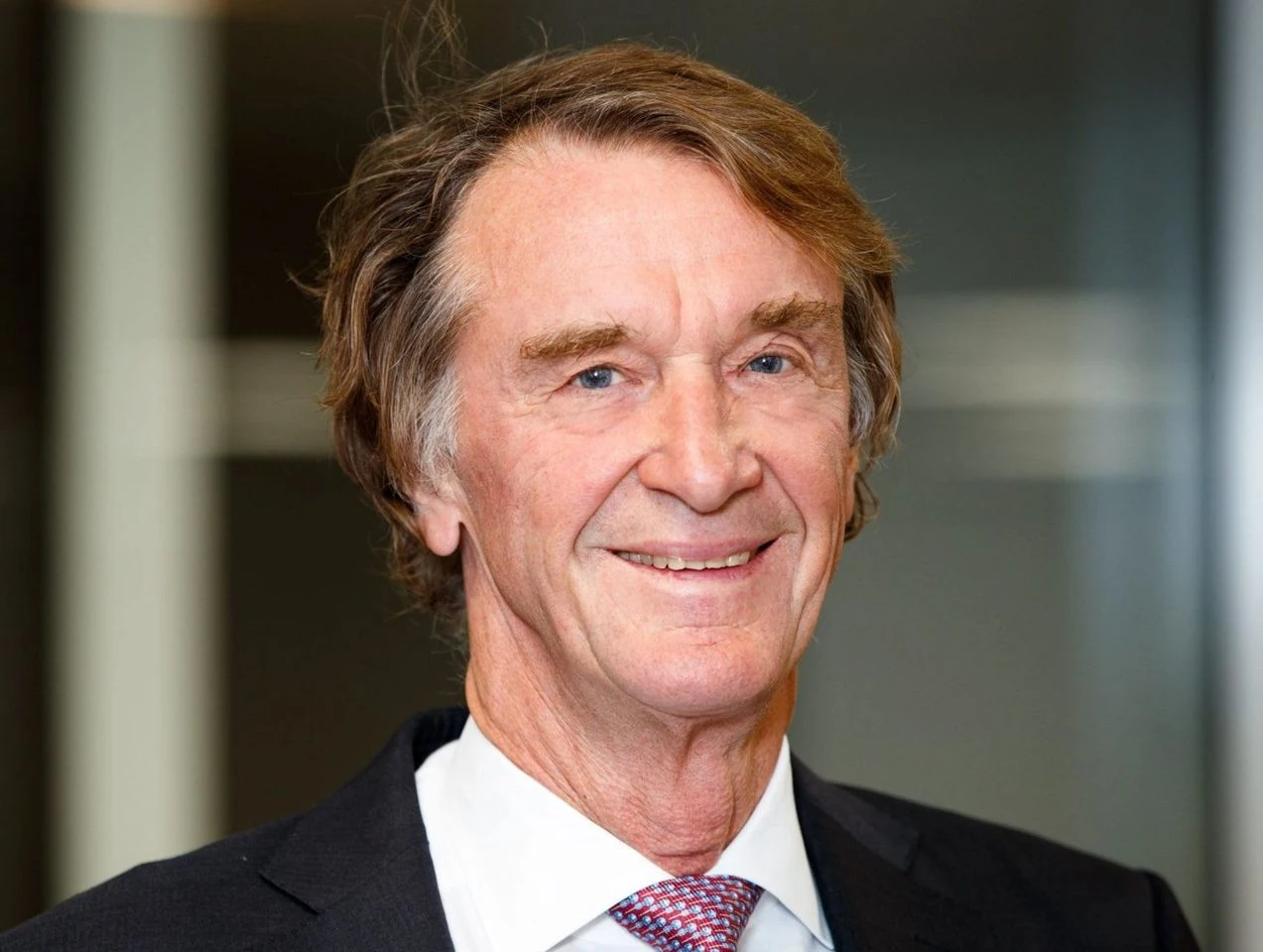
Jim Ratcliffe’s business story began not with a ready-made industrial empire but with the purchase of a chemical site in Antwerp. In 1998, he formed INEOS to buy out the company leasing the former BP Chemicals site and acquire its freehold. From that base, he built a multinational chemicals group through deals for businesses that larger owners were willing to sell. The strategy made him one of Britain’s most prominent industrialists, while also linking his name to debates about manufacturing, energy, the environment and the role of private capital.
From Failsworth to the chemicals trade
James Arthur Ratcliffe was born on 18 October 1952 in Failsworth, then in Lancashire and now part of Greater Manchester. His father worked as a joiner before running a factory that made laboratory furniture; his mother worked in an accounts office. Ratcliffe was raised in a council house until the family moved to East Yorkshire when he was ten. He attended Beverley Grammar School and graduated in 1974 with a degree in chemical engineering from the University of Birmingham.
His first job after university was at BP, where he was dismissed after three days. The account of his career records that the reason given was eczema, which BP considered incompatible with work around toxic chemicals. He then became a trainee accountant at a pharmaceuticals company. Later, he joined Esso, which funded his MBA at London Business School between 1978 and 1980. He subsequently worked for the fabric and chemicals producer Courtaulds, before joining the US private-equity firm Advent International in 1989.
Those roles brought together technical training and experience in finance and corporate transactions. Ratcliffe became a co-founder of Inspec, which leased the former BP Chemicals site in Antwerp. In 1998 he formed INEOS in Hampshire to buy out Inspec and acquire the site itself. This sequence is more precise than the often-repeated shorthand that the company began simply with the purchase of a struggling Antwerp factory: the original deal concerned both Inspec and the freehold.
INEOS grows through acquisitions
Ratcliffe’s approach was to buy chemical operations that their owners no longer wanted and try to improve their earnings. INEOS used high-yield debt to finance acquisitions, choosing targets on the basis of their potential to double earnings over five years. Among its purchases were unwanted businesses from groups including ICI and BP. The model turned acquisition and operational management into the defining features of the company’s expansion.
A major step came in 2006, when INEOS bought BP’s refining and petrochemical arm, Innovene. The deal brought refineries and plants in Scotland, Italy, Germany, France, Belgium and Canada into the group. The following year, INEOS acquired Norsk Hydro’s polymers business, strengthening its position in the European market, particularly in polyvinyl chloride, or PVC. The company’s reach therefore grew through identifiable transactions, rather than through a single invention or product.
In April 2010, Ratcliffe moved INEOS’s head office from Hampshire to Rolle in Switzerland, a decision that reduced the company’s tax bill. In 2015, the group opened a UK headquarters for its chemicals and energy operations in Knightsbridge, London, alongside gas and oil trading and other functions. Ratcliffe described himself as pleased to be returning to the UK as a business base. The two moves show the international character of the group: its activities and leadership were not confined to Britain, even as it continued to maintain a substantial British presence.
INEOS’s expansion also made its relationship with the British industrial landscape a matter of public debate. In 2019, the company said it would close its Middlesbrough manufacturing plant unless it could defer compliance with forthcoming European rules on air and water pollution. Environment Agency data cited in the Wikipedia account showed 176 permit violations at the plant between 2014 and 2017; an agency spokesperson said emissions were above legal limits and posed an environmental risk. INEOS’s director said the company could not justify the investment needed to meet the rules. That episode complicates any simple account of industrial revival: manufacturing brings jobs and production, but also regulatory responsibilities and environmental costs.
New ventures: vehicles and lower-carbon energy
Ratcliffe extended the group into vehicle manufacturing through Ineos Automotive. He first approached Jaguar Land Rover about buying the tooling to continue producing the original Land Rover Defender after its production ended, but the approach was unsuccessful. In 2019, he instead formed partnerships with BMW and Magna Steyr to design and build a new vehicle, initially known by the codename Projekt Grenadier. The five-door Grenadier Station Wagon entered production in October 2022, followed by the Quartermaster utility vehicle in 2023. The project drew on the Defender’s rugged-vehicle tradition, but developed a separate product and manufacturing venture.
Energy became another part of the group’s plans. In 2021, Ratcliffe announced that INEOS intended to invest more than €2 billion in electrolysis projects to produce green hydrogen in Europe. The first proposed units were to use renewable electricity in Norway, with projects planned to follow in Germany and Belgium. He also said the company intended to invest in France and the UK, where its hydrogen business would be headquartered. These were announced plans, not evidence that every proposed facility had been completed; their significance lies in the scale and direction of the intended investment.
Ratcliffe has also been associated with experiments in bioethanol production using Clostridium bacteria. The work encountered a technical difficulty: the syngas contained hydrogen cyanide at levels too high for the bacteria to survive. INEOS sold its US plant to Alliance Bio-Products in 2017. These examples give a more grounded account of the company’s environmental ambitions than broad claims of sustainability: they show both projects aimed at alternative production and practical obstacles, alongside the pollution controversy at Middlesbrough.
Sport, investment and public recognition
Sport has been a prominent area of Ratcliffe’s investment. He bought Swiss club Lausanne-Sport in 2017 and, through INEOS, acquired French club Nice in 2019. In 2020, INEOS became a principal partner of Mercedes-AMG Petronas Formula One, signing a five-year agreement. Ratcliffe also backed competitive sailing: INEOS Team UK challenged unsuccessfully for the 36th America’s Cup in 2021, and INEOS Britannia later represented the Royal Yacht Squadron as Challenger of Record for the 37th competition.
His involvement in football widened in 2024, when the purchase of a 25 per cent stake in Manchester United was completed and INEOS Sport took control of the club’s football operations. The transaction followed a public bidding process that began after the club’s owners announced they were seeking investment. The club is one of the most visible parts of Ratcliffe’s sporting portfolio, but it is distinct from his original industrial work and brings its own responsibilities and scrutiny.
Ratcliffe has also backed cycling. INEOS bought the Team Sky cycling franchise in 2019, subsequently rebranding it Team INEOS. The team won the 2019 Tour de France and the 2021 Giro d’Italia with Colombian rider Egan Bernal. Earlier, Ratcliffe completed the Marathon des Sables across the Sahara in 2013 and founded Go Run for Fun, a charity organising celebrity-led events intended to encourage children aged five to ten to be active.
His public recognition has included an honorary fellowship from the Institution of Chemical Engineers in 2009, awarded in recognition of his leadership in building INEOS, and the Petrochemical Heritage Award in 2013. He was appointed Knight Bachelor in the 2018 Birthday Honours for services to business and investment. These honours recognise his position in industry; they do not settle the questions raised by the group’s environmental record, its business choices or its influence over major sporting institutions.
Why Jim Ratcliffe deserves a place in British Legacy
Ratcliffe’s place in British Legacy rests most securely on the industrial company he founded and the way he built it. INEOS began in Hampshire with a buyout connected to the Antwerp chemicals site, then expanded through purchases including Innovene and Norsk Hydro’s polymers business. Those acquisitions brought operations in Britain and elsewhere into a group whose work spans chemicals, refining, polymers and, later, vehicle manufacturing. Ratcliffe’s career shows how British industrial leadership can operate internationally: its story is rooted in British education and company formation, but its plants, markets and corporate decisions cross national borders.
That legacy is not simply a tale of growth. The proposed investment in green hydrogen and the Grenadier’s move into production show an appetite for developing new industrial activities, while the Middlesbrough pollution dispute illustrates the consequences and obligations that accompany manufacturing. His sporting investments have also made INEOS and Ratcliffe familiar well beyond the chemicals sector, from cycling and sailing to football and Formula One. These ventures broaden the public reach of his business career, but they should not obscure its central achievement: building a major industrial group through acquisitions and steering it into new fields. Taken together, the record offers a specific British story of enterprise, international scale and contested responsibility—not a generic celebration of success.
Sources
Jim Ratcliffe — revision 1376164734
Adapted in part from Jim Ratcliffe by Wikipedia contributors, under CC BY-SA 4.0. Text has been edited and combined with the existing article; this adapted text is shared under the same licence. Contributor history.