
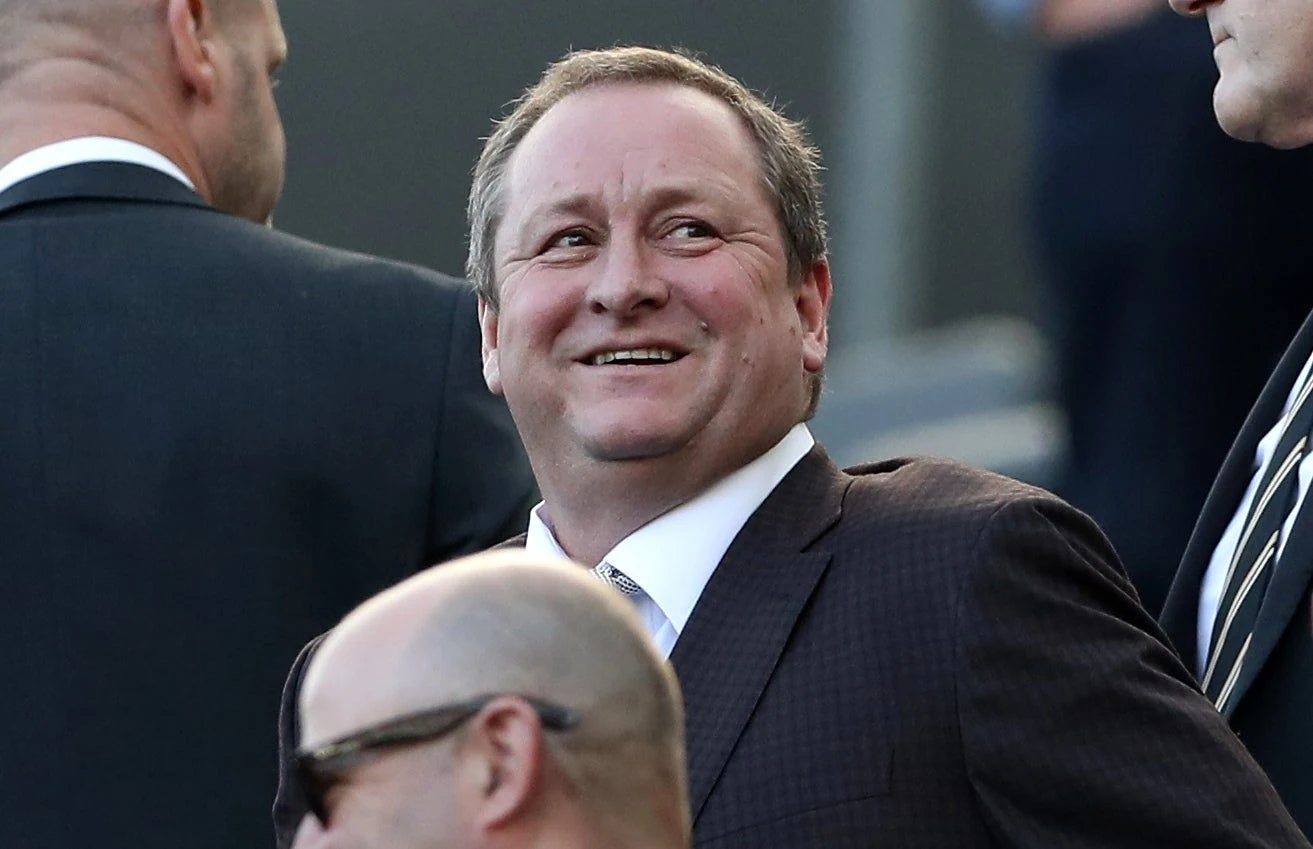
Mike Ashley’s career joined two parts of British public life: high-street retail and professional football. He opened a sports and ski shop in Maidenhead in 1982, aged 18, and built it into a business that became Sports Direct International and later Frasers Group. His ownership of Newcastle United, from 2007 to 2021, brought a different kind of scrutiny, as supporters challenged his decisions and the club’s direction. The story is not simply one of expansion: it is also a record of the consequences of running a large employer and a football club under intense public attention.
From Burnham to a first shop
Ashley was born in Walsall, Staffordshire, on 9 September 1964, and grew up in Burnham, Buckinghamshire. His father managed a food-distribution depot. Ashley attended Burnham Grammar School and left at 16 without qualifications. At 18, he opened his first sports and ski shop in Maidenhead with a £10,000 loan from his family. That combination—a local shop and family financing—was the starting point for a retail operation that expanded around London and beyond.
In the late 1990s, Ashley rebranded the chain as Sports Soccer. The business became a limited company in 1999. Its growth relied in part on bringing sports brands and businesses into a wider retail portfolio. Donnay Sports was the first brand he added; in 2003 he bought Dunlop Slazenger for £40 million and acquired Karrimor. He later bought Kangol for £10 million and took a stake in Umbro, alongside a long-term deal with the brand.
The pace and reach of that expansion distinguish the early business story more clearly than the promotional language often used to describe it. By 2006, the group had overtaken JJB Sports as the UK’s largest sportswear retailer. Ashley also took stakes in retailers including Matalan, Blacks Leisure Group, JJB Sports and JD Sports. These investments placed his interests well beyond a single chain, though the evidence does not establish that every stake formed part of a lasting strategy or delivered a particular outcome.
Building Sports Direct
Sports Soccer became associated with the Sports Direct name as Ashley’s business broadened its range and presence. The company’s public-market ambitions took shape in 2006, when Ashley hired Merrill Lynch for an initial public offering. Sports Direct International joined the London Stock Exchange in 2007. The flotation marked a change in scale and visibility: a business that had begun with one shop was now a listed retailer, with a growing portfolio of stores and brands.
By 2019, Sports Direct, Lillywhites and USC together had more than 400 stores in the UK. The group employed more than 20,000 people across the UK, Ireland, Belgium and Slovenia. Those figures convey the practical reach of the enterprise: its shops were part of town and city retail landscapes, while its workforce and operations extended across several countries. Ashley’s retail holdings also reached beyond sportswear. His interests included House of Fraser, and the wider business became known as Frasers Group.
Expansion continued through acquisitions and changes in the retail market. Sports Direct acquired a 38.5 per cent stake in Game Digital in 2019. In 2020, Ashley bought a 12.5 per cent stake in Mulberry, while Frasers Group acquired assets from DW Sports Fitness, including leisure clubs and retail outlets. These transactions show how the business extended into other forms of shopping and leisure. They do not, on their own, substantiate claims that Ashley consistently anticipated consumer trends or that each acquisition succeeded.
Warehouse scrutiny and public accountability
The growth of Sports Direct also brought attention to how its workers were treated. In 2016, the Department for Business, Innovation and Skills ordered an investigation into working conditions at a Sports Direct warehouse in Shirebrook following allegations of misconduct. During a parliamentary hearing, MPs compared the company to a “Victorian workhouse”. That was a criticism made in a formal public setting, not a neutral description of the workplace.
In 2020, The Guardian reported that an undercover investigation found working conditions had improved only incrementally. The available account therefore documents both official scrutiny and a subsequent report of limited improvement; it does not support a claim that the controversy produced “genuine industry reforms” across retail. The episode matters because Sports Direct’s scale made working conditions an issue of public concern, and because parliamentary attention turned the company’s employment practices into part of Ashley’s record as a business leader.
Other episodes brought different kinds of scrutiny. In 2000, Ashley gave the Office of Fair Trading evidence about meetings among sports retailers concerning football-shirt prices. In 2017, he won a High Court dispute with investment banker Jeffrey Blue, who claimed Ashley had promised him £15 million if Sports Direct’s shares doubled in value. The court ruled that no one would have thought Ashley’s remark was serious. In March 2020, the company was criticised after saying its shops would remain open during new government restrictions; a few days later, it announced they would close until permitted to reopen.
Newcastle United and the demands of ownership
Ashley bought Newcastle United in 2007. He acquired an initial 41.6 per cent stake from Sir John Hall and later bought the remaining shares, becoming the club’s sole owner. He paid down substantial debts inherited from the previous ownership, but was also criticised for failing to carry out due diligence: he later said he had not known about certain financial arrangements and outstanding liabilities. The takeover gave Ashley a place at the centre of a club with a large and engaged following, where commercial decisions were inseparable from supporters’ sense of the club’s identity.
In 2008, manager Kevin Keegan left after a dispute involving the club’s football decision-making. His resignation prompted sustained protests from fans. Ashley put the club up for sale, saying he understood supporters’ anger and no longer wanted to subsidise it; after no acceptable buyer emerged, he announced in December that it was no longer for sale. Newcastle were relegated in 2009. An arbitration panel subsequently found the club guilty of constructive dismissal in its treatment of Keegan, and Ashley was ordered to pay £2 million in compensation plus interest.
The relationship with supporters remained difficult. In 2010, manager Chris Hughton was dismissed and replaced by Alan Pardew. Newcastle were relegated again at the end of the 2015–16 season. Ashley said publicly that he would sell the club when it had won a trophy, later adding that Champions League qualification would also count. In October 2021, a consortium completed the purchase of Newcastle for £300 million, ending his ownership after 14 years. The long sale process, the club’s relegations and repeated fan protests made Newcastle an enduring part of how his business leadership was discussed in public.
Ashley also held an 8.92 per cent stake in Rangers’ parent company from 2014. The Scottish Football Association rejected his request to increase that holding, citing his existing Newcastle shares and the potential conflict of interest. He sold his Rangers stake in 2017. In 2022, he bought Coventry City’s stadium, the CBS Arena. The club later announced that it had bought the stadium from Frasers Group in August 2025.
Why Mike Ashley deserves a place in British Legacy
Ashley’s place in British Legacy rests on the scale and visibility of the businesses he built. From one Maidenhead shop, he developed a sports retailer that became the UK’s largest in its sector by 2006, listed on the London Stock Exchange and operated hundreds of stores. Its brands, acquisitions and later expansion into other retail and leisure assets show how one entrepreneur helped shape the changing British high street. The business also supported a large workforce across several countries. These are concrete elements of his commercial impact, rather than proof of the broader claims about inspiration or foresight sometimes attached to his story.
His record also shows why commercial success cannot be separated from accountability. Scrutiny of working conditions at Shirebrook, parliamentary criticism and the subsequent report of only incremental improvement belong alongside the company’s growth. Newcastle United offers a parallel lesson: ownership can bring financial decisions, sporting outcomes and supporters’ trust into direct conflict. Ashley’s 14 years at the club included protest, relegation and an eventual sale, making his tenure an important chapter in the recent history of a prominent English football club. Remembering both sides—the expansion of a British retailer and the disputes over responsibility at work and in football—offers a more useful legacy than praise alone.
Sources
Mike Ashley (businessman), revision 1378507006 · Mike Ashley (businessman)
Adapted in part from Mike Ashley (businessman) by Wikipedia contributors, under CC BY-SA 4.0. Text has been edited and combined with the existing article; this adapted text is shared under the same licence. Contributor history.
.jpg)