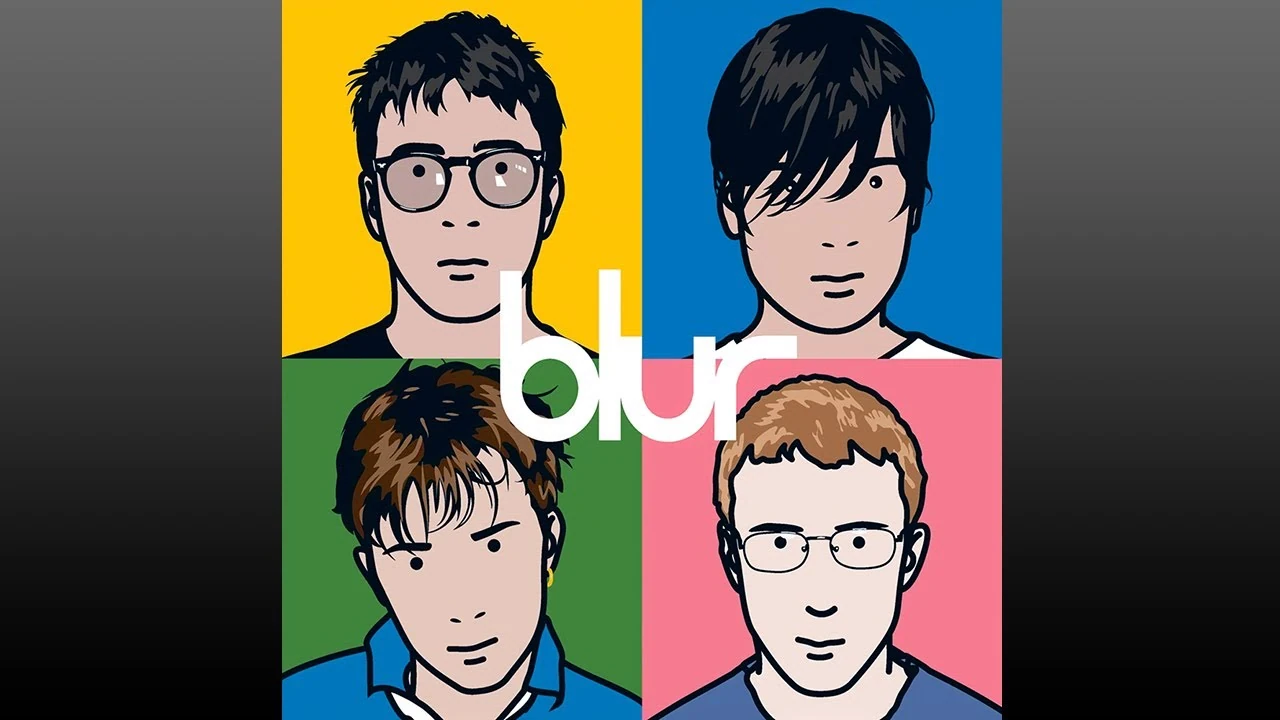
Blur’s career is often associated with the Britpop years, but the band’s story did not stop at the chart battles of the mid-1990s. Formed in 1988, the group released its debut album, Leisure, in 1991, reached a wider audience with Parklife in 1994 and then pursued increasingly varied musical directions. Its changing sound, as well as the songs that fixed its place in the Britpop era, makes for a fuller account than any single hit or rivalry can provide.
Formation and early records
The original line-up comprised Damon Albarn on vocals and keyboards, Graham Coxon on guitar and backing vocals, Alex James on bass guitar, and Dave Rowntree on drums. Their first album, Leisure, appeared in 1991. The supplied account describes its reception as mixed, while identifying “She’s So High” and “There’s No Other Way” as early songs that helped bring the band to public attention.
Modern Life Is Rubbish, the band’s second album, followed in 1993. The original article presents it as a response to the growing grunge scene and identifies its British themes as part of the groundwork for Britpop. It marked a step in the group’s development between the debut and the greater visibility that followed. The album’s place in that sequence is important: Blur’s arrival as a prominent Britpop band came through a run of records, rather than one sudden change.
Parklife and the chart battle
Released in 1994, Parklife brought Blur to a wider audience. Its songs included “Girls & Boys”, “End of a Century” and the title track, featuring actor Phil Daniels. The album became closely associated with the band’s Britpop identity and with observations of everyday British life. The original article quotes a line from “Parklife” as emblematic of that association; it is a lyric from one particular song, not a claim to represent every experience of British life.
The Great Escape followed in 1995. “Country House” and “The Universal” were among its notable tracks. “Country House” also became the focus of the chart contest with Oasis’s “Roll with It”. The widely publicised singles battle, known as the “Battle of Britpop”, set the two groups against one another in the public imagination. Blur’s single reached number one. That result gave the contest a clear chart outcome, but it was one episode in a career that continued beyond the rivalry.
Experimentation and recognition
Blur’s self-titled 1997 album marked a departure towards a more introspective and grungier tone, according to the supplied article. “Song 2” became an international hit, with its “Woo-hoo!” refrain helping the track reach listeners beyond the British context of the band’s Britpop material. Its success also illustrates why Blur cannot be defined by one sound: the group’s profile travelled with music that departed from the themes associated with Parklife.
The next two albums, 13 (1999) and Think Tank (2003), continued the experimentation. The original account describes their range as incorporating electronic music, gospel and African rhythms, and names “Tender” and “Out of Time” among tracks that received critical acclaim. It also notes strains in the band’s internal dynamics, particularly Coxon’s temporary departure. Musical exploration and changes within the group were part of the same later period.
The supplied article credits Blur with five BRIT Awards, including the Outstanding Contribution to Music Award in 2012. It also records reunions for tours and the release of The Magic Whip in 2015, which it describes as receiving positive reviews. These points extend the story beyond the band’s best-known Britpop period, without requiring that its later work be treated as a simple continuation of the same sound.
Why Blur deserves a place in British Legacy
Blur deserves a place in British Legacy because its work became part of a specific and influential moment in British popular music. Parklife brought “Girls & Boys”, “End of a Century” and the title track, featuring Phil Daniels, to a broad audience. The album’s association with observations of everyday British life helped shape how the band was understood during the Britpop years. That connection is grounded in a particular record, its songs and the public identity that grew around them—not in the idea that one band could speak for the whole country.
The band’s subsequent changes are just as important to its legacy. The 1995 contest with Oasis made Blur’s place in the Britpop moment unusually visible, and “Country House” reaching number one gave that episode a chart result. But the group did not simply repeat the sound of that period. The self-titled Blur, 13 and Think Tank document further experimentation, while the supplied account also records later touring, The Magic Whip and the 2012 award. Taken together, these achievements make Blur significant not only as a Britpop name, but as a British band whose music passed through distinct phases.