
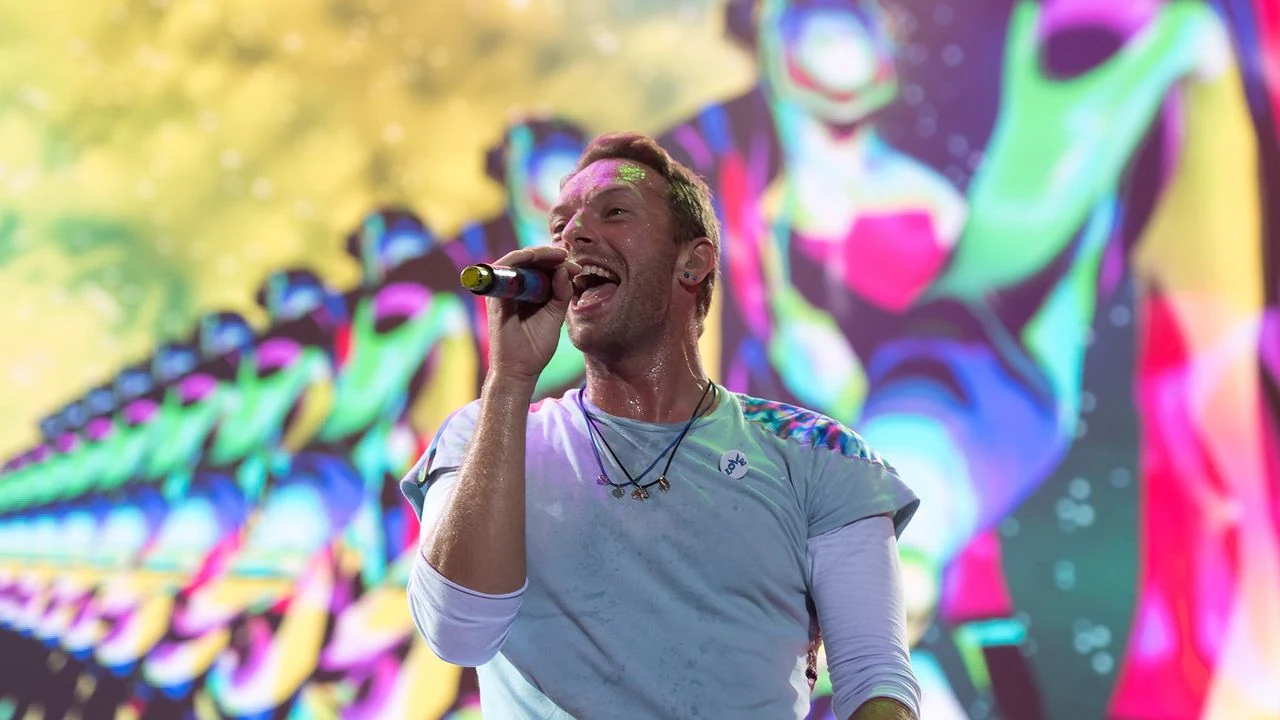
Chris Martin’s career has carried him from student rehearsals in London to stadiums around the world. As vocalist, pianist and co-founder of Coldplay, he helped build one of the most commercially successful bands of the 21st century. Away from the stage, he has used that reach to promote fair trade and support humanitarian campaigns. The two strands are connected: Martin’s public influence has grown through music, but he has also sought to direct attention towards causes beyond it.
From Exeter to University College London
Christopher Anthony John Martin was born in Exeter, Devon, on 2 March 1977. He attended Hylton and Exeter Cathedral primary schools, where he developed an interest in music, and later went to Sherborne School. There he met Phil Harvey, who would become Coldplay’s manager, and played in a blues band with him. Before university, Martin worked at Shed Studios, writing jingles for plays at St George’s College in Harare. He then studied Greek and Latin at University College London, graduating with first-class honours.
At UCL, Martin met guitarist Jonny Buckland during the university’s 1996 orientation week. They began planning a band and writing songs together. Guy Berryman joined in the following months; Will Champion came aboard shortly before the group’s first live performance. The band performed briefly under other names before settling on Coldplay. Those beginnings were modest, but the university connection brought together the musicians who would shape Martin’s best-known work.
Coldplay’s rise and Martin’s songwriting
Coldplay’s debut album, Parachutes, appeared in 2000 and brought the band international recognition. “Yellow”, its breakthrough single, reached number four in the UK charts. Albums including A Rush of Blood to the Head, X&Y and Viva la Vida or Death and All His Friends extended the group’s reach. Across a long recording career, Coldplay have moved between alternative rock and pop, while Martin’s voice, piano playing and songwriting have remained central to their sound.
Martin’s songwriting has also travelled beyond the band. He co-wrote “Gravity” for Embrace and “See It in a Boy’s Eyes” for Jamelia, and worked with artists including Ron Sexsmith, Ian McCulloch, Nelly Furtado and Jay-Z. His collaborations have included “Beach Chair” with Jay-Z and “Homecoming” with Kanye West. These projects show a career not confined to Coldplay’s albums: Martin has repeatedly contributed as a writer, singer or pianist in different musical settings.
Coldplay’s commercial success has been accompanied by substantial recognition. The band has received seven Grammy Awards and nine Brit Awards, and is credited with sales of more than 170 million records worldwide. Their catalogue includes songs such as “Yellow”, “Fix You” and “Viva la Vida”, which have helped make the group familiar to audiences well beyond Britain. Martin’s place in that success is as a member of a four-person band, rather than a solo artist working alone.
Fair trade and humanitarian work
Martin has campaigned for Oxfam’s Make Trade Fair initiative, which draws attention to the effects of unfair trade on farmers and workers in developing countries. He travelled to Ghana and Haiti to meet farmers and see those effects. On stage, he often wrote “Make Trade Fair”, “MTF” or an equals sign on the back of his hand, turning a campaigning message into a recurring visual part of his performances. His involvement gave the issue access to audiences who might first have encountered it through Coldplay.
His support for humanitarian causes has included benefit performances. In 2012, he played at the 12-12-12 concert for victims of Hurricane Sandy. In 2014, he joined Band Aid 30, a new recording of “Do They Know It’s Christmas?” intended to raise money for the Ebola crisis in West Africa. The following year, he became creative director of the Global Citizen Festival. That role connected his musical work to a campaign focused on extreme poverty and issues including education, sanitation and health.
These activities take different forms: campaigning, public performance and festival leadership. They do not make music a substitute for policy or humanitarian work, but they show how Martin has used his profile to draw attention and audiences towards causes. The 2019 announcement by Coldplay that they would pause touring until concerts could be made more environmentally sustainable added another dimension to that public stance. It framed the environmental impact of live performance as something artists should consider, rather than treating touring as separate from a band’s responsibilities.
Music beyond the band
Martin has continued to work with other musicians alongside his Coldplay commitments. His collaborations span pop, hip-hop and rock, including work with Avicii, Dua Lipa and the Chainsmokers. He has also performed in tribute and benefit settings, from singing at the 2012 Sandy relief concert to paying tribute to Linkin Park singer Chester Bennington in 2017. These appearances are a reminder that his musical career includes both long-running group work and occasional projects shaped by particular artists or events.
His public profile has sometimes extended beyond music, but the strongest through-line in the available account is the connection between songwriting, performance and advocacy. Martin’s work with Oxfam and Global Citizen has used the attention generated by Coldplay to amplify messages about poverty, trade and humanitarian need. His contributions to benefit recordings and concerts have also made performance itself a means of raising awareness and support.
Why Chris Martin deserves a place in British Legacy
Chris Martin’s British legacy begins with a clear geographical and cultural connection: he was born in Exeter and developed as a musician through education in England and the formation of Coldplay at University College London. The band’s international success has carried songs written and performed by a British group to audiences worldwide. Martin’s achievements are not only a tally of awards or records sold; they include the lasting work of helping to create a group whose music has become part of contemporary popular culture.
His campaigning gives that musical reach a wider purpose. Through Oxfam’s Make Trade Fair initiative, Martin brought attention to the effects of trade practices on farmers and workers, including through visits to Ghana and Haiti. His work with Band Aid 30, the Sandy relief concert and the Global Citizen Festival linked performance to support for people facing crises and poverty. The 2019 touring pledge also placed environmental questions before a major live-music audience. Together, these actions show a British artist using an international platform to connect popular music with public causes. That combination of creative achievement and sustained advocacy makes Martin a distinctive subject for British Legacy.
Sources
Chris Martin — Wikipedia, revision 1379794319 · Chris Martin — Wikipedia
Adapted in part from Chris Martin by Wikipedia contributors, under CC BY-SA 4.0. Text has been edited and combined with the existing article; this adapted text is shared under the same licence. Contributor history.
.jpg)