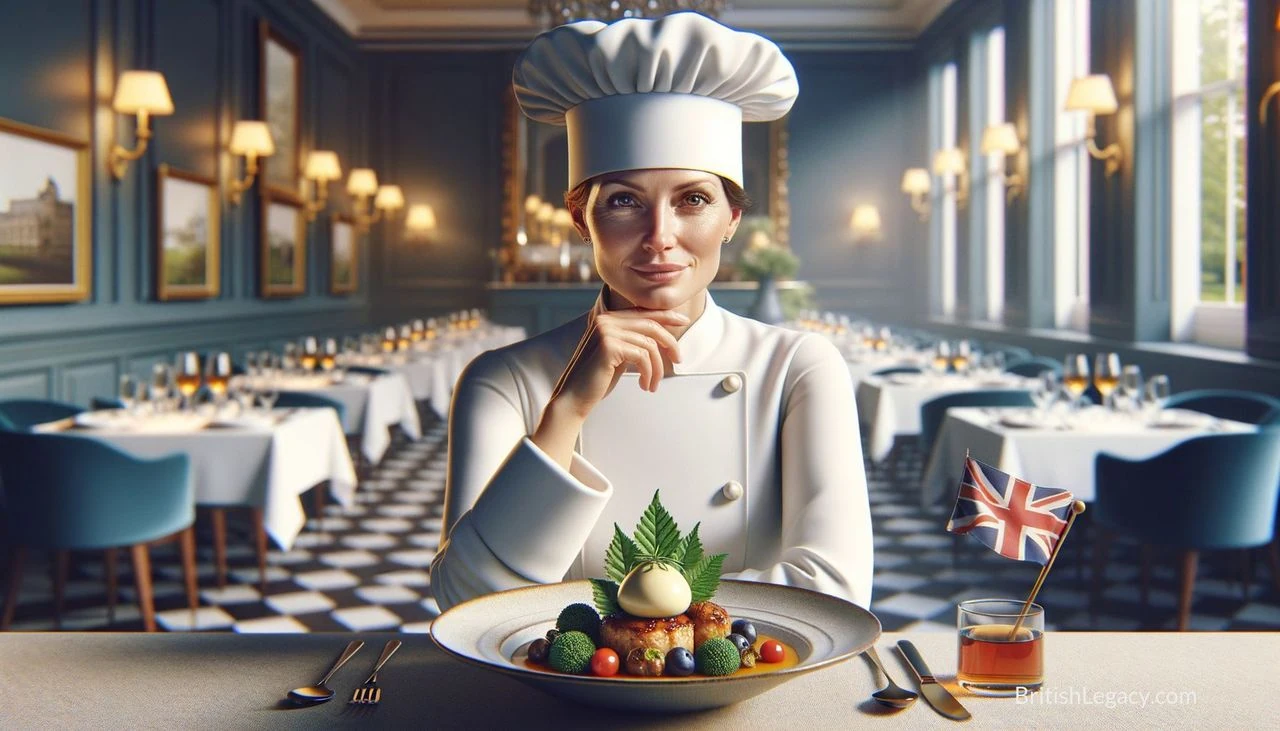
Clare Smyth’s career has taken her from the head chef’s position at Restaurant Gordon Ramsay in Chelsea to Core, her own restaurant in Notting Hill. Core opened in 2017 and received three Michelin stars by 2021. Its cooking is described as refined British cuisine, using modern techniques with ingredients that include potatoes, lamb, carrots and scallops from the Isle of Mull. Smyth was the first female British chef to hold three Michelin stars for her own restaurant.
From Chelsea to her own kitchen
Born in Northern Ireland, Smyth built her career through training and experience in professional kitchens. One of its defining stages came at Restaurant Gordon Ramsay in Chelsea, where she became head chef. During her tenure, the restaurant earned and retained three Michelin stars. That record preceded the opening of Core, where Smyth could establish a restaurant with a distinct identity of its own.
Core opened in Notting Hill in 2017. It received two Michelin stars within its first year and a third in 2021. The restaurant’s cuisine is characterised as refined and elegant, with British ingredients at its centre and modern techniques used in their preparation. Its menu offers a set of specific examples of that approach rather than relying on a general claim about British cooking.
Dishes shaped around British ingredients
Among the dishes singled out as examples of Smyth’s cooking are Potato and Roe, Lamb Carrot and Isle of Mull Scallop. Potato and Roe puts the potato at the centre, pairing it with smoked trout and herring roe, with beurre blanc. Lamb Carrot combines lamb and carrot with sheep’s-milk yoghurt. The Isle of Mull scallop is served with sea vegetables and broth. Together, the dishes show the range of ingredients named in the restaurant’s menu, from a familiar potato to scallops identified with a specific Scottish island.
These combinations also make clear how the restaurant brings ingredients together: potato with fish and roe; lamb with carrot and yoghurt; and scallop with sea vegetables and broth. The dishes are described as carefully prepared and presented, with contemporary methods applied to ingredients associated with British cuisine. This focus on ingredients and their combinations is a more concrete account of Core’s identity than praise alone.
Awards and public work
In 2018, The World’s 50 Best Restaurants named Smyth the World’s Best Female Chef. The award brought international recognition beyond the Michelin stars associated with her restaurants. She has also served as a Culinary Ambassador for the UK, promoting British cuisine internationally, and has been involved in charitable initiatives.
Smyth is described as a mentor and an inspiration to aspiring chefs, particularly women. Her own career includes becoming head chef at a three-Michelin-starred restaurant and opening Core, which went on to receive three stars. Those milestones give substance to the example her career offers to people entering professional kitchens.
Why Clare Smyth deserves a place in British Legacy
Clare Smyth deserves a place in British Legacy for a career that connects recognised achievement with a clearly described approach to cooking. At Restaurant Gordon Ramsay, she became head chef while the restaurant earned and retained three Michelin stars. At Core, she established her own restaurant and led it from its 2017 opening to three Michelin stars in 2021. Her dishes give that achievement a particular culinary character: potato with smoked trout, herring roe and beurre blanc; lamb with carrot and sheep’s-milk yoghurt; and Isle of Mull scallop with sea vegetables and broth.
Her contribution also has a public dimension. Named the World’s Best Female Chef in 2018, Smyth has served as a Culinary Ambassador for the UK, promoting British cuisine internationally. Her career is also presented as an example for aspiring chefs, especially women, and as a source of mentorship. These are specific reasons to remember her: leadership in a demanding kitchen, the creation of a restaurant centred on British ingredients, and a recognised role in representing British cooking beyond the restaurant itself.