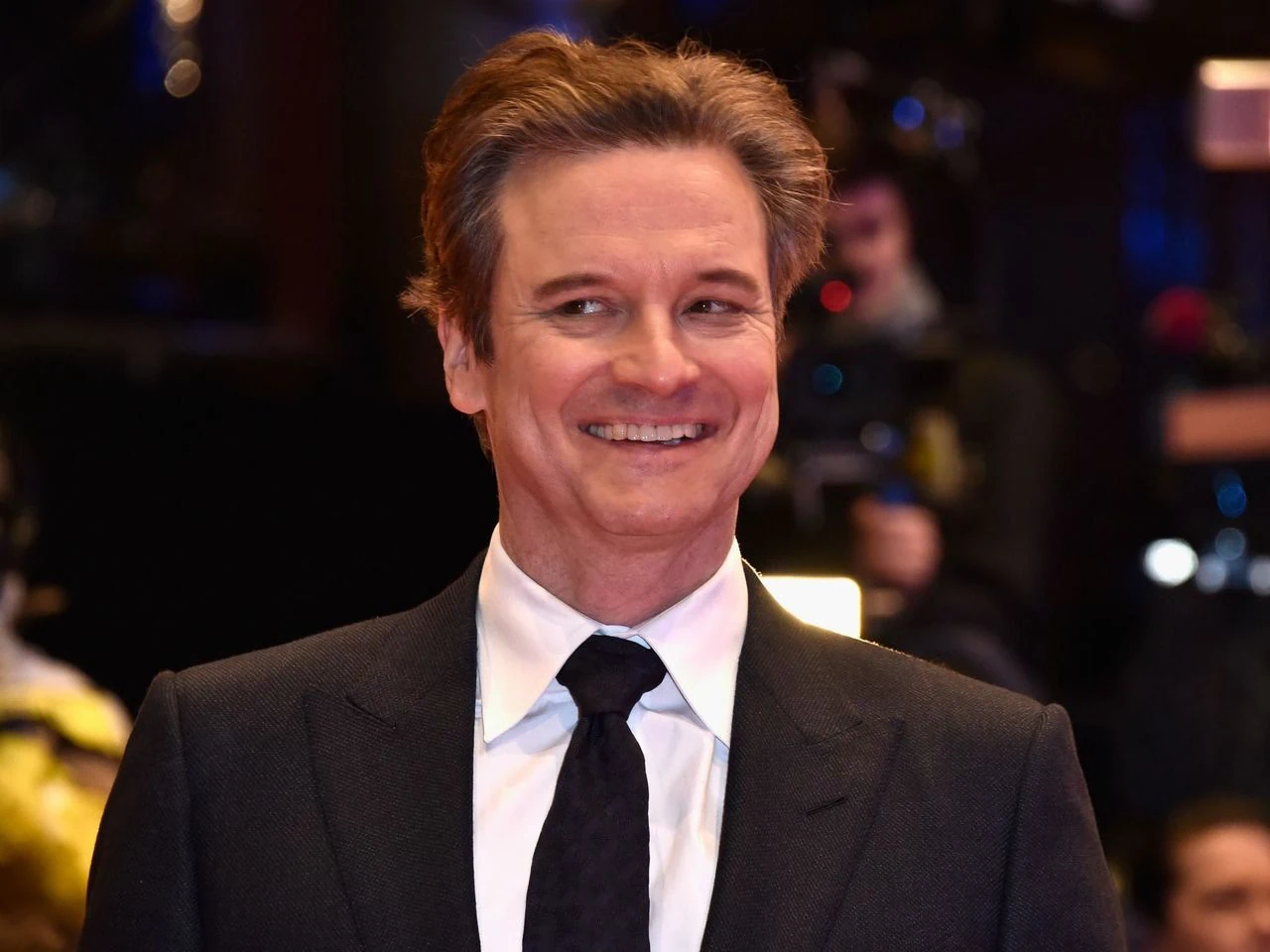
Colin Firth’s career has moved between intimate dramas, romantic comedies, historical films and international productions. For many viewers, its turning point came in 1995, when he played Mr Darcy in the BBC adaptation of Jane Austen’s Pride and Prejudice. A decade and a half later, his performance as King George VI in The King’s Speech brought him an Academy Award. Between and beyond those landmarks, Firth has taken on roles that resist a single image of the actor: from a young soldier struggling with disability in Tumbledown to a secret agent in Kingsman: The Secret Service.
Finding a route into acting
Firth was born in Grayshott, Hampshire, on 10 September 1960. His parents were academics and teachers, and his childhood included time in Nigeria, where his parents worked, and in St Louis, Missouri. Back in England, he attended the Montgomery of Alamein Secondary School in Winchester. He began drama workshops at ten and had decided by fourteen that he wanted to become an actor.
After sixth form at Barton Peveril College in Eastleigh, he moved to London and joined the National Youth Theatre. He found work in the wardrobe department at the National Theatre before studying at Drama Centre London. In 1984, he made his film debut as Tommy Judd in Another Country, an adaptation of the play. The following years brought work in film and television, including A Month in the Country and the 1988 BBC drama Tumbledown.
In Tumbledown, Firth portrayed Robert Lawrence, a British soldier severely injured in the Falklands War. The drama followed Lawrence’s struggle to adjust to disability and the indifference he encountered from government and public. It was controversial, but Firth’s performance won a Royal Television Society Best Actor Award and earned a BAFTA television nomination. It showed an early willingness to take on roles shaped by difficult public questions, rather than relying only on romantic or comic parts.
From Mr Darcy to an international film career
Firth became a household name through the 1995 BBC adaptation of Pride and Prejudice. His Mr Darcy was aloof and proud, with a reserve that gradually gave way to warmth. The series found an international audience, and the role made him a romantic figure in the public imagination. Firth later took the part of Mark Darcy in Bridget Jones’s Diary (2001), a modern story that drew knowingly on the Austen character. He returned to the role in later films in the series.
The Darcy association did not define the full range of his work. Firth appeared in the 1996 film The English Patient, played roles in Shakespeare in Love and The Importance of Being Earnest, and joined the ensemble cast of Love Actually (2003). He also took on a more sombre part in Conspiracy (2001), a BBC film about the Wannsee Conference, which brought him a Primetime Emmy nomination. In 2008, he made his first film musical appearance in Mamma Mia!.
A further change in register came with Tom Ford’s A Single Man (2009), in which Firth played a college professor grieving the death of his partner. The performance earned him the Volpi Cup for Best Actor at the Venice Film Festival and a BAFTA award, as well as nominations including an Academy Award. In The King’s Speech (2010), he portrayed Prince Albert, later King George VI, as he sought to overcome a speech impediment while becoming monarch. Firth won the Academy Award for Best Actor, alongside a BAFTA, Golden Globe and Screen Actors Guild award for the role.
His subsequent parts continued to range widely: Bill Haydon in the 2011 adaptation of John le Carré’s Tinker Tailor Soldier Spy; Harry Hart in Kingsman: The Secret Service (2014) and its sequel; and appearances in Mary Poppins Returns, 1917 and Operation Mincemeat. In 2012, he co-founded the production company Raindog Films with music-industry executive Ged Doherty. Firth co-produced its first feature, Eye in the Sky, released in 2016. His television work has also continued, including the 2022 series The Staircase.
Writing, production and public causes
Firth’s work outside acting has included writing and producing. His short story, “The Department of Nothing”, appeared in Speaking with the Angel (2000), a collection edited by Nick Hornby to benefit the TreeHouse Trust, which supports autistic children. He contributed to We Are One: A Celebration of Tribal Peoples (2009), a book about Indigenous cultures and the challenges they face; profits went to the Indigenous rights organisation Survival International. He was also an executive producer of the documentary In Prison My Whole Life.
Firth has supported campaigns on Indigenous rights, refugees and the environment. A longstanding supporter of Survival International, he spoke publicly about the eviction of San people from Botswana’s Central Kalahari Game Reserve and backed a campaign concerning the Awá-Guajá people in Brazil. He also supported the Refugee Council and campaigned against the deportation of Congolese asylum seekers, raising concerns in open letters about their safety if returned. His involvement in Oxfam’s Make Trade Fair campaign focused on trade practices that campaigners regarded as unfair to producers.
That public activity also took practical forms. Firth and collaborators opened Eco, an environmentally minded shop in west London offering fair-trade and eco-friendly goods alongside advice on making homes more energy efficient. In 2009, he and his then wife, Livia Giuggioli, launched Brightwide, a film and political activism website that is now decommissioned. In 2010, he guest-edited BBC Radio 4’s Today programme and commissioned research into possible differences in brain structure associated with political orientation. The resulting academic paper listed him as an author alongside researchers and the programme’s science reporter.
Recognition and personal milestones
Firth was appointed Commander of the Order of the British Empire in 2011 for services to drama. He received an honorary doctorate from the University of Winchester in 2007 and an honorary fellowship from the University of the Arts London in 2012. Other recognition included a star on the Hollywood Walk of Fame and inclusion in Time magazine’s 2011 list of the world’s most influential people.
Firth married Italian activist Livia Giuggioli in 1997. They have two sons; Firth also has a son from his earlier relationship with actor Meg Tilly. Firth and Giuggioli announced their separation in 2019, and their divorce was finalised in 2021. In 2017, Firth became an Italian citizen as well as a British citizen, explaining that he wanted the same passports as his wife and children. He has described himself as remaining “extremely British”.
Why Colin Firth deserves a place in British Legacy
Firth’s place in British cultural life rests on more than the popularity of a single character. His Mr Darcy helped make a BBC literary adaptation a defining television event for a generation of viewers, while his later work showed how an actor can carry the public recognition of one role without being confined by it. His performances in Tumbledown, A Single Man and The King’s Speech demonstrate distinct approaches to stories about injury, grief and the demands placed on public figures. The Academy Award for The King’s Speech brought international recognition to a performance centred on a British monarch, while his wider filmography has connected British television and film with audiences around the world.
His contribution also extends beyond the screen. Through writing, producing and public campaigning, Firth has drawn attention to Indigenous rights, asylum seekers and trade fairness. His support for Survival International and the Refugee Council, his involvement in Oxfam’s Make Trade Fair campaign, and the creation of a London shop promoting fair-trade and environmentally minded goods give specific shape to that record. These efforts do not make him a substitute for the organisations or people whose causes he has supported; they show how a prominent actor has used his public standing to help bring those issues into view. Taken together, his acting and advocacy make Firth a substantial subject in a British legacy shaped by both cultural work and public engagement.
Sources
Adapted in part from Colin Firth by Wikipedia contributors, under CC BY-SA 4.0. Text has been edited and combined with the existing article; this adapted text is shared under the same licence. Contributor history.