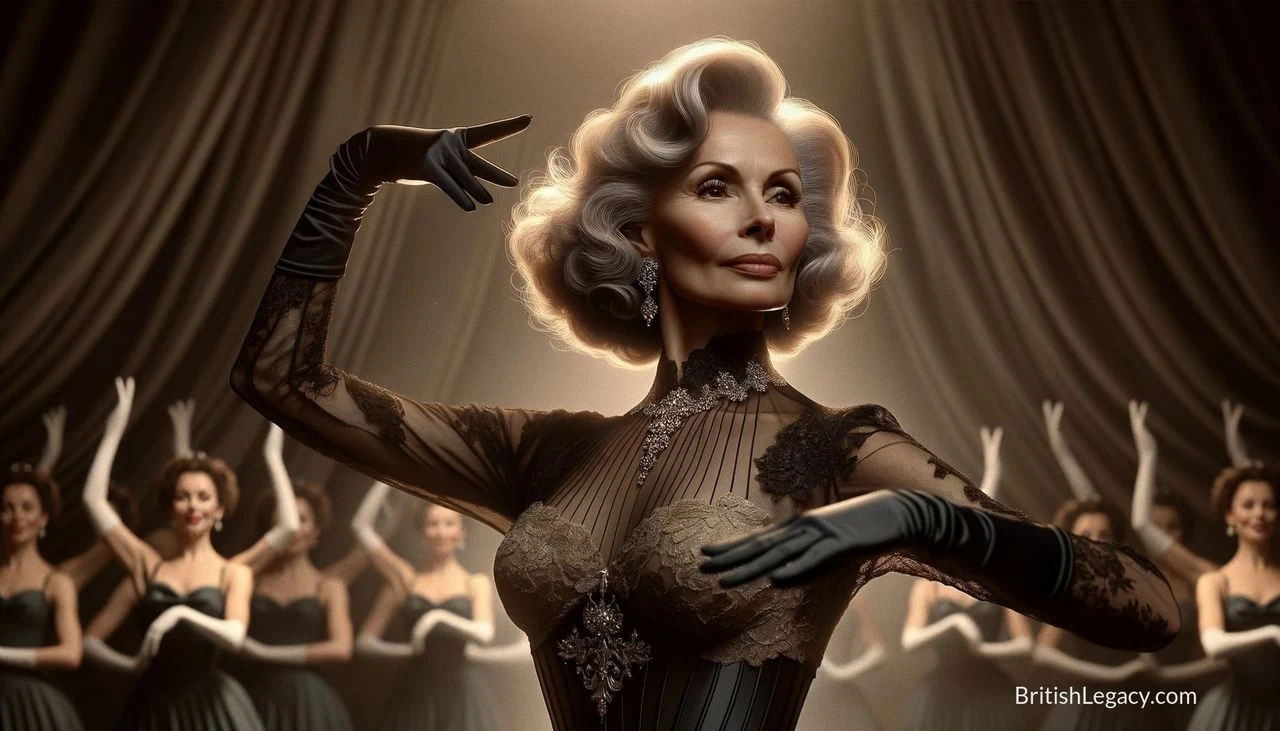
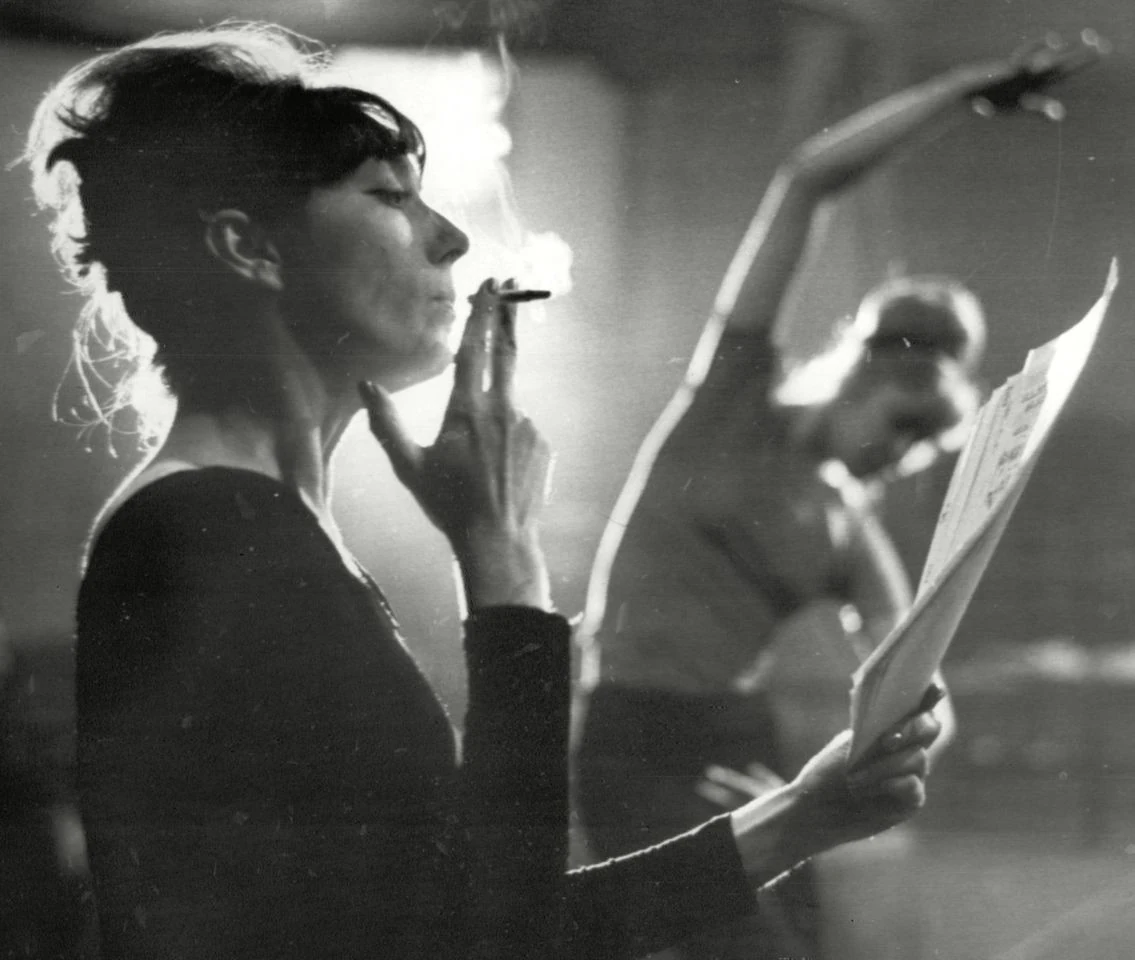
Dame Gillian Lynne built a career that crossed ballet, film, television and musical theatre. She first became known as a dancer with Sadler’s Wells Ballet, then developed into a choreographer and director whose work ranged from opera-house productions to West End musicals. Her choreography for Cats and The Phantom of the Opera brought her name to an international audience, but those celebrated shows were part of a working life that began on the ballet stage and extended across decades of British performance.
A young dancer in wartime Britain
Born Gillian Barbara Pyrke in Bromley, Kent, on 20 February 1926, Lynne showed an early aptitude for dance. Her mother died in a car crash on 8 July 1939, when Lynne was 13. The loss shaped her adolescence; dance became a focus during a difficult period, rather than a story of being orphaned, as some accounts have described it.
While still at school, she danced with childhood friend Beryl Grey. She joined Molly Lake’s Ballet Guild, performing at the People’s Palace, where Sadler’s Wells Ballet founder Ninette de Valois saw her and invited her to join the company during the Second World War. The invitation placed Lynne within one of Britain’s central ballet institutions at a young age.
After the war, when the Royal Opera House reopened, Lynne made her first major solo appearance in The Sleeping Beauty on her twentieth birthday. She became an admired dramatic ballerina in the company that was soon to be renamed the Royal Ballet. Among her notable roles were the Black Queen in de Valois’s Checkmate and the Queen of the Wilis in Giselle. Frederick Ashton and Robert Helpmann also created roles for her.
From the ballet stage to the West End
Lynne left Sadler’s Wells Ballet in 1951 and moved into commercial theatre. She became a star dancer at the London Palladium, then appeared in the West End as Claudine in Can-Can at the Coliseum Theatre. She also worked in film and on early British television, acting as well as dancing. These years broadened her experience of performance beyond ballet and offered an early view of the range of work she would later undertake behind the scenes.
Her transition towards choreography and direction was not a departure from performance so much as an expansion of it. Over a long career she worked with the Royal Opera House, the Royal Shakespeare Company and English National Opera, as well as with West End and Broadway productions. Her credits included choreography, musical staging, direction and, at times, performance. The variety matters: Lynne’s contribution to theatre was not confined to devising dance steps, but included shaping how productions moved and played as a whole.
In 1970, she directed and choreographed Nottingham Playhouse’s musical adaptation of Walter Greenwood’s Love on the Dole, starring Eric Flynn and Angela Richards. Five years later she went to Australia to create The Fool on the Hill, the Australian Ballet’s first work commissioned expressly for television. She also became a prolific television choreographer and director. Her work on The Muppet Show was among her screen credits, and in 1987 she won the BAFTA Huw Wheldon Award for directing and choreographing A Simple Man, starring Moira Shearer.
Choreography for a new musical era
Lynne’s best-known theatre work grew through her association with Andrew Lloyd Webber’s musicals. She was associate director and choreographer for Cats, which opened in 1981, and musical stager and choreographer for The Phantom of the Opera, first staged in 1986. She also choreographed Aspects of Love in 1990. The two earlier shows became major international productions, and Lynne’s choreography helped establish their physical worlds on stage.
Cats drew on T. S. Eliot’s Old Possum’s Book of Practical Cats. Lynne and the production team translated the poems’ distinct characters into a theatrical vocabulary of movement, with performers embodying cats rather than simply illustrating the songs. Her choreography was central to the show’s identity, and she received the Olivier Award for Outstanding Achievement of the Year in Musicals in 1981 for her work on it. She was later nominated for Tony Awards for choreography on both Cats and The Phantom of the Opera, and for a Drama Desk Award for Cats.
Her work continued well beyond those landmark productions. She choreographed the Royal Shakespeare Company’s The Secret Garden, which played at Stratford in 2000 before transferring to the Aldwych Theatre in London the following year. In 2002 she worked on the stage musical Chitty Chitty Bang Bang, returning to the London Palladium after an absence of 50 years; the production later opened on Broadway in 2005. She also choreographed the Las Vegas production of The Phantom of the Opera, which opened in 2006, and directed and choreographed Dear World at London’s Charing Cross Theatre in 2013.
In 2011, Lynne choreographed the 25th-anniversary production of The Phantom of the Opera at the Royal Albert Hall. Her varied credits included opera, Shakespeare, musical comedy and television, a breadth that helps explain why she became an influential figure in British theatre beyond her association with two internationally familiar musicals.
Honours, books and remembrance
Lynne received numerous professional honours. She was appointed a Commander of the Order of the British Empire in the 1997 Birthday Honours for services to dance and musical theatre, then made a Dame Commander of the Order of the British Empire in the 2014 New Year Honours. The Royal Academy of Dance awarded her the Queen Elizabeth II Coronation Award in 2001, and she received a special award at the 2013 Olivier Awards. Her awards also included the BAFTA Huw Wheldon Award for A Simple Man.
Her first husband was Patrick Back; she married actor and singer Peter Land in 1980. Lynne’s autobiography, A Dancer in Wartime, was published in 2011. She died in a London hospital on 1 July 2018, aged 92, from pneumonia.
That year, the New London Theatre was renamed the Gillian Lynne Theatre. It was the first West End theatre named after a non-royal woman. The change gave a permanent London venue her name and linked her recognition not only to a particular production, but to the wider field of theatre in which she had worked as a dancer, choreographer and director.
Why Gillian Lynne deserves a place in British Legacy
Gillian Lynne deserves a place in British Legacy because her career shows how a performer could help shape several generations of British stage and screen work. She began in the wartime years with Sadler’s Wells Ballet, became a dramatic ballerina at the Royal Opera House, and carried that knowledge of movement into musical theatre and television. Her work on Cats and The Phantom of the Opera made choreography central to productions seen by audiences far beyond Britain. The 1981 Olivier Award for Cats and her two Tony nominations for choreography record professional recognition for work that was both distinctive and widely performed.
Her legacy is also visible in the range of institutions and forms she served. She worked with the Royal Opera House, Royal Shakespeare Company and English National Opera, directed and choreographed for television, and helped bring productions such as The Secret Garden and Chitty Chitty Bang Bang to London audiences. The Gillian Lynne Theatre’s name makes that contribution part of the West End’s public landscape. It honours a British artist whose influence came not from a single role or production, but from a sustained ability to make movement communicate character, story and theatrical energy across ballet, musicals and television.
Sources
Gillian Lynne — revision 1361695774
Adapted in part from Gillian Lynne by Wikipedia contributors, under CC BY-SA 4.0. Text has been edited and combined with the existing article; this adapted text is shared under the same licence. Contributor history.