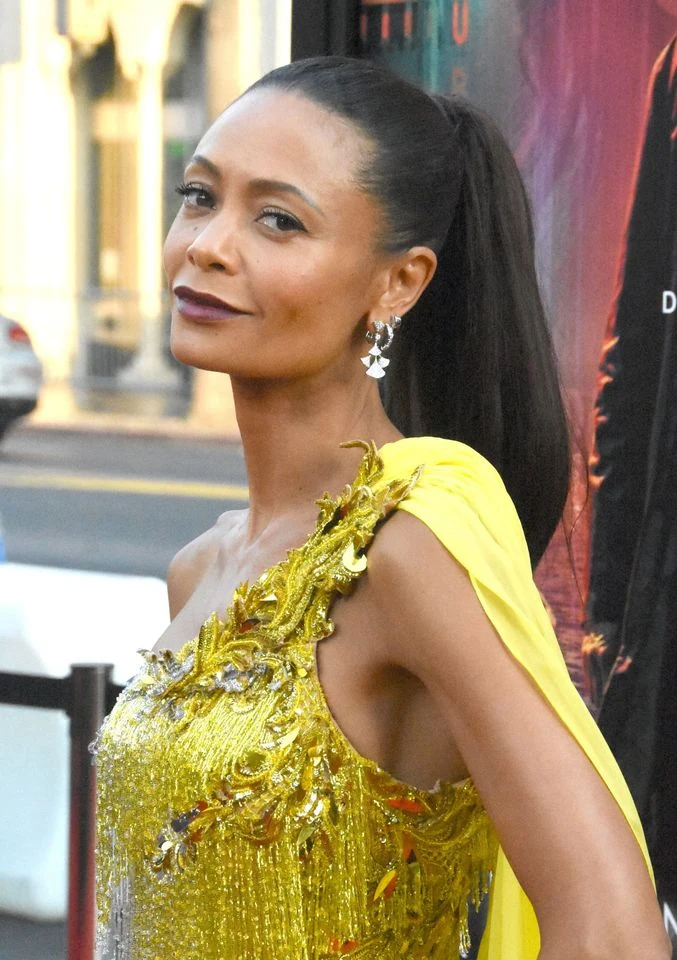
Thandiwe Newton’s career has moved between British television and theatre and films made for international audiences. She made her film debut in Flirting, played roles in Mission: Impossible 2 and Crash, and later won an Emmy for the television drama Westworld. Her name also tells part of her story: after decades of screen credits as Thandie Newton, she announced in 2021 that she would again be credited as Thandiwe.
From Westminster to the screen
Newton was born Melanie Thandiwe Newton in Westminster, London, on 6 November 1972. Her mother is Zimbabwean and her father English. When Newton was three, her family returned to England and settled in Penzance. She attended St Mary’s Roman Catholic Primary School, studied dance at Tring Park School for the Performing Arts, and went on to Downing College, Cambridge. She graduated in 1995 with a degree in social anthropology.
Newton has described feeling out of place as a Black child at an all-white Catholic school. Her early life included both Cornwall and London, and she later discussed the experience of growing up between distinct cultures in a 2011 TED talk, “Embracing otherness, embracing myself”. That account provides context for her public reflections on identity, without reducing her acting career to a single theme.
Her first film was Flirting, a coming-of-age drama filmed in 1989 and released in 1991. She appeared as Sally Hemings in Jefferson in Paris (1995), and played Cookie in Gridlock’d (1996). In Jonathan Demme’s 1998 adaptation of Toni Morrison’s Beloved, she played the title character, a young woman who returns as a ghost. The role brought wider recognition and established her as an actor able to carry demanding dramatic parts.
Film, television and theatre
Newton’s subsequent film work spans studio productions and smaller dramas. In Mission: Impossible 2 (2000), she played Nyah Nordoff-Hall opposite Tom Cruise. She appeared in The Chronicles of Riddick and Crash in 2004. For her performance as Christine Thayer in Crash, she won the BAFTA Award for Best Actress in a Supporting Role. Later credits include The Pursuit of Happyness, Run Fatboy Run, Oliver Stone’s W., and For Colored Girls.
Her television work has brought its own recognition. Newton played Makemba “Kem” Likasu in the American medical drama ER, returning for its series finale in 2009. From 2016 to 2022 she played Maeve Millay in Westworld. The performance earned her the Primetime Emmy Award for Outstanding Supporting Actress in a Drama Series in 2018. In 2017, she appeared in the BBC police drama Line of Duty as DCI Roseanne “Roz” Huntley, a role that brought a BAFTA television award nomination.
Newton has also worked on the British stage. In 2012 she made her West End debut as Paulina Salas in Ariel Dorfman’s Death and the Maiden at the Harold Pinter Theatre. The role placed her in a revival of a play concerned with power and the aftermath of political violence, distinct from her screen work but part of the same varied career. Later film roles included Val in Solo: A Star Wars Story (2018) and the lead in God’s Country (2022).
A name and a public voice
Newton’s full name includes Thandiwe, a name of Nguni origin meaning “beloved”. She began dropping the “w” from her middle name when she was young, and for much of her career appeared in credits as Thandie Newton. In a 2021 interview, she said she would return to Thandiwe Newton for new credits, describing it as her name and saying she was taking back what was hers. She also said she would try to have earlier credits corrected. The change was not simply a new professional label: it brought her birth name back into view after years of being credited differently.
Her public advocacy has included a direct contribution to a campaign against violence. In 2013 she led a One Billion Rising flash mob in London, an event intended to call for justice, gender equality and an end to violence. Newton has also spoken publicly about an experience of sexual exploitation in a teenage audition: in 2016 she said a director had repeatedly shown friends a sexually graphic video she had made as a teenager. She later connected that experience to her decision to take part in Westworld, a series that engages with sexual violence and questions of personhood. These are her reported experiences and reflections, not a claim that her acting choices or activism can be explained by them alone.
Newton’s career has continued across film, television and voice work. Alongside live-action roles, she voiced Mona in the animated series Big Mouth and its spin-off Human Resources. Her credits also include Chicken Run: Dawn of the Nugget and Mufasa: The Lion King. The range is notable not because every project has the same purpose, but because she has moved between genres, formats and audiences over a career that began with a film made when she was a teenager.
Honours and recognition
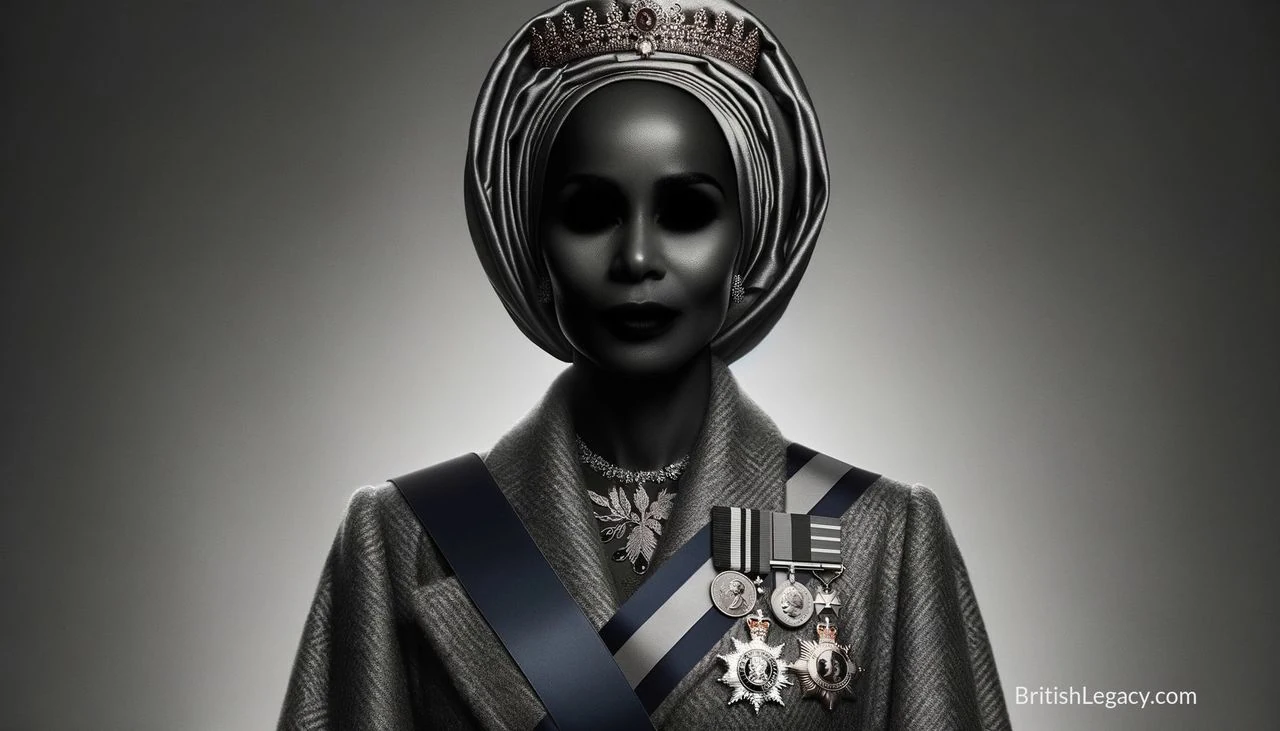
Newton was appointed Officer of the Order of the British Empire (OBE) in the 2019 New Year Honours for services to film and charity. The distinction recognises her service; it does not confer the title “Dame”. Her screen work has also brought a BAFTA for Crash and an Emmy for Westworld, marking achievements in both film and television.
Her connection to British cultural life is visible in more than the honour. Newton was born in London, studied at Cambridge, made her film debut in a British production and returned to London for her West End stage debut. Her career is international in scope, but its early foundations and several of its important professional chapters are British.
Why Thandiwe Newton deserves a place in British Legacy
Newton deserves a place in British Legacy for the depth and range of a career rooted in Britain and recognised well beyond it. From Flirting to Beloved, Crash and Westworld, she has taken on varied roles across film and television, earning a BAFTA and an Emmy for performances in two different formats. Her West End debut adds a significant stage chapter. Those achievements offer a concrete account of a British actor working across national industries without being confined to one kind of role or one medium.
Her legacy also includes the public choices she has made around identity and representation. Returning to the name Thandiwe made visible a name that had been shortened in her professional credits for decades. Leading the 2013 One Billion Rising event in London connected her public profile to a campaign against violence and for gender equality. Newton has also spoken about experiences of racial difference and sexual exploitation, giving her public voice a basis in personal testimony rather than generic claims of advocacy. Together, her work and her stated actions show how an actor’s influence can extend beyond individual performances: through the stories she helps bring to audiences, the name under which she works and the issues she chooses to address.
Sources
Thandiwe Newton (revision 1379042161) · Thandiwe Newton
Adapted in part from Thandiwe Newton by Wikipedia contributors, under CC BY-SA 4.0. Text has been edited and combined with the existing article; this adapted text is shared under the same licence. Contributor history.