Richard Branson’s first business was a magazine. His next was a mail-order record operation that used its pages to advertise albums at prices below those of many high-street shops. That progression—from finding readers to finding customers—became an early pattern in the growth of Virgin. Branson co-founded the Virgin Group, developed businesses in music and transport, and turned his own appetite for adventure into part of the company’s public identity. His career also included ventures that failed, commercial setbacks and a continuing effort to support causes beyond business.
A magazine becomes a record business
Born in Blackheath, London, on 18 July 1950, Richard Charles Nicholas Branson attended Stowe School until he was 16. In 1966, he and Nik Powell launched Student, a magazine whose first issue appeared in January 1968. Branson used it to advertise popular albums, then began selling records by mail order. The business offered records at lower prices than many high-street retailers, giving the magazine a practical role in building a customer base.
In 1970, Branson set up the mail-order record business that became Virgin. He and Powell launched Virgin Records in 1972, using money from the record shop business. One of the label’s early successes was Mike Oldfield’s Tubular Bells, released in 1973. Virgin also signed acts including the Sex Pistols, whose controversial reputation made them a difficult proposition for some companies. The label’s later roster included the Rolling Stones, Peter Gabriel, XTC, UB40 and Steve Winwood. Its willingness to work with artists outside the safest commercial choices helped establish Virgin as a significant independent label.
The early growth was not free of difficulty. In 1971, Branson was questioned over records declared as export stock but sold domestically. The matter did not go to court; he agreed to repay purchase tax and pay a fine. His parents re-mortgaged their home to help meet the settlement. In 1992, Branson sold Virgin Records to EMI for £500 million to help keep the airline afloat. He later returned to the music business with V2 Records, formed in 1996.
From music into transport
Virgin’s expansion moved beyond records. Branson formed Virgin Atlantic and Virgin Cargo in 1984, followed by Virgin Holidays in 1985. The airline’s launch grew out of a disrupted journey: after a flight to Puerto Rico was cancelled, Branson chartered a plane and offered seats to other stranded passengers to help cover its cost. In the 1980s and 1990s, Virgin Atlantic developed into a prominent competitor in a market dominated by established airlines.
That competition became particularly bitter with British Airways. Virgin accused its rival of poaching passengers, accessing its computers and planting damaging stories. British Airways settled the case, paying compensation and legal costs; Branson shared compensation with Virgin Atlantic staff. The dispute offered a sharp contrast to the familiar image of the adventurous entrepreneur: the Virgin business was also engaged in hard commercial and legal contests.
Virgin later entered British rail during the privatisation of British Rail. Virgin Rail Group won the InterCity West Coast and CrossCountry franchises in 1997. Virgin Trains operated the CrossCountry franchise until 2007 and the West Coast franchise until 2019. A later joint venture, Virgin Trains East Coast, operated the East Coast franchise from 2015 until 2018, when it was taken back into public operation. The record shows the scale and reach of the Virgin brand, but also the finite terms and changing fortunes of its transport contracts.
Risk, records and new frontiers
Branson made high-profile attempts to break records as well as to build companies. In 1985, his first attempt to cross the Atlantic by boat ended when the vessel capsized in British waters and its crew were rescued. The following year, he and sailing expert Daniel McCarthy crossed in Virgin Atlantic Challenger II, beating the previous record by two hours. In 1987, his balloon Virgin Atlantic Flyer crossed the Atlantic. He later made record-setting balloon flights across the Pacific and, in 2004, crossed the English Channel in an amphibious car.
Space travel became another Virgin ambition. In 2004, Branson announced Virgin Galactic, a company that would license technology developed for SpaceShipOne and pursue commercial suborbital flights. The project gave a new form to the adventurous image he had cultivated, but it was also a long-term commercial undertaking rather than a simple extension of the record attempts. On 11 July 2021, Branson flew to the edge of space aboard Virgin Galactic’s VSS Unity, alongside Beth Moses, Sirisha Bandla and Colin Bennett.
Virgin’s ventures reached into other sectors, including mobile communications, hotels and healthcare. Not all endured: Virgin Cola, Virgin Cars, Virgin Publishing, Virgin Clothing and Virgin Brides were among the business ventures that failed. Branson has presented failure as something to learn from, but a balanced account of his career must include it alongside the company’s expansion. The Virgin name could open doors into new markets; it could not guarantee that each venture would succeed.
Public profile and humanitarian work
Branson’s visibility has always been part of the story. He has written several books about business and his personal experiences, including Losing My Virginity and Finding My Virginity. His balloon journeys, boat crossings and other challenges brought the Virgin name into public view, while also making him a familiar figure in television and popular culture.
His work outside commercial ventures has included support for The Elders, a group of leaders formed after discussions involving Branson, musician Peter Gabriel and Nelson Mandela. Branson and Gabriel were among its funders. In South Africa, Virgin Unite partnered with entrepreneur Taddy Blecher to establish the Branson School of Entrepreneurship, which aimed to support start-ups and small businesses with skills, mentoring, services, networks and finance arrangements. Branson also launched Virgin StartUp, an official delivery partner for the UK Start Up Loans programme, providing loans to entrepreneurs aged 18 to 30.
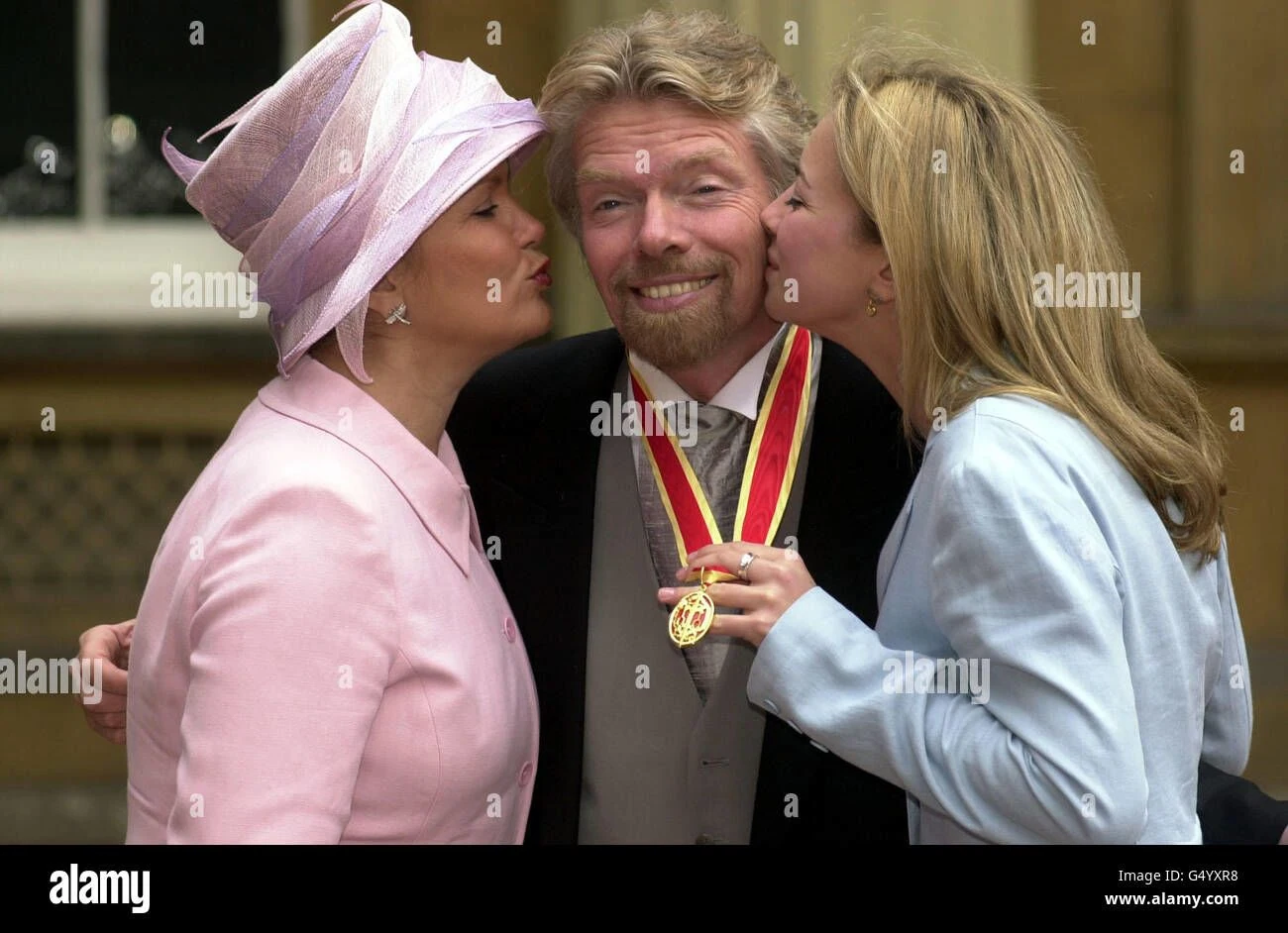
In 2000, Branson was knighted for services to entrepreneurship. The honour recognised his business career, which by then had ranged from discount records to international air travel. His later ventures and public commitments extended that profile, but his central achievement remained the construction of a brand that repeatedly moved into unfamiliar markets.
Why Sir Richard Branson deserves a place in British Legacy
Branson’s place in British Legacy rests on more than the visibility of the Virgin name. He began with a magazine and a mail-order record business, then built a group that entered music, aviation and rail. In the British context, Virgin Atlantic became a new competitor in an established industry, while Virgin’s rail franchises made the brand part of the experience of passenger travel after British Rail’s privatisation. These businesses did not all last, and their contracts and commercial outcomes changed over time. That record is more instructive than a simple tale of uninterrupted success: it shows how a distinctive brand can challenge incumbents while remaining exposed to competition, costs and risk.
His legacy also includes the way he made entrepreneurship a public subject. Record-breaking attempts and a conspicuous personal profile drew attention to the businesses, while the Virgin StartUp loan programme and the Branson School of Entrepreneurship offered practical support to other entrepreneurs. The Elders represented a further strand of his work, bringing business funding to an initiative intended to address difficult global conflicts. Taken together, these examples connect his British business career to a wider set of effects: new competition for customers, employment and services across several sectors, and support for people trying to establish enterprises of their own. His knighthood for services to entrepreneurship acknowledges that lasting contribution without making every Virgin venture a success story.
Sources
Richard Branson — Wikipedia revision 1377721043
Adapted in part from Richard Branson by Wikipedia contributors, under CC BY-SA 4.0. Text has been edited and combined with the existing article; this adapted text is shared under the same licence. Contributor history.