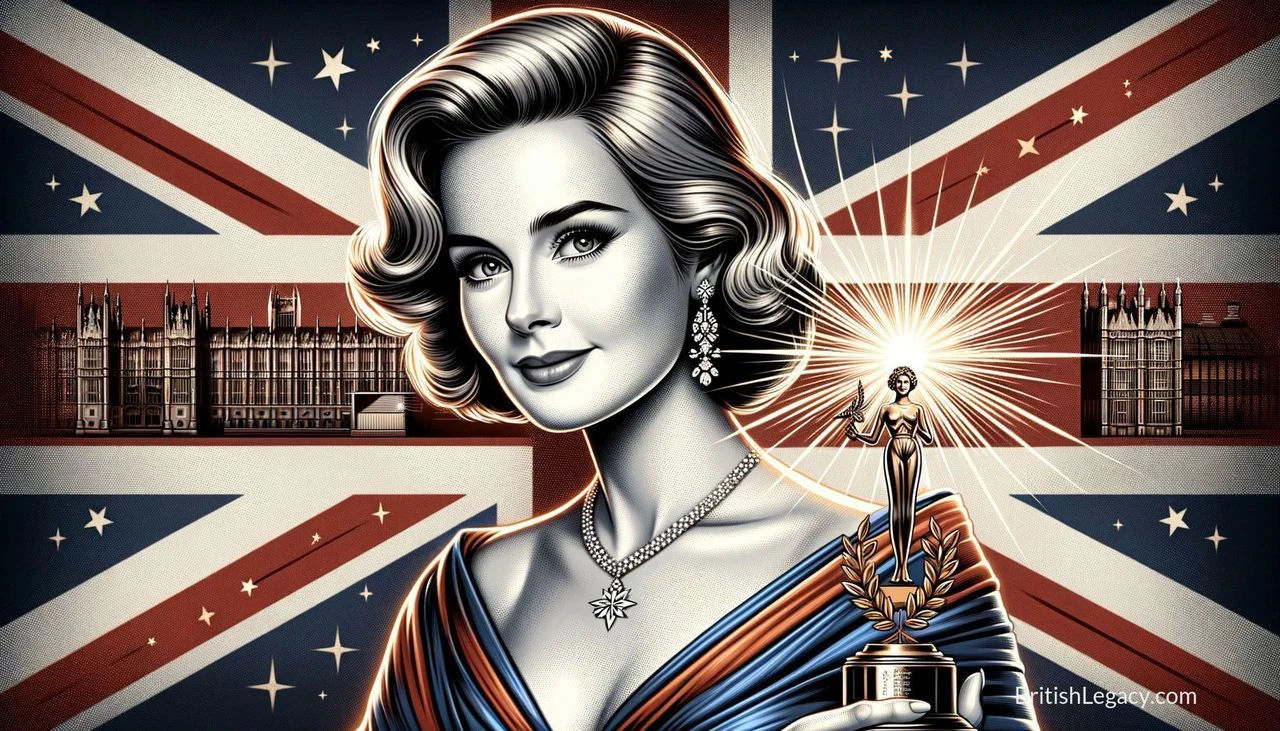
Before she became Mary Poppins to cinema audiences around the world, Julie Andrews was a child performer singing for British troops and a teenage soloist on the London stage. The Surrey-born actress and singer carried that early training into musical theatre, Hollywood films, television, directing and writing. Her career has a distinctly British beginning, but its reach was international: from the West End and Broadway to the films that made her one of the best-known performers of the 1960s.
A childhood shaped by performance
Born Julia Elizabeth Wells in Walton-on-Thames on 1 October 1935, Andrews began appearing on stage with her mother, Barbara, and stepfather, Ted Andrews, in 1945. Her mother played piano while the child sang, sometimes standing on a beer crate to reach the microphone. During the war, she also travelled around Britain with fellow young performer Petula Clark, entertaining troops.
Her professional solo debut came at the London Hippodrome in 1947, when she was 12. She sang the aria “Je suis Titania” in the revue Starlight Roof. The following year, aged 13, she became the youngest solo performer to appear in a Royal Variety Performance, before King George VI and Queen Elizabeth at the London Palladium. Early work in pantomime, radio and television followed. From 1950 to 1952, she appeared on the BBC radio programme Educating Archie.
Andrews’s childhood was not simply a smooth ascent. Her parents separated, and she went to live with her mother and stepfather. The family later moved to Beckenham and then Hersham. Her stepfather paid for her musical training, including lessons at the Cone-Ripman School and with voice teacher Lilian Stiles-Allen. Andrews was trained in dance as well as singing; that combination of voice, rhythm and movement would serve her in musical theatre and film.
From the West End to Broadway
In 1954, Andrews made her Broadway debut as Polly Browne in The Boy Friend, a London musical that had become a success in New York. The role brought her favourable attention and helped open the way to her next major part. She was cast as Eliza Doolittle in My Fair Lady, which opened on Broadway in 1956. Her performance established her as a leading musical-theatre actor. She later returned to Broadway as Queen Guinevere in Camelot, which opened in 1960.
Andrews’s work also reached American television. Richard Rodgers created the title role in the live television musical Cinderella for her; the 1957 broadcast had an estimated audience of 107 million. It earned her an Emmy nomination. She continued to appear in variety programmes, including a 1962 special with Carol Burnett. These performances put a British stage-trained actor before audiences far beyond the theatre.
When the film version of My Fair Lady was cast, Andrews did not reprise Eliza. Studio head Jack Warner chose Audrey Hepburn, judging that she had greater box-office recognition; Marni Nixon dubbed much of Hepburn’s singing. Andrews later said she understood that her experience on Broadway had been within a “very small pond”, though she wished she could have recorded her own performance for posterity.
Mary Poppins and the films that followed
Walt Disney had seen Andrews in Camelot and offered her the title role in Mary Poppins. She initially declined because she was pregnant, but Disney agreed to wait. The film, released in 1964, became a major box-office success and earned 13 Academy Award nominations. Andrews won the Academy Award for Best Actress, as well as a Golden Globe; she and her co-stars also won a Grammy for the children’s album. Her performance made the magical nanny a defining screen role.
The next year, Andrews played Maria von Trapp in The Sound of Music. The film became the highest-grossing release of 1965, and Andrews received a second Golden Globe for her performance. Songs including “Do-Re-Mi” and “My Favourite Things” became closely associated with her. Together, the two films made her a household name, but she did not confine herself to the same kind of part. In The Americanization of Emily (1964), she took a role partly to avoid being typecast as a nanny. Later films included Torn Curtain, directed by Alfred Hitchcock, Thoroughly Modern Millie and Victor/Victoria. The last brought her another Golden Globe and an Academy Award nomination.
Her career also included setbacks. The musical films Star! and Darling Lili were commercial disappointments, while her public singing career was profoundly affected by vocal surgery in 1997. Andrews subsequently said that the operation had damaged her singing voice. She continued to work in film and television, increasingly using her speaking and voice-over talents.
A changing career: acting, directing and writing
Andrews returned to a new generation of cinema-goers as Queen Clarisse in The Princess Diaries (2001) and its 2004 sequel. She voiced Queen Lillian in the Shrek films and Marlena Gru in the Despicable Me series, among other roles. In television, she appeared in children’s productions, co-created the series Julie’s Greenroom with her daughter Emma Walton Hamilton and voiced Lady Whistledown in Bridgerton.
She also returned to a formative stage work from a different position. In 2003, Andrews made her directing debut with a revival of The Boy Friend, the musical in which she had made her Broadway debut nearly half a century earlier. The production was later remounted and toured. In 2016, she created the children’s television series Julie’s Greenroom, bringing puppetry and performing arts into a programme for young audiences.
Writing became another substantial part of her work. Andrews co-authored numerous children’s books with Walton Hamilton, including The Very Fairy Princess, and wrote two memoirs. Home: A Memoir of My Early Years (2008) looks back on her childhood and early career, ending in 1962 as she was about to enter the film period that would bring her worldwide fame. Home Work: A Memoir of My Hollywood Years followed in 2019.
Honours and an enduring public presence
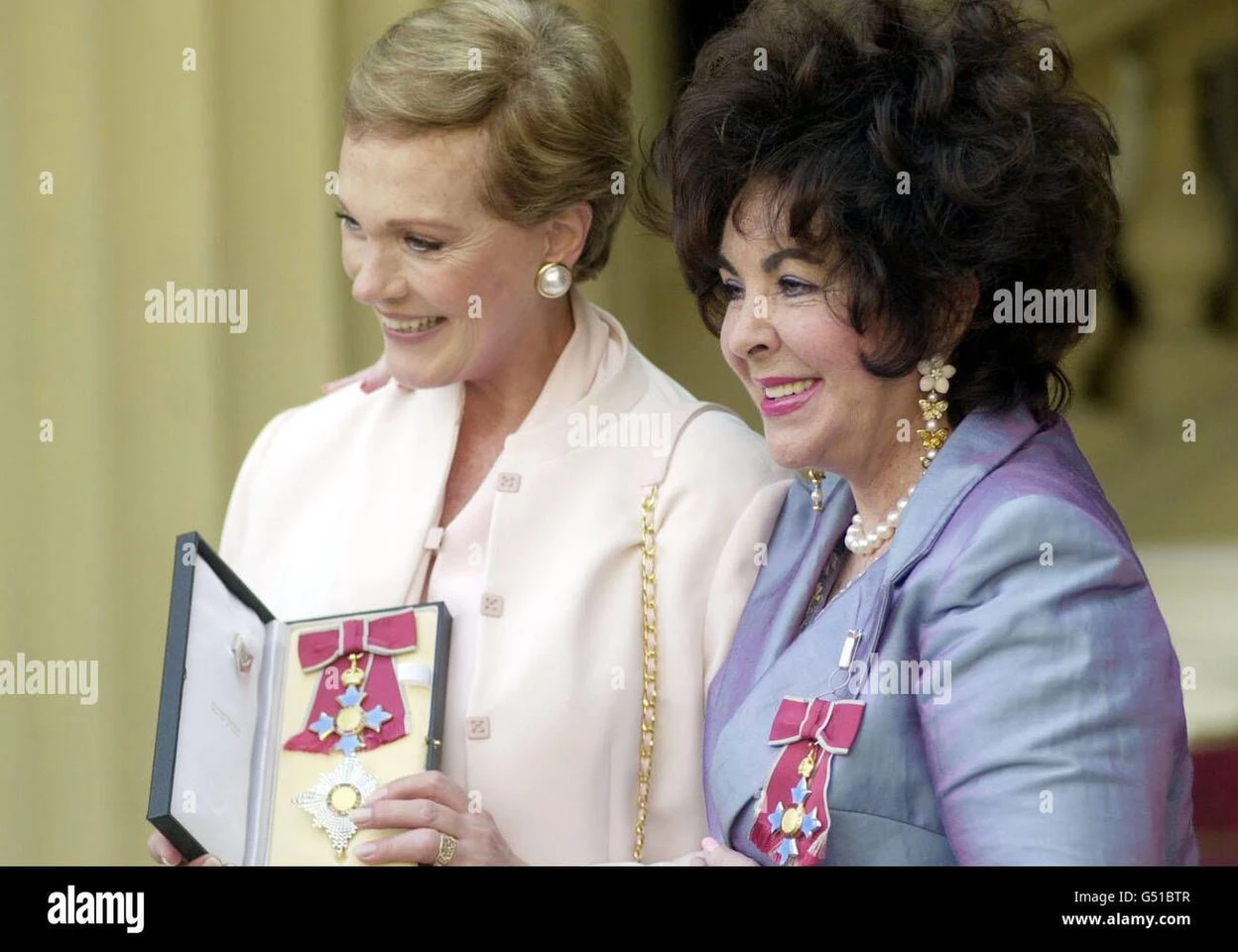
In the 2000 New Year Honours, Andrews was made a Dame Commander of the Order of the British Empire for services to the performing arts. She received the insignia from Queen Elizabeth II at Buckingham Palace. The honour recognised an international career whose foundations lay in British performance: music hall, radio, the West End and the London stages where she first appeared as a child.
Andrews received the Kennedy Center Honors in 2001 and the Screen Actors Guild Life Achievement Award in 2007. Her London appearances also brought her back to the city where she began: in 2005, she appeared at the curtain call of the West End production of Mary Poppins to recall making the film and praise the new cast. In 2010, she performed at the O2 Arena with the Royal Philharmonic Orchestra, her first London performance in 21 years. The concert included spoken and sung material, reflecting the changes to her voice while keeping her connected to live performance.
Why Dame Julie Andrews deserves a place in British Legacy
Julie Andrews’s place in British Legacy rests first on a remarkable body of performance that began in Britain. She moved from singing for troops during the Second World War to the Hippodrome, the Royal Variety Performance and BBC radio, then took British musical-theatre experience to Broadway. That route matters: her success was not an overnight Hollywood discovery, but the result of years of work in performance forms that demanded live singing, acting and movement. Her British training and early stages formed the foundation for roles that reached audiences across the world.
Her contribution also extends beyond the films most readily associated with her. Andrews moved between musical theatre, television, screen comedy, dramatic roles, directing and children’s writing. When surgery damaged her singing voice, she continued to make work as an actor, narrator, director and author rather than allowing one celebrated aspect of her career to define all that followed. Her books with Emma Walton Hamilton and programmes such as Julie’s Greenroom brought her experience into work for children; directing The Boy Friend connected a later chapter to her own beginnings. Her DBE recognises services to the performing arts, while her career shows the range of those services. Andrews’s British legacy is therefore both rooted and expansive: a performer shaped by British stages whose work became part of international popular culture.
Sources
Julie Andrews — Wikipedia revision 1379020750 · Julie Andrews — Wikipedia
Adapted in part from Julie Andrews by Wikipedia contributors, under CC BY-SA 4.0. Text has been edited and combined with the existing article; this adapted text is shared under the same licence. Contributor history.