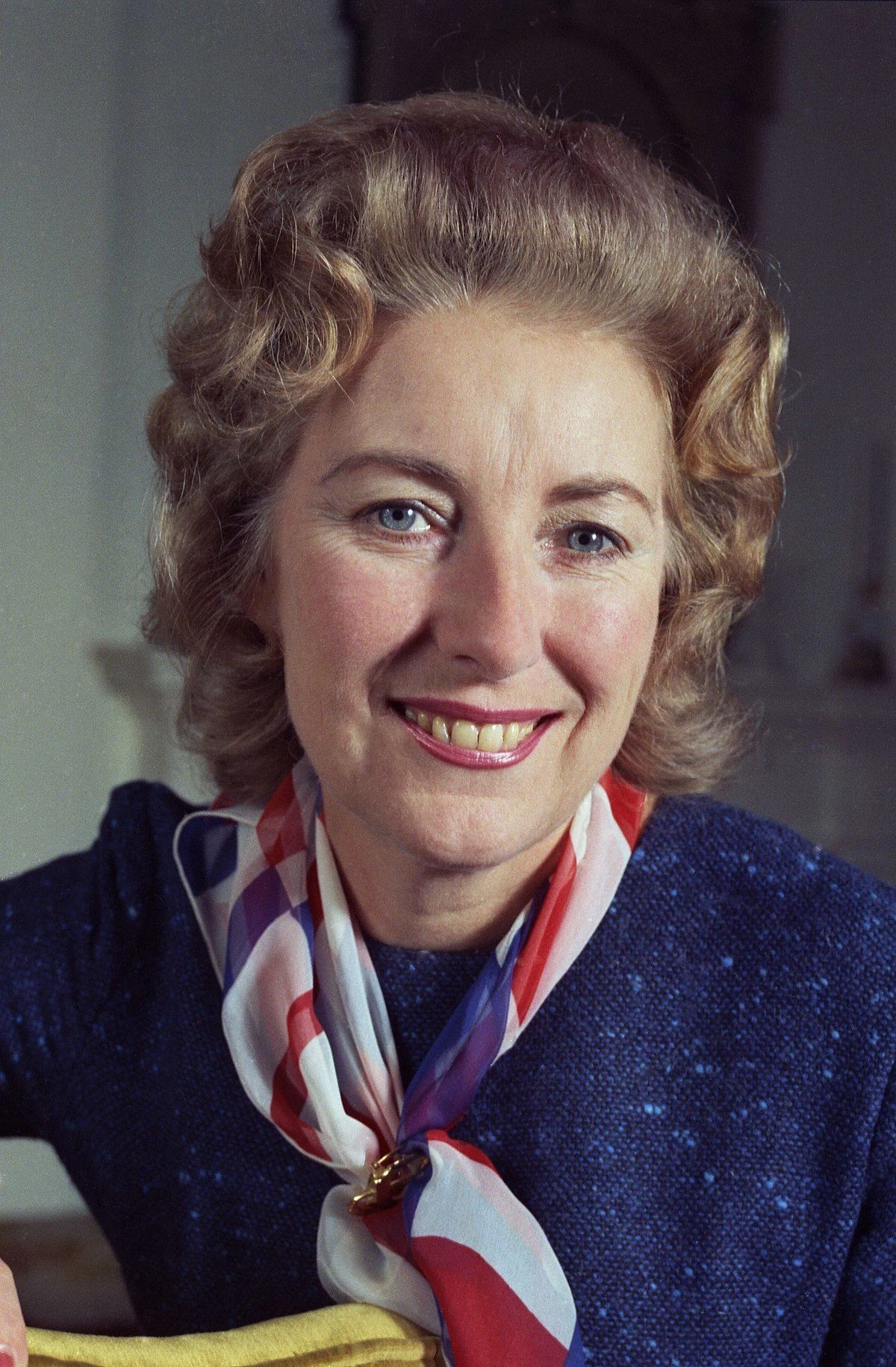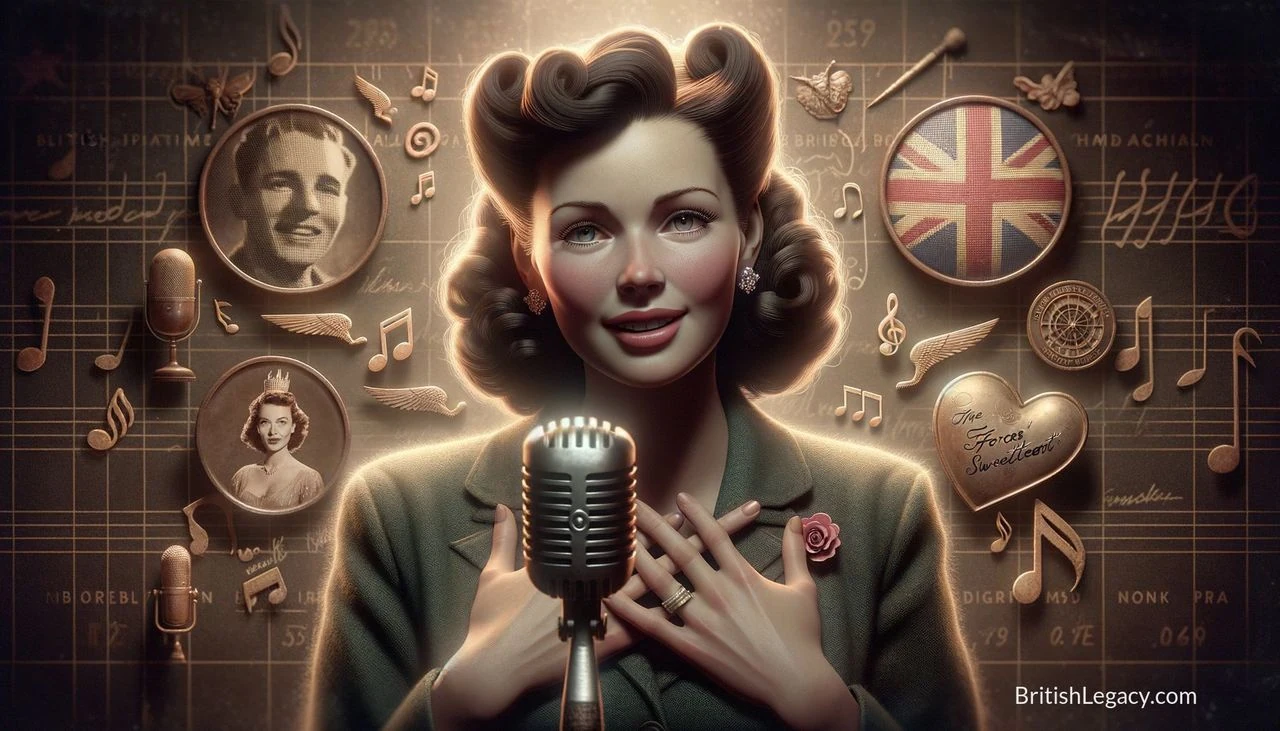
Vera Lynn’s voice reached British troops through radio and outdoor concerts during the Second World War, when songs such as “We’ll Meet Again” gave musical form to separation and the hope of reunion. Known as the “Forces’ Sweetheart”, she became closely associated with wartime Britain. Her career did not end with the conflict: she continued recording and broadcasting for decades, and at 92 topped the UK album chart with a collection of her best-known songs.
From East Ham to the bandstand
Vera Margaret Welch was born in East Ham, Essex, on 20 March 1917. She began performing publicly at seven and took the stage name Lynn, her maternal grandmother’s maiden name, at 11. As a child she joined Madame Harris’s Kracker Kabaret Kids. In 1933, bandleader Howard Baker invited her to join his band; she later toured briefly with Billy Cotton before returning to Baker.
Lynn made her first record, “It’s Home”, with Baker in February 1935, and her first radio broadcast followed that August with the Joe Loss Orchestra. She recorded as a vocalist with dance bands, including those led by Loss and Charlie Kunz, before joining Bert Ambrose’s band in 1937. Her early records included songs such as “I’m in the Mood for Love” and “Red Sails in the Sunset”. She also worked as an administrative assistant to support herself. In 1940 she left Ambrose and began performing as a solo act.
A wartime voice, on air and overseas
Lynn’s wartime contribution began close to home. During the early air raids, she sang to people sheltering on London Underground platforms. In the months before the full force of the war, a Daily Express poll asked British servicemen to name their favourite performers; Lynn came out on top, helping establish the name “the Forces’ Sweetheart”.
“We’ll Meet Again”, written by Ross Parker and Hughie Charles, became her signature song. Lynn first recorded it in 1939, then recorded it again in 1953 with servicemen from the British Armed Forces. Its promise of a future reunion suited the experience of families separated by war. Other songs closely associated with her include “(There’ll Be Bluebirds Over) The White Cliffs of Dover” and “A Nightingale Sang in Berkeley Square”.
Her work was not confined to recordings. As a member of the Entertainments National Service Association, she toured Egypt, India and Burma, performing for British troops. In March 1944 she travelled to an airfield in Bengal to entertain troops before the Battle of Kohima. In 1985 she received the Burma Star for entertaining British guerrilla units in Japanese-occupied Burma.
Radio carried her performances and messages to troops overseas. Her weekly programme Sincerely Yours began in November 1941, with Lynn and her quartet performing songs requested by soldiers. She also visited hospitals, interviewing new mothers and sending messages to their husbands abroad. The programme was taken off air in March 1942; she returned to regular broadcasting in 1943 with It’s Time for Vera Lynn on the BBC Forces programme.
A career beyond the war
Lynn returned to recording and broadcasting after 1945. Her husband, Harry Lewis, became her manager, and she resumed radio work in 1947 with Vera Lynn Sings. Her post-war success reached across the Atlantic: in 1952, “Auf Wiederseh’n, Sweetheart” became the first record by a British performer to top the US charts, remaining there for nine weeks. In Britain, “My Son, My Son” reached number one in 1954.
She moved from Decca to MGM in 1960 and recorded for several labels over the following years, including EMI and Pye. Her repertoire ranged from traditional and wartime songs to contemporary pop and country material. She also became a familiar television performer, hosting a variety series and appearing in anniversary and entertainment programmes. In 1976 she presented the BBC’s A Jubilee of Music, marking the beginning of Queen Elizabeth II’s Silver Jubilee year.
Lynn’s later chart achievements brought her back to the top of the music industry’s public conversation. In 2009, at 92, she became the oldest living artist to reach number one on the UK Albums Chart with We’ll Meet Again: The Very Best of Vera Lynn. A century after her birth, the album Vera Lynn 100, featuring new arrangements and duet partners, reached number three. In 2018 she received the Classic Brit Awards’ Lifetime Achievement Award.
Charity, honours and remembrance
Charitable work formed a substantial part of Lynn’s life beyond the stage. In 1953 she founded SOS, a charity for children with cerebral palsy, and became its chair. She later led the Vera Lynn Charity Breast Cancer Research Trust, founded in 1976. In 2002 she became president of the Dame Vera Lynn Trust for Children with Cerebral Palsy. She also supported organisations connected with veterans and remembrance, including the Dover War Memorial Project.
Her honours reflected both her charitable work and her public career. Lynn was appointed an Officer of the Order of the British Empire in 1969 and a Dame Commander in 1975. In 2016 she became a Member of the Order of the Companions of Honour for services to entertainment and charity. In a 2000 public poll, she was named the Briton who best exemplified the spirit of the 20th century.
Her public appearances continued into old age. At the 2005 Trafalgar Square concert marking the 60th anniversary of VE Day, she praised veterans, urged younger generations to remember their sacrifice and joined in “We’ll Meet Again”. In 2020, Queen Elizabeth II echoed the song in a televised address during the COVID-19 pandemic. Lynn and Katherine Jenkins also performed it virtually for the 75th anniversary of VE Day, with Jenkins singing alongside a hologram of Lynn.
Lynn died of pneumonia in Haywards Heath, West Sussex, on 18 June 2020, aged 103. Her funeral procession in East Sussex was accompanied by representatives of the armed forces and the Royal British Legion, with a Spitfire flypast. In 2022, a thanksgiving service for her was held at Westminster Abbey. Plans for a memorial in Dover developed into a tribute to Lynn and the wartime entertainers who performed for service personnel.
Why Vera Lynn deserves a place in British Legacy
Vera Lynn’s place in British cultural history rests on more than the affection attached to a famous voice. During the Second World War, she brought songs and personal messages to people separated by service: through broadcasts such as Sincerely Yours, through visits to hospital wards, and through concerts for troops in Egypt, India and Burma. “We’ll Meet Again” endured because it expressed a recognisable wartime experience without losing its directness. Its return to public life in later commemorations, and its use in a national address during the COVID-19 pandemic, show how a song rooted in one historical moment could speak to other moments of uncertainty.
Her later career and charity work give that legacy further substance. Lynn remained active in recording and broadcasting long after the war, and her 2009 number-one album introduced her catalogue to another generation of listeners. At the same time, she devoted sustained effort to charities supporting children with cerebral palsy, breast cancer research and veterans. Her honours recognised both entertainment and service. For British Legacy, her story connects popular music to the lived experience of wartime Britain, while also showing a long public life in which remembrance, performance and charitable commitment continued well beyond the years that first made her famous.
Sources
Adapted in part from Vera Lynn by Wikipedia contributors, under CC BY-SA 4.0. Text has been edited and combined with the existing article; this adapted text is shared under the same licence. Contributor history.