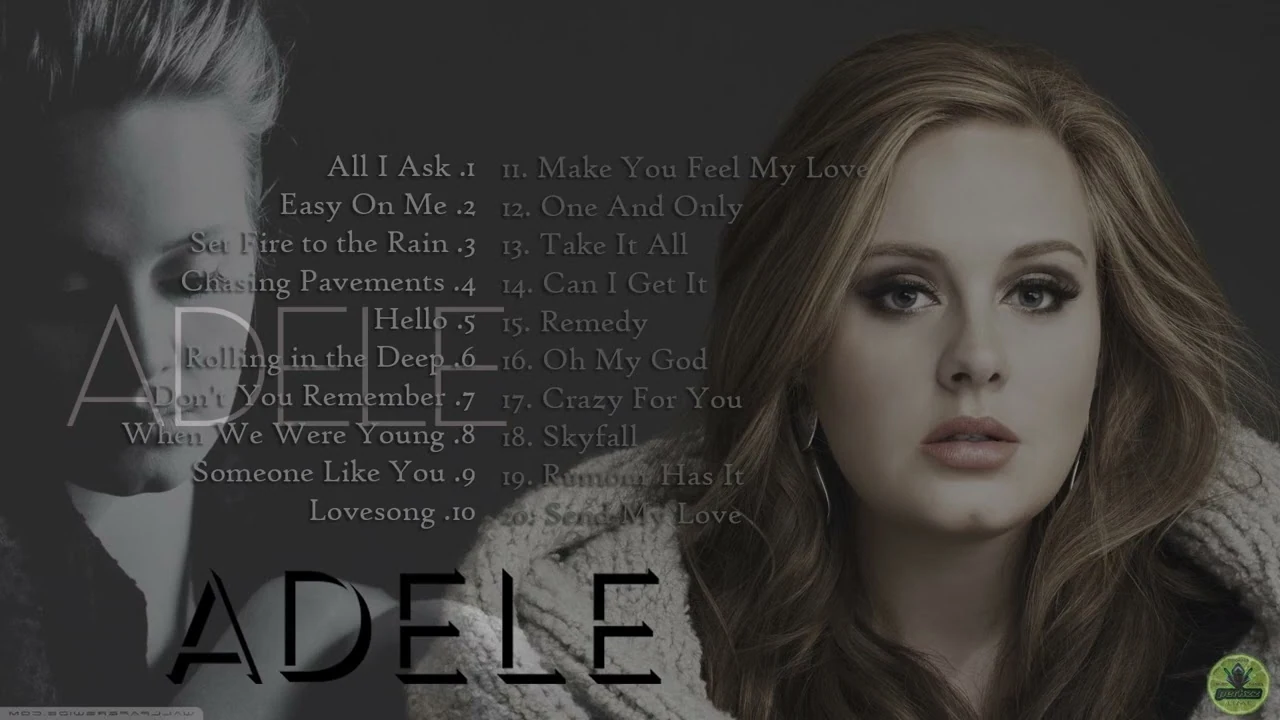
Adele Laurie Blue Adkins built an international career around songs that sound direct without being simple. Her voice can command a room, but the songs are carefully made: heartbreak, memory and change are given a shape that listeners can recognise as their own. From Hometown Glory to Someone Like You and Hello, she has made private feeling part of shared musical life.
Born in Tottenham and educated at the BRIT School in Croydon, Adele came to public notice after a friend posted a class-project demo on Myspace. XL Recordings took notice; her debut, 19, followed in 2008. The rise that began there led to record-setting albums, a James Bond theme recorded at Abbey Road, a Glastonbury headline performance and recognition that includes 16 Grammy Awards, 12 BRIT Awards, an Academy Award, a Primetime Emmy Award, a Golden Globe and an MBE for services to music.
London roots and a first recording deal
Adele was born in London on 5 May 1988. She spent part of her childhood in Brighton before moving back to London with her mother, first to Brixton and then to West Norwood. These places became more than background to her early work. Written when she was 16, Hometown Glory made a song of attachment to home and neighbourhood, rather than treating London as a postcard setting.
She graduated from the BRIT School for Performing Arts and Technology in Croydon in 2006. Adele later recalled being more interested in artists and repertoire work than in becoming a performer herself; she hoped to help launch other people’s careers. That interest in songs and what makes them work sits neatly alongside her later reputation as a distinctive interpreter and songwriter.
For a class project, she recorded a three-song demo and gave it to a friend, who posted it on Myspace. Richard Russell, head of XL Recordings, heard it and contacted her. Adele signed with the label in September 2006. In 2007 she made her television debut on the BBC programme Later... with Jools Holland. Her first release, Hometown Glory, appeared that year; after being featured in the television series Skins, it entered the UK singles chart.
The route from an online demo to a record deal is often reduced to a neat discovery story. What followed mattered just as much: Adele’s first records established a performer who could make a vocal line feel conversational while giving it weight and control. Her writing and singing did not depend on elaborate spectacle to make an impression.
19: a debut with a sense of place
Released in 2008, 19 took its title from Adele’s age when she wrote and composed many of its songs. It reached number one on the UK albums chart. Chasing Pavements reached number two in the UK singles chart, while Hometown Glory brought her early writing about home to a wider audience. Her version of Bob Dylan’s Make You Feel My Love showed a different strength: the ability to inhabit a song written by someone else without losing her own presence.
The BRIT Awards gave Adele its first Critics’ Choice award in 2008, before the release of her debut album. The BBC’s Sound of 2008 poll also identified her as a leading breakthrough prospect. At the 2009 Grammy Awards, she won Best New Artist and Best Female Pop Vocal Performance for Chasing Pavements.
Her American breakthrough came in October 2008, when she performed on Saturday Night Live. The episode attracted a large audience and helped send 19 sharply up the US charts. The change in scale was striking: a British singer whose first album was built from soul, pop and songwriterly observation had reached new listeners without relying on a dance-floor crossover or a change of musical identity.
19 was not the sound of a finished artist, but it introduced several qualities that would persist: an uncluttered approach to emotion, a strong sense of melody and a voice that made room for vulnerability as well as power. The album’s local references were not incidental. They showed how a specific life and place could become material with a much wider reach.
21 and the scale of a ballad
Adele released 21 in 2011. Inspired in part by the end of a relationship, the album broadened the musical palette of her debut with country and roots influences alongside soul. Rolling in the Deep brought urgency and bite; Someone Like You made its impact through a more restrained performance; and Set Fire to the Rain gave her voice room to meet a larger, more dramatic arrangement.
The album spent 23 weeks at number one on the UK albums chart, including both consecutive and non-consecutive weeks at the top. Official Charts identifies it as the best-selling album of the 21st century in the UK. Its success showed that an album centred on songs of emotional rupture could lead popular music on a vast scale. Adele did not make heartbreak glamorous or tidy. Across the record it can be angry, generous, self-questioning and resigned, sometimes within the same emotional landscape.
That connection with listeners was matched by major industry recognition. At the 2012 Grammy Awards, Adele won all six categories in which she was nominated, including Album of the Year for 21 and Record of the Year and Song of the Year for Rolling in the Deep. The album had also won British Album of the Year at the BRIT Awards.
In 2011, however, a vocal-cord haemorrhage forced Adele to cancel performances and undergo surgery. The disruption put her ability to work as a singer at risk. Her return to the stage at the 2012 Grammys followed treatment and recovery; the awards made that appearance an especially visible moment in the album’s extraordinary run. Her experience also underlined how closely the career depended on the voice at its centre.
Bond, 25 and British stages
In 2012 Adele recorded Skyfall, the theme for the James Bond film, with co-writer and producer Paul Epworth. The song was recorded at Abbey Road Studios and won both the Academy Award and the Golden Globe for Best Original Song. It placed her voice within a long-running British film tradition without making her sound like a guest in someone else’s musical world: the performance is controlled and stately, with its drama carried by the song rather than by vocal excess.
Her third album, 25, arrived in 2015 after a gap in which, as she put it, life had happened. Its lead single, Hello, quickly became an international hit. The album broke first-week sales records in the UK and the US. In America it became the first album to sell more than three million copies in a single week. It later won five Grammy Awards, including Album of the Year, and four BRIT Awards, including British Album of the Year.
Where 21 often sounds like the immediate force of a breakup, 25 is more reflective. Memory, time and the experience of growing older take a larger place. Its success also reinforced the importance of the album format in Adele’s British career. Official Charts names her the UK’s best-selling female album artist of the 21st century and identifies 21 and 25 as the two biggest-selling albums of the 2010s in Britain.
In 2016 Adele headlined the Pyramid Stage at Glastonbury Festival. The performance brought together a British artist, a defining British festival and songs already familiar to a mass audience. She has also performed at London’s Royal Albert Hall, with a concert recording that extended the reach of her live work. These are different settings, but both show how naturally her music can move between intimacy and spectacle.
30, later performances and recognition
Released in 2021, 30 turned towards divorce, motherhood and self-examination. At the 2022 BRIT Awards, the album was described as a work Adele had written to help explain upheaval to her son. That subject gave the record a different emphasis from her earlier breakup album: its questions concern responsibility and change as well as loss.
The single Easy on Me reached number one in the UK and the US. 30 also reached number one on the UK albums chart and was the UK’s best-selling album of 2021. At the 2022 BRIT Awards it won British Album of the Year, making Adele the first solo artist in the awards’ history to win that album prize three times. Her BRIT total reached 12.
Adele’s achievements span several kinds of performance. In addition to her recording career, she has made television specials and built extended live residencies. Her Las Vegas residency, Weekends with Adele, began in 2022 and continued through 2024. She also performed a series of shows in Munich in 2024. In July of that year, she said she planned an indefinite break from music after her residency, with no new album planned at that time.
Her honours include the MBE, awarded for services to music in the Queen’s Birthday Honours list in 2013, and a Primetime Emmy Award for the television special Adele One Night Only. Her career has earned a substantial list of awards, but the records and trophies do not explain on their own why her songs have travelled so widely. That rests on the combination of expressive vocal control and writing that can make a personal crisis sound recognisable without reducing it to a slogan.
Why Adele deserves a place in British Legacy
Adele deserves a place in British Legacy because her achievements are rooted in a recognisable British musical and cultural landscape, yet reach far beyond it. She trained at the BRIT School in Croydon, began her recording career with the independent British label XL Recordings and brought the particularities of London life into songs such as Hometown Glory. Later, Skyfall connected her work to a major British film series, while her Glastonbury headline performance placed her among the defining artists of a national festival. These are not simply details of geography: they show how British institutions, places and popular traditions formed part of a career that became international without being detached from its origins.
Her musical legacy is equally specific. With 21 and 25, she demonstrated that carefully made albums and emotionally serious ballads could lead the charts in an era often associated with singles and rapid turnover. The UK’s Official Charts record her position as its best-selling female album artist of the 21st century, while 12 BRIT Awards and her three British Album of the Year wins mark the scale of her achievement at home. More than statistics, her songs gave listeners a durable language for loss, self-reproach, memory and change. She made the power of a voice central to modern pop, and showed that directness can be an artistic strength rather than a retreat from craft. That combination of local beginnings, national recognition and music shared across borders makes her legacy distinctly worth recording.
Sources
Adapted in part from Adele by Wikipedia contributors, under CC BY-SA 4.0. Text has been edited and combined with the existing article; this adapted text is shared under the same licence. Contributor history.