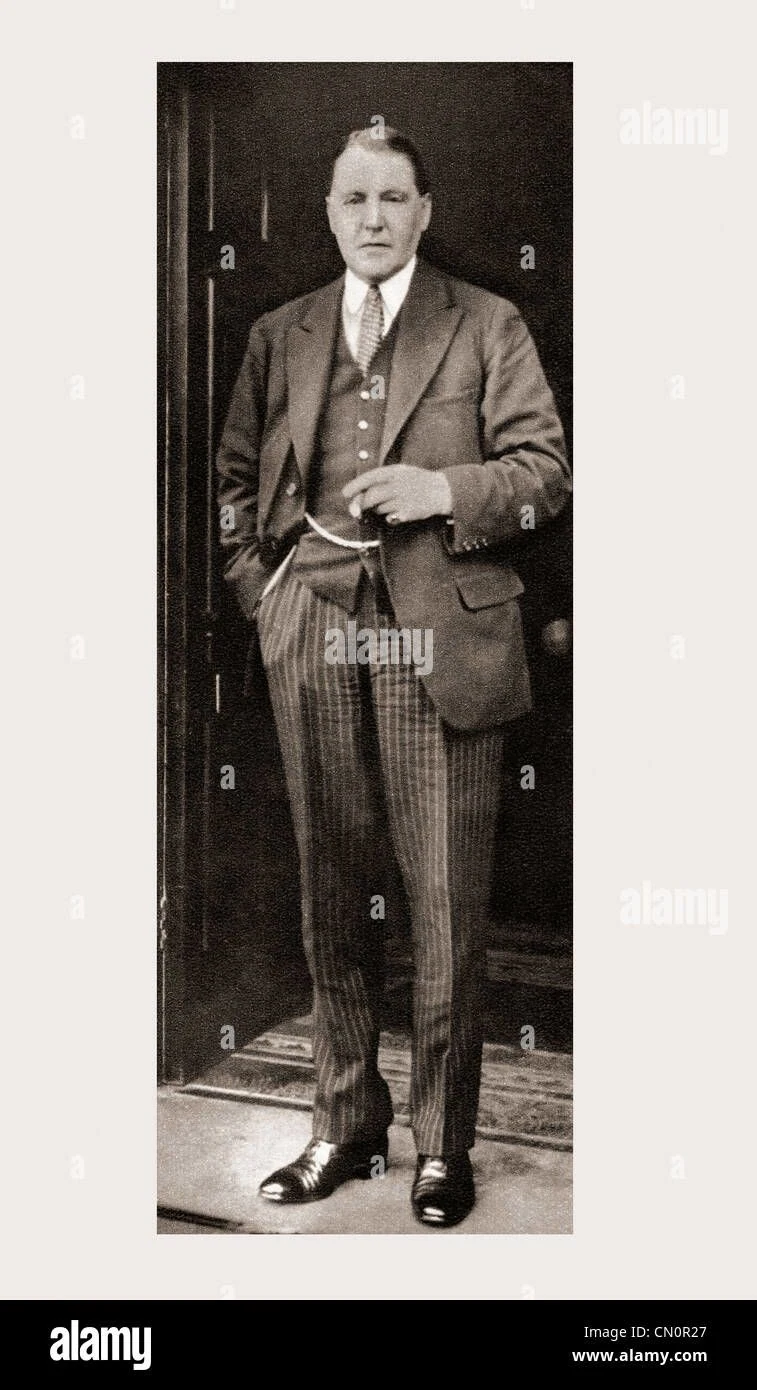
Frederick Edwin Smith made his name through forceful advocacy, sharp wit and an appetite for political combat. A successful barrister before entering Parliament, he became Attorney General during the First World War and Lord Chancellor in 1919. His career also included a consequential role in the Anglo-Irish Treaty negotiations and, later, four years as Secretary of State for India. The record contains sharp contrasts: his opposition to Irish nationalism did not prevent him helping to draft a treaty that led to the Irish Free State, while his reputation for brilliance sat alongside a political style that increasingly alienated colleagues.
Oxford, the Bar and a political beginning
Smith was born in Birkenhead, Cheshire, on 12 July 1872, the eldest son of a barrister who also became a local Tory politician. He attended schools in Birkenhead and Southport before entering Birkenhead School. In 1891 he won a scholarship to Wadham College, Oxford, where he became prominent in the Oxford Union and graduated with a first-class degree in law in 1895. He was elected a fellow of Merton College in 1896 and won the Vinerian law scholarship.
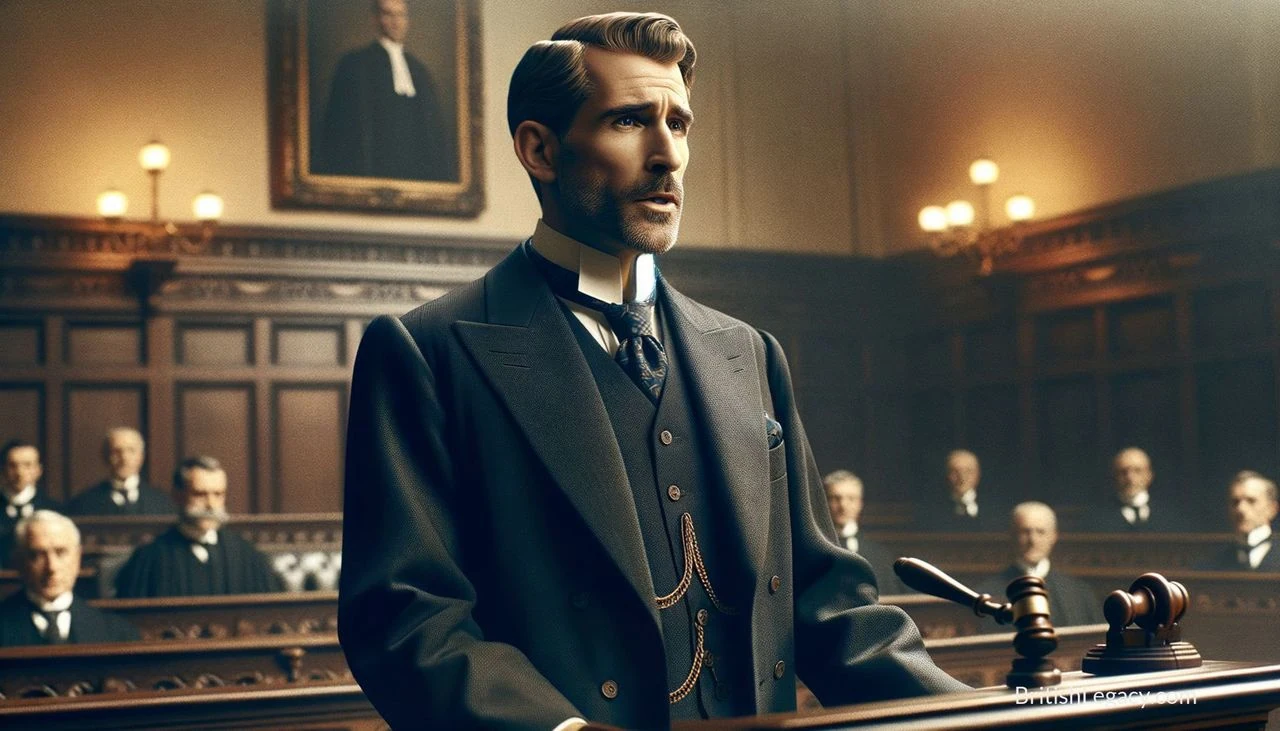
Called to the Bar in 1899, Smith built a lucrative practice on the Northern Circuit, initially based in Liverpool. His courtroom manner helped establish his reputation as a formidable advocate. Among the cases in which he appeared was the prosecution of John McKeever, who was acquitted of the murder of Protestant activist John Kensit. Smith later defended Ethel le Neve, the mistress of Dr Crippen, against a murder charge; Crippen was tried separately and convicted.
Smith was already speaking for the Conservatives in national politics while at Oxford. He campaigned in support of Joseph Chamberlain’s tariff-reform proposals and was selected as candidate for Liverpool Walton. In 1906 he narrowly held the seat despite a national Liberal victory, and remained its MP until boundary changes in 1918. His maiden speech attracted notice, as did his opposition to the Trade Disputes Act 1906 and to limits on the House of Lords. A committed Unionist, he campaigned against Irish home rule and became closely associated with Edward Carson’s resistance to it.
From wartime service to the Woolsack
Smith joined the Queen’s Own Oxfordshire Hussars in 1913. During the First World War he was placed in charge of the Government’s Press Bureau and served in France as a staff officer with the Indian Corps. He and another officer later collaborated on an official history of the corps in France. In 1915 he became Solicitor General and was knighted; later that year he succeeded Carson as Attorney General, joining the Cabinet. In that role he led the Crown’s prosecution of Irish nationalist Sir Roger Casement in 1916 and was involved in the prosecution of Alice Wheeldon and her family in 1917.
After being made a baronet in 1918, Smith was returned for West Derby at the general election that December. In February 1919 he entered the House of Lords as Baron Birkenhead and became Lord Chancellor in Lloyd George’s coalition. At 47, he was among the youngest holders of the office. His work included a role in legal reform: he helped advance the Law of Property Act 1922, an initial stage in the reorganisation of English land law that came to fruition in the mid-1920s. He also unsuccessfully sought to reform divorce law, arguing that it caused hardship and favoured the wealthy.
His Unionist politics did not prevent him taking part in negotiations that led to the Anglo-Irish Treaty of 1921. Birkenhead played an important role and drafted much of the treaty. Its consequences angered some of his former Unionist associates, including Carson. In 1921 he also opposed a proposal to criminalise lesbianism in a House of Lords debate, arguing that most women had never heard of the practices under discussion. These episodes show a political career shaped by sharp arguments and compromises, rather than a single consistent programme.
Office, influence and political isolation
Birkenhead became Viscount Birkenhead in 1921 and Earl of Birkenhead in 1922. Alongside Churchill, he was a leading figure in Lloyd George’s coalition. The government fell in October 1922, and Birkenhead spent the next two years outside office. His attacks on the new Conservative administration, and his reputation for hard living, helped make him an increasingly divisive figure. A speech at the University of Glasgow in 1923, in which he urged students to pursue “glittering prizes” with “stout hearts and sharp swords”, captured an outlook at odds with the more restrained political style then gaining ground.
When the Conservatives returned to office in 1924, Birkenhead became Secretary of State for India, serving until 1928. He opposed advances in Indian participation in provincial government and regarded the country’s religious divisions as an obstacle to self-government. In 1927 he unveiled the Neuve-Chapelle Indian Memorial to soldiers of the Indian Army whose graves were unknown. He also worked with the Trades Union Congress in an effort to avert the 1926 General Strike and supported the Trades Disputes Act 1927, which required union members to contract into political levies.
After leaving office in 1928, Birkenhead became rector of the University of Aberdeen, a director of Tate & Lyle and Imperial Chemical Industries, and High Steward of the University of Oxford. His publications included International Law, Famous Trials of History and The World in 2030. The last, published in 1930, drew controversy over allegations that passages had been copied from earlier works by J. B. S. Haldane.
Friendship, reputation and final years
Birkenhead’s friendship with Churchill was one of the most enduring relationships in his public life. Churchill later praised his courage, fidelity and loyalty. The relationship connected two prominent figures of the coalition years, although Birkenhead’s own political standing weakened as his conduct and public image attracted growing criticism. His reputation was never simply that of a brilliant speaker: it also reflected the combative positions he took on Irish nationalism, India and social questions.
Birkenhead died in London in 1930, aged 58. The supplied account attributes his death to pneumonia caused by cirrhosis of the liver. After lying in state at Gray’s Inn chapel, he was cremated at Golders Green, and his ashes were buried at Charlton, Northamptonshire. His career left a record of high legal office, substantial political influence and contentious views, rather than an uncomplicated model of public service.
Why F. E. Smith deserves a place in British Legacy
F. E. Smith deserves a place in British Legacy because his career illuminates how law and political power met in Britain during a period of profound change. His rise from a Northern Circuit practice to Attorney General and Lord Chancellor was built on courtroom advocacy and parliamentary skill. As Lord Chancellor, he helped advance the Law of Property Act 1922, part of a process that reshaped English land law. His later service as Secretary of State for India placed him at the centre of arguments over political participation and British rule. These were offices with consequences beyond his personal reputation.
His contribution to the Anglo-Irish Treaty negotiations makes the story more complex still. A prominent opponent of Irish home rule, he nevertheless helped draft an agreement that led to the Irish Free State. The contradiction matters: it shows how political negotiation could carry a figure beyond the position for which he was best known. Birkenhead also worked to avert the 1926 General Strike and left a body of legal and political writing. His friendship with Churchill is part of his historical place, but not its whole explanation. Remembering Birkenhead offers a specific account of British legal office, Unionist politics, imperial government and treaty-making—and of the tensions between principle, power and compromise that ran through each.
Sources
F. E. Smith, 1st Earl of Birkenhead — revision 1379211930
Adapted in part from F. E. Smith, 1st Earl of Birkenhead by Wikipedia contributors, under CC BY-SA 4.0. Text has been edited and combined with the existing article; this adapted text is shared under the same licence. Contributor history.