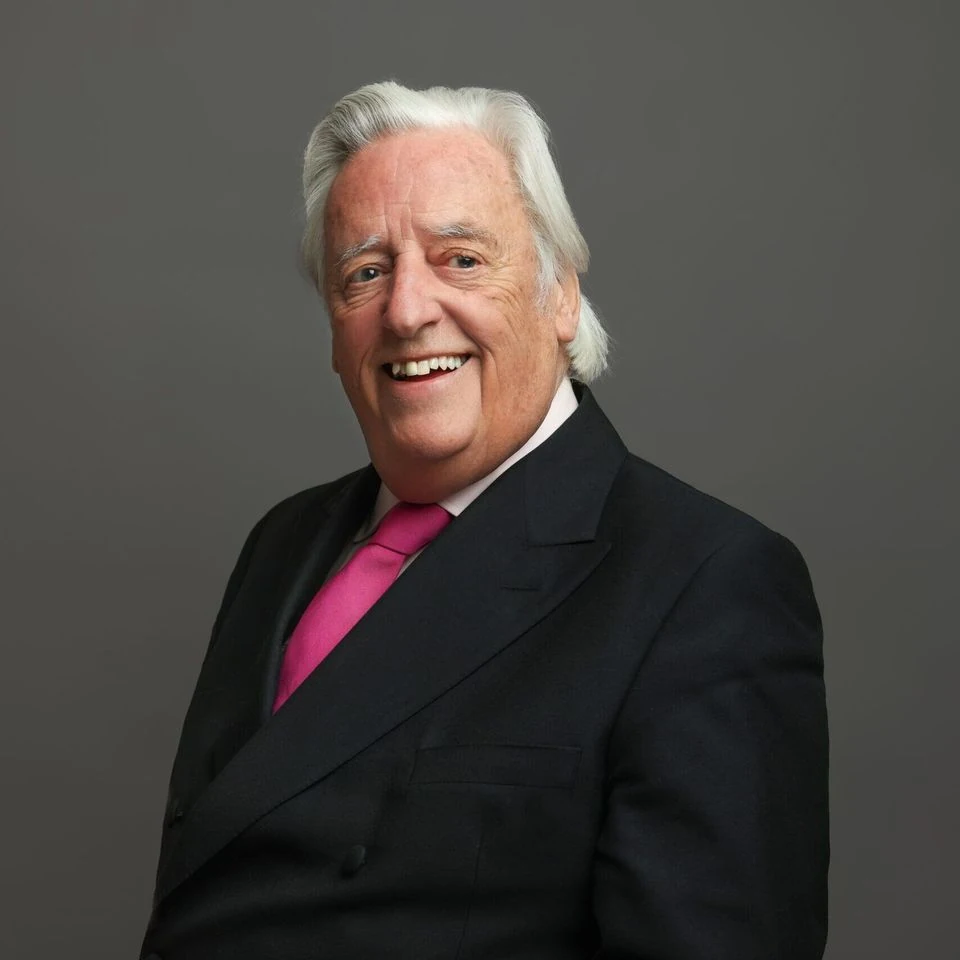
Michael Mansfield KC has spent much of his career in cases where the evidence, the conduct of public authorities and the fairness of the legal process were under intense scrutiny. He represented people wrongly convicted of IRA bombings, the family of Stephen Lawrence, and families seeking answers after Hillsborough and Bloody Sunday. The cases differ sharply, but together they show the reach of his work: from criminal appeals to public inquiries and inquests, Mansfield has repeatedly acted for people challenging official accounts of events.
Education and the Bar
Born on 12 October 1941, Mansfield grew up in north Finchley in north London. He attended Holmewood Preparatory School and Highgate School, then studied history and philosophy at the University of Keele, where he graduated with a BA (Hons) and served as secretary of the students’ union. He was called to the Bar at Gray’s Inn in 1967. In 1989 he became Queen’s Counsel, now styled King’s Counsel, and in 2007 was elected a Bencher of Gray’s Inn.
Mansfield has described himself as a “radical lawyer”. His practice has included civil liberties and human rights work, including actions against the police. The variety of his cases has made him a visible advocate in legal disputes that also raised questions for the wider public. He is head of chambers at Nexus Chambers and president of the Haldane Society of Socialist Lawyers.
Appeals and contested convictions
Mansfield represented members of the Guildford Four and the Birmingham Six, who had been convicted in connection with IRA pub bombings. The cases became prominent examples of wrongful convictions in Britain. His work also extended to other people accused of involvement in IRA bombings, including Dolours and Marian Price and Brian Keenan. A thread running through these cases is the importance of testing the evidence on which a conviction rests, particularly where the consequences of a flawed prosecution are severe.
His work in criminal cases has ranged well beyond those appeals. He represented Mahmood Hussein Mattan, Ruth Ellis and James Hanratty in posthumous appeals, and acted for Angela Cannings and Colin Norris. He also represented the Orgreave miners and Arthur Scargill. These cases involved different allegations, legal questions and outcomes; what links them is Mansfield’s role as an advocate for clients whose cases had become subjects of public dispute.
In a 1997 BBC Scotland programme about Lockerbie, Mansfield warned against treating forensic science as infallible. He argued that scientific evidence can be wrong and that courts and the public should scrutinise it rather than accept it as beyond challenge. The point fits a broader concern in his work: no form of evidence, institution or official account should be exempt from examination.
Families, inquests and public scrutiny
Mansfield represented families of victims of the Hillsborough disaster, in which 96 football supporters died in 1989. He also represented families of victims of the 1972 Bloody Sunday shootings. Inquests and inquiries can give bereaved families a route to investigate events and seek an account of how deaths occurred. Mansfield’s role in these proceedings placed him alongside people pursuing answers through formal legal processes, often amid prolonged public debate.
His work for the family of Stephen Lawrence brought another set of questions into view. Lawrence was murdered in a racially motivated attack, and Mansfield represented his family during their private prosecution of his killers. The case became a defining point in discussion of the police and race in Britain. Mansfield has also acted for the families of Jean Charles de Menezes and Mark Duggan, among others, in cases involving deaths and state conduct.
Inquests have formed a substantial part of his practice. He represented Mohamed al-Fayed in the inquest into the deaths of his son Dodi and Diana, Princess of Wales, and acted for the family of Stuart Lubbock at an inquest involving Michael Barrymore. He represented Barry George in proceedings connected with Jill Dando’s death and his wrongful conviction. These cases show how an inquest can bring a public figure, a bereaved family and difficult evidential questions into the same legal setting.
A wide-ranging practice
Mansfield’s clients have included people from very different backgrounds and causes. He represented the McLibel Two, Frank Crichlow, owner of the Mangrove restaurant, Danny McNamee, and Fatmir Limaj, a Kosovo-Albanian leader prosecuted at The Hague. His work has also included Kenneth Noye, the Tottenham Three and the Cardiff Five. In 2019, he was engaged by the family of footballer Emiliano Sala to represent their interests in a dispute following Sala’s death.
His public profile has accompanied this varied practice. Mansfield has written about the legal system and his own work, including Presumed Guilty: British Legal System Exposed (1993) and Memoirs of a Radical Lawyer (2009). He also speaks at public and professional events. These activities have helped bring legal arguments beyond the courtroom, though his most concrete contribution remains the representation of clients in particular cases.
Public commitments
Mansfield’s work and public life extend into environmental and animal-rights advocacy. He is a patron of Viva!, an animal-rights organisation, and a patron of the Hastings Advice and Representation Centre, which provides free welfare-benefit advice and representation to local people. He is also a co-founder and trustee of Silence of Suicide, a charity concerned with suicide. These commitments sit alongside, rather than substitute for, his legal practice.
He has been a prominent figure in political debate as well. In 2019 he signed public letters supporting Labour leader Jeremy Corbyn and the party’s manifesto. His political views have been described in various ways, while Mansfield has called himself a socialist and a republican. The range of his legal and public commitments reflects a career in which advocacy has not been confined to a single type of case or forum.
Why Michael Mansfield deserves a place in British Legacy
Michael Mansfield deserves a place in British Legacy because his career offers a detailed view of how legal representation can matter beyond the immediate contest between prosecution and defence. He represented people associated with the Guildford Four and the Birmingham Six, families affected by Hillsborough and Bloody Sunday, and the family of Stephen Lawrence. Those cases placed questions of evidence, policing, accountability and justice before courts, inquests and the public. The record does not need to turn every case into a personal triumph to show the significance of the work: representing people whose claims demand scrutiny is itself an important part of a functioning legal system.
His practice also demonstrates the breadth of the British bar. Mansfield has worked in criminal appeals, private prosecutions, inquests and cases involving deaths and public authorities, as well as representing clients in disputes with an international dimension. His public warning about the fallibility of forensic science captures a principle relevant well beyond one trial: evidence must be tested, not merely trusted. Alongside his legal work, his support for welfare advice, animal rights and suicide-prevention work shows a continuing engagement with public concerns. Taken together, these contributions make Mansfield a distinctive figure in modern British legal life and a subject whose career helps explain how advocacy, scrutiny and access to representation shape public understanding of justice.
Sources
Michael Mansfield — Wikipedia revision 1376014020
Adapted in part from Michael Mansfield by Wikipedia contributors, under CC BY-SA 4.0. Text has been edited and combined with the existing article; this adapted text is shared under the same licence. Contributor history.