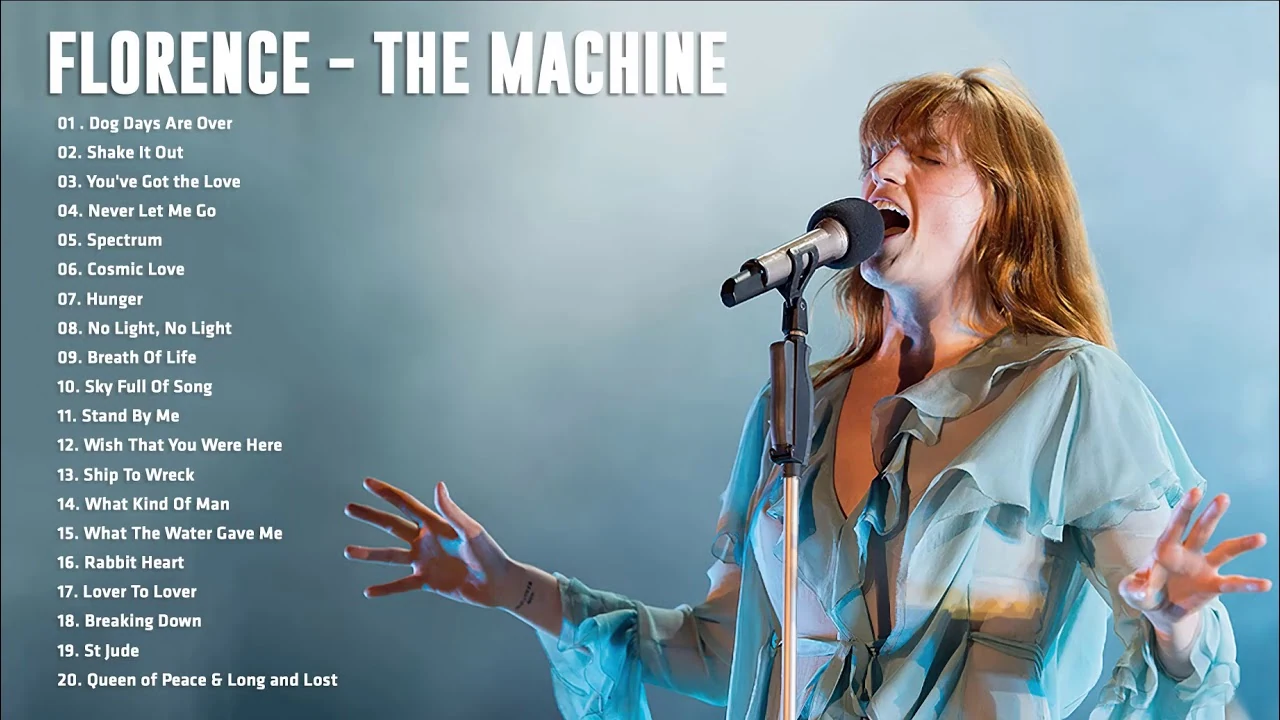
Florence + the Machine made a striking entrance into British music with songs that seemed to turn private emotion into public ceremony. Formed in London in 2007, the band set Florence Welch’s commanding voice against harp, drums and richly layered arrangements. Its music could feel baroque and restless, but it also had melodies and choruses built to be shared. The result was not simply a distinctive sound: it was a way of bringing unusual scale and emotional directness into mainstream pop.
The group’s first album, Lungs, grew into a chart-topping success after its release in 2009. The band followed it with several more UK number-one albums, headlined Glastonbury and, in 2024, saw the songs from that debut reworked with an orchestra at the BBC Proms. Along the way, Florence + the Machine kept changing the shape of their music without losing the intensity that first made it recognisable.
A London band, not just a singer with a backing group
Florence Welch and keyboardist Isabella Summers were at the heart of the project from its beginnings. Their shared history also informs the band’s name: Summers was known as “Machine” and Welch as “Florence Robot” when they made music together. They performed for a time as Florence Robot/Isa Machine, before the name Florence and the Machine took hold. The early band also included guitarist Rob Ackroyd, drummer Christopher Lloyd Hayden and harpist Tom Monger. Line-ups changed over the years, but the collaborative basis of the project remained important.
That distinction matters. Welch became the unmistakable voice and public face of Florence + the Machine, but its songs depended on arrangements that gave her voice both a frame and a force. The harp, drums, keyboards and backing vocals could make a track sound ritualistic without taking away its pop immediacy. The music drew on indie and alternative rock, baroque pop and soul; its drama came from the way those elements met, rather than from a single genre label.
Early support helped the band reach listeners beyond its London beginnings. The BBC promoted Florence and the Machine through BBC Music Introducing, and the group played festivals including Glastonbury, Reading and Leeds and Bestival in 2008. It also appeared on the Shockwaves NME Awards Tour in 2009. The 2009 BRITs Critics’ Choice award offered a prominent sign of industry recognition before the debut album had completed its long ascent.
Lungs: a debut that gathered momentum
Released in 2009, Lungs did not reach the top of the UK album chart immediately. It spent its first five weeks at number two, then reached number one in January 2010, after 28 consecutive weeks on the chart. It went on to spend 196 weeks on the UK chart, according to Official Charts, and was among the best-selling albums in the UK in both 2009 and 2010. Its success was built over time, as listeners returned to an album whose songs had strikingly different emotional temperatures.
“Dog Days Are Over” is exuberant, but its release feels earned rather than carefree. “You’ve Got the Love”, a cover of the Source and Candi Staton song, became another central part of the band’s early identity. Its gospel-inflected lift suited Welch’s voice, while the group’s treatment made the familiar material feel newly expansive. “Kiss with a Fist”, the album’s lead single, had appeared earlier; the record also included “Rabbit Heart (Raise It Up)”, “Drumming Song” and “Cosmic Love”. The songs reached audiences well beyond the album itself: “Dog Days Are Over” was used in television and film, and “Heavy in Your Arms” appeared in the end credits of The Twilight Saga: Eclipse.
The BRIT Award for British Album, awarded to Lungs in 2010, confirmed that the achievement extended beyond individual singles. The same year, Florence + the Machine headlined Latitude, having been booked for the festival before the album’s mainstream success. They also played the 2010 Glastonbury Festival and drew a large audience at the Other Stage. The album had turned an emerging act into a major live presence, but its songs still sounded personal: Welch’s vocal urgency made vulnerability part of the spectacle, not something hidden behind it.
Making the sound larger, then changing its balance
For Ceremonials, released in October 2011, the band enlarged the atmosphere of Lungs. Recording included work at Abbey Road Studios, and Welch described the ambition as a darker, heavier record with bigger drums and bass. It reached number one on the UK Albums Chart and number six in the United States. “Shake It Out” showed how the band could turn regret into a shared release: its sweeping arrangement and insistent refrain invited listeners into the song rather than asking them to observe it from a distance.
In 2012, a Calvin Harris remix of “Spectrum (Say My Name)” became Florence + the Machine’s first UK number-one single. Its success showed that the band’s writing could cross into dance-pop without losing its identity. Welch also appeared on Harris’s “Sweet Nothing”, which reached number one in the UK later that year. The group’s musical language was not fixed to one kind of arrangement; its choruses and emotional momentum could survive a change of setting.
The third album, How Big, How Blue, How Beautiful, arrived in 2015 and became the band’s third UK number-one album. It also reached number one in the United States, a first for the group. Its songs made room for sharper movement and self-scrutiny alongside the familiar surges of sound. That summer, when Foo Fighters withdrew from Glastonbury after Dave Grohl fractured his leg, Florence + the Machine took the Friday-night headline slot on the Pyramid Stage. The replacement became a defining live moment: Welch thanked Grohl, wished him a speedy recovery and performed the Foo Fighters’ “Times Like These”. The festival later remembered how she stepped up. It was a demanding opportunity, and the band met it on one of Britain’s most prominent stages.
High as Hope, released in 2018, offered a more pared-back setting for Welch’s writing. Dance Fever, in 2022, returned to movement and physical urgency; it reached number one in the UK. Together these albums show a group willing to revise its musical balance. The theatrical scale remained available, but it was not the only tool: a quieter passage or a more direct rhythm could serve the songs just as well.
From festivals to the concert hall
The band’s live history connects small beginnings with large public occasions. Before the first album, the group played gigs around London and supported MGMT in Europe. In 2009 it performed for Teenage Cancer Trust at the Royal Albert Hall, supported Blur at Manchester Arena and appeared at major UK and Irish festivals. These appearances helped establish a live act capable of carrying the elaborate recordings into a room full of people.
The songs also travelled into other settings. “Kiss with a Fist” featured in films including Wild Child and St Trinian’s 2: The Legend of Fritton’s Gold; “Dog Days Are Over” and “Cosmic Love” were used in television. The band recorded “Stand by Me” for the video game Final Fantasy XV and contributed original songs to the game. Such uses are not, on their own, a measure of artistic importance. They do, however, show how the group’s melodic writing could move beyond the albums and live shows without depending on one single format.
On 11 September 2024, Welch joined Jules Buckley and his orchestra at the Royal Albert Hall for Symphony of Lungs, marking 15 years since the debut album. The Proms performance gave songs first heard as richly arranged indie-pop a new orchestral frame. It was a fitting change of scale for music that had always used its arrangements to make emotion feel expansive. The event also placed the album in a wider British musical setting: a contemporary pop record revisited on one of the country’s best-known concert platforms.
Florence + the Machine’s reach is reflected in sustained chart success and Grammy recognition. The supplied accounts differ on the precise total of Grammy nominations, so no number is given here. Official Charts records five UK number-one albums, including Lungs, Ceremonials, How Big, How Blue, How Beautiful and Dance Fever; the band’s fifth album, Dance Fever, followed earlier chart-topping releases in a career spanning more than a decade. Their catalogue has grown through shifts in sound, but Welch’s voice and the group’s capacity for dramatic, memorable songwriting remain its through-line.
Why Florence + the Machine deserves a place in British Legacy
Florence + the Machine deserves a place in British Legacy because the band expanded the possibilities of popular music without giving up its connection with a broad audience. The group took the scale of baroque pop, the force of rock and the emotional lift of soul, then made those resources serve songs listeners could sing together. Lungs did not depend on a brief burst of attention: it climbed to number one after months on the chart and remained there in the national conversation through lasting chart presence. Later records reached the top of the UK chart too, while the band continued to alter the balance between grandeur, rhythm and intimacy. That combination of reach and artistic change is more substantial than a run of hits.
The British connection is visible in particular events, not just in the band’s London origins. BBC Introducing helped bring the group to wider notice; the BRITs recognised its debut and its early promise; Glastonbury trusted it with the Pyramid Stage headline slot when the original headliner withdrew. A decade later, the BBC Proms and Royal Albert Hall offered a different kind of recognition, presenting Lungs in an orchestral setting. These moments trace a career moving through several parts of British cultural life, from emerging-band support and festival crowds to a major concert-hall programme. Florence + the Machine’s legacy lies in making that journey while remaining unmistakably itself: theatrical but accessible, emotionally exposed but communal, and ambitious without losing the song at its centre.
Sources
Florence and the Machine — Wikipedia revision 1374879821
Adapted in part from Florence and the Machine by Wikipedia contributors, under CC BY-SA 4.0. Text has been edited and combined with the existing article; this adapted text is shared under the same licence. Contributor history.